There is a particular kind of pleasure in encountering a mechanical watch whose design initially seems unusual, only for every detail to make more sense the longer it is studied. The Sinn EZM 19 belongs firmly in that category. At first glance, it appears to be another exceptionally legible German instrument watch: black dial, stark markings, bead-blasted steel and an imposing rotating bezel. Look more carefully, however, and the logic behind the watch starts to reveal something considerably more specialised.
The EZM 19 was developed for professional command staff responsible for coordinating complicated operational situations. That is significant because it gives the watch a very different purpose from the familiar worlds of diving, aviation or motorsport. Its job is not primarily to calculate speed, monitor decompression or navigate across time zones. Instead, the EZM 19 has been designed around the management of time itself.
When several teams, briefings, handovers and operational phases are being coordinated under pressure, time becomes part of the organisational structure. Sinn has translated that concept into a mechanical watch, and in doing so has produced one of the most conceptually interesting models in its long-running Einsatzzeitmesser family.
A different interpretation of the mission timer
The initials EZM stand for Einsatzzeitmesser, generally translated as mission timer. The important distinction is that an EZM is traditionally developed with a particular task or professional environment in mind. This has allowed Sinn to produce watches that often look deceptively simple while containing numerous details dictated by very specific operating requirements.
The EZM 19 continues that approach, although its intended environment is less visually dramatic than the diving bells, aircraft cockpits and emergency services usually associated with professional watches. It was conceived for command staff, where the pressure may come from information, decision-making and coordination rather than physical movement.
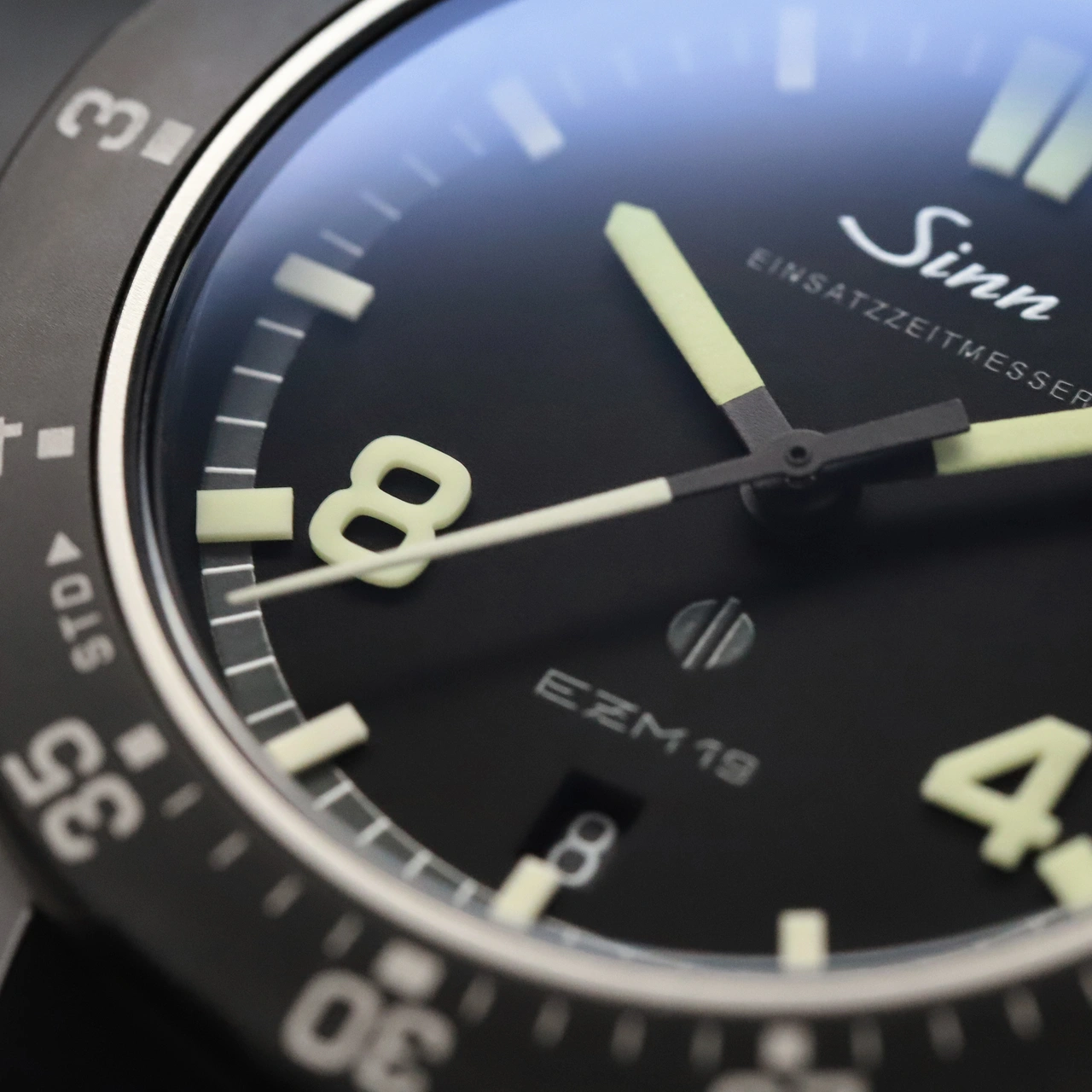
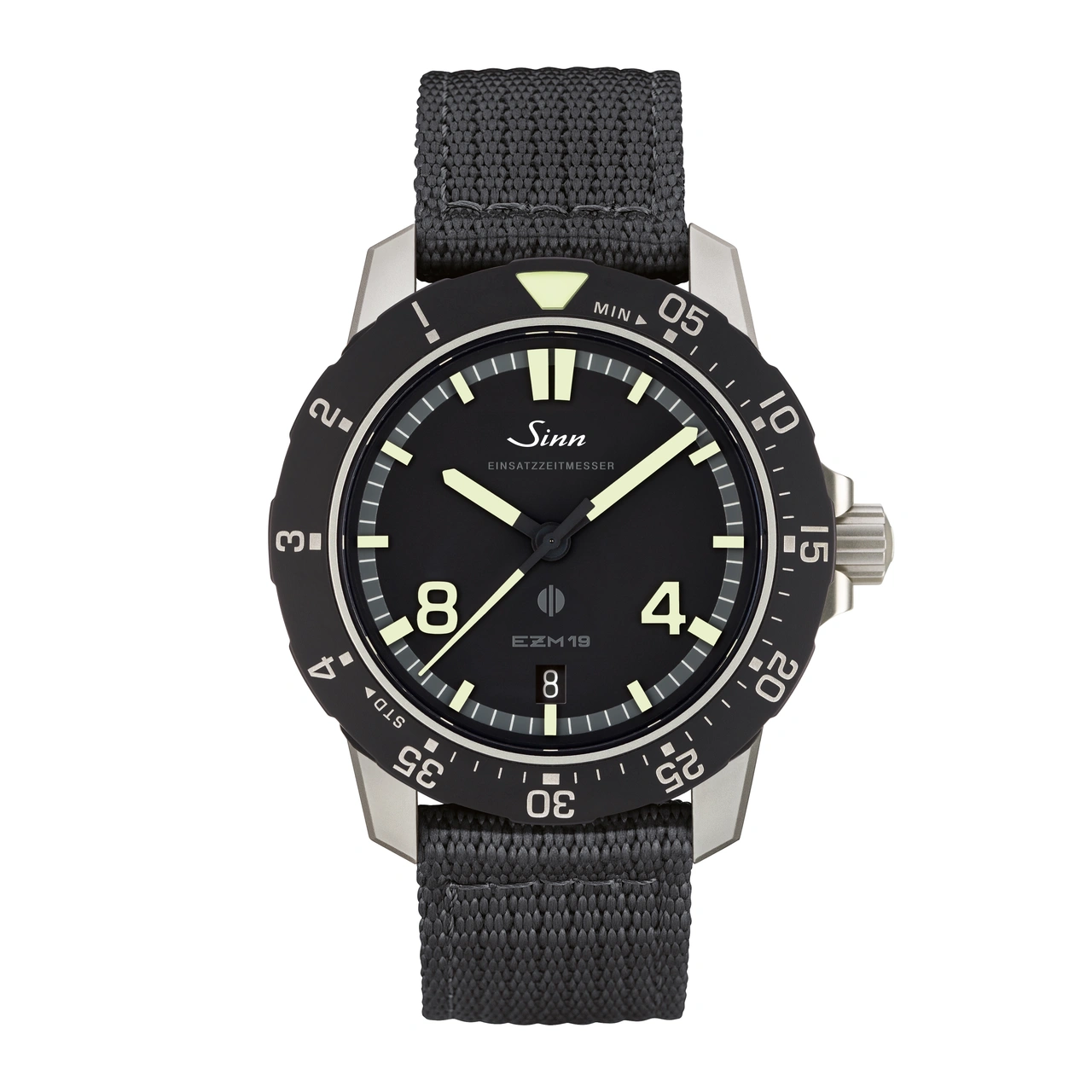
That background explains the most distinctive feature of the dial: its prominent four-hour markers. These are not decorative additions created to make the watch look different. They represent operational cycles that have proved effective within command staff processes. The watch therefore presents time in a way that reflects how its intended users may actually structure a working operation.
It is an excellent example of function creating aesthetics. Remove the operational story and the markers might look unconventional. Understand their reason for being there and they become perhaps the defining feature of the watch.
Turning time into visual information
Mechanical watches are naturally good at displaying time, but the EZM 19 attempts something slightly different. It is designed to make time easier to organise.
The captive bidirectional rotating bezel plays an important part in that system. It can be used to move between minute-based and hour-based perspectives, allowing the wearer to establish timing references for shorter events or broader operational periods without adding another complication to the movement.
This simplicity matters. A digital system could theoretically display considerably more information, but additional information is not always useful information. In high-pressure circumstances, a display that requires interpretation can become a distraction. Sinn has instead concentrated on providing only the information that matters and giving each element an obvious place within the hierarchy of the dial.
The result is unusual because the EZM 19 feels less like a conventional wristwatch dial and more like an analogue information interface. The wearer can use the hands, four-hour reference points and bezel together, yet the display remains remarkably uncluttered.
That restraint is perhaps one of the strongest aspects of the design. The watch is technically complicated in the way it has been conceived, but visually straightforward in the way it communicates.
Colour as part of the operating system
Legibility is one of the most overused descriptions in the tool-watch world. Large white hands on a black dial are routinely described as exceptionally legible, whether or not much thought has gone into the relationship between the various indications.
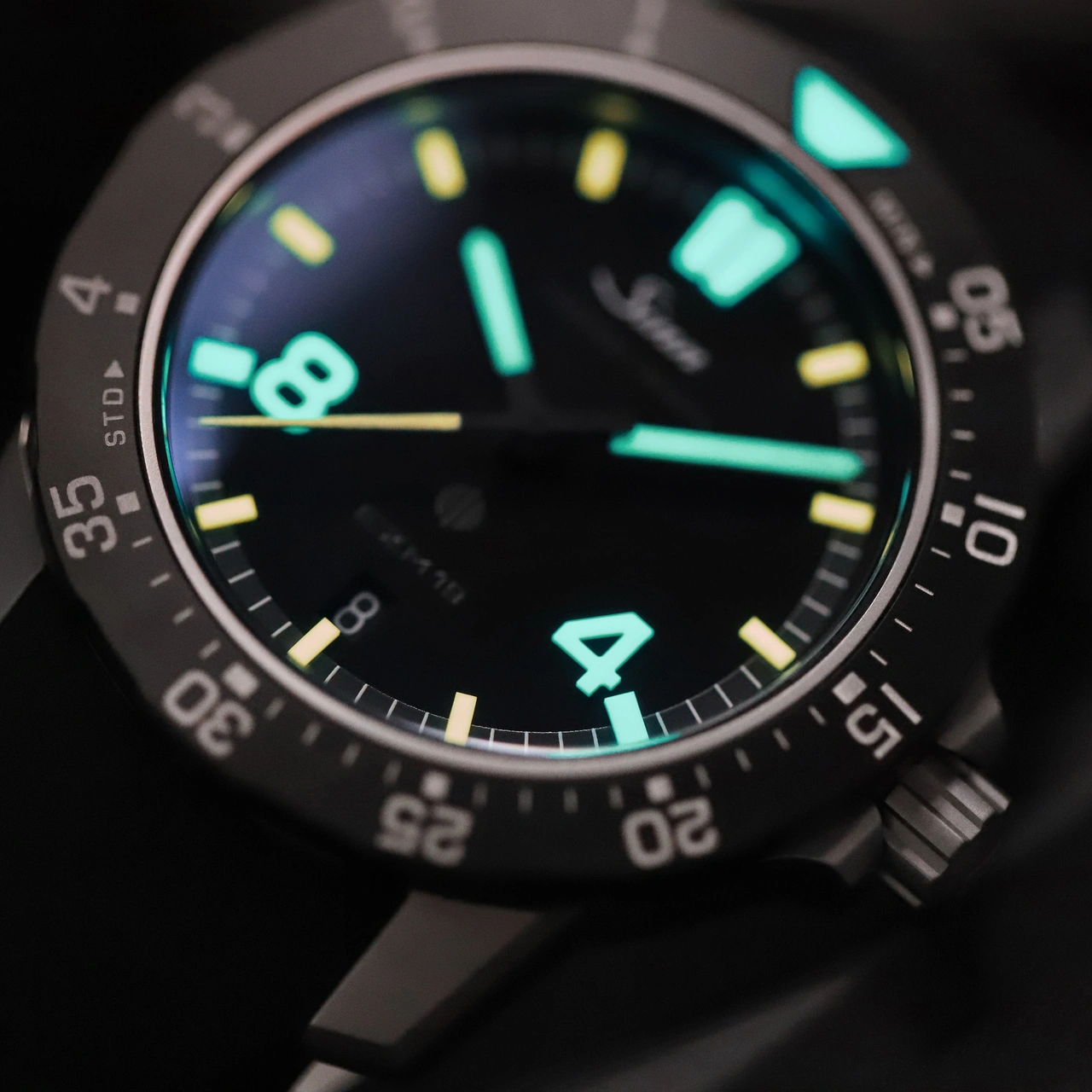
The EZM 19 takes the matter further by using colour to establish priorities. The hour and minute hands correspond with the distinctive four-hour markers, forming the primary orientation system. Other indices and the seconds hand are deliberately differentiated.
This allows the wearer to separate essential timing information almost instinctively. Instead of every luminous element competing equally for attention, the dial creates layers of importance.
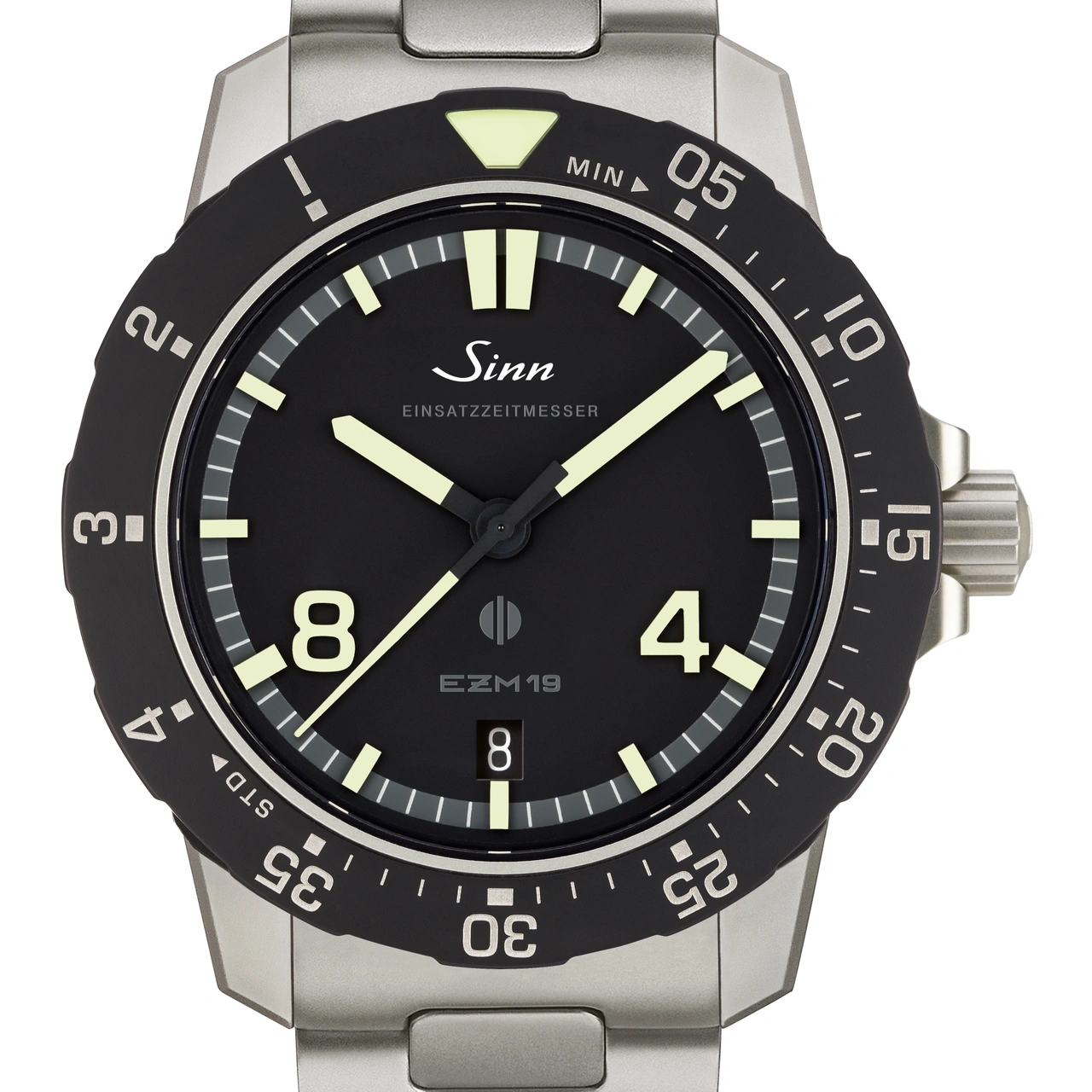
That becomes particularly interesting after dark. Sinn has employed hybrid ceramic luminous elements for the numerals and indices, with each element attached individually by hand. These components provide considerable luminous intensity while also creating a more substantial, almost architectural quality than conventional printed luminous paint.
The technique is a perfect match for Sinn’s broader philosophy. It is technologically advanced, but its purpose is fundamentally practical. The material is not being employed simply because it sounds impressive in a specification list. It helps create a clearer, brighter interface when ambient light disappears.
A case shaped by purpose rather than fashion
The dimensions of the EZM 19 are another pleasant surprise. The stainless-steel case measures 41 mm across and approximately 11.4 mm thick, giving the watch a relatively restrained profile considering the amount of technical capability built into it.
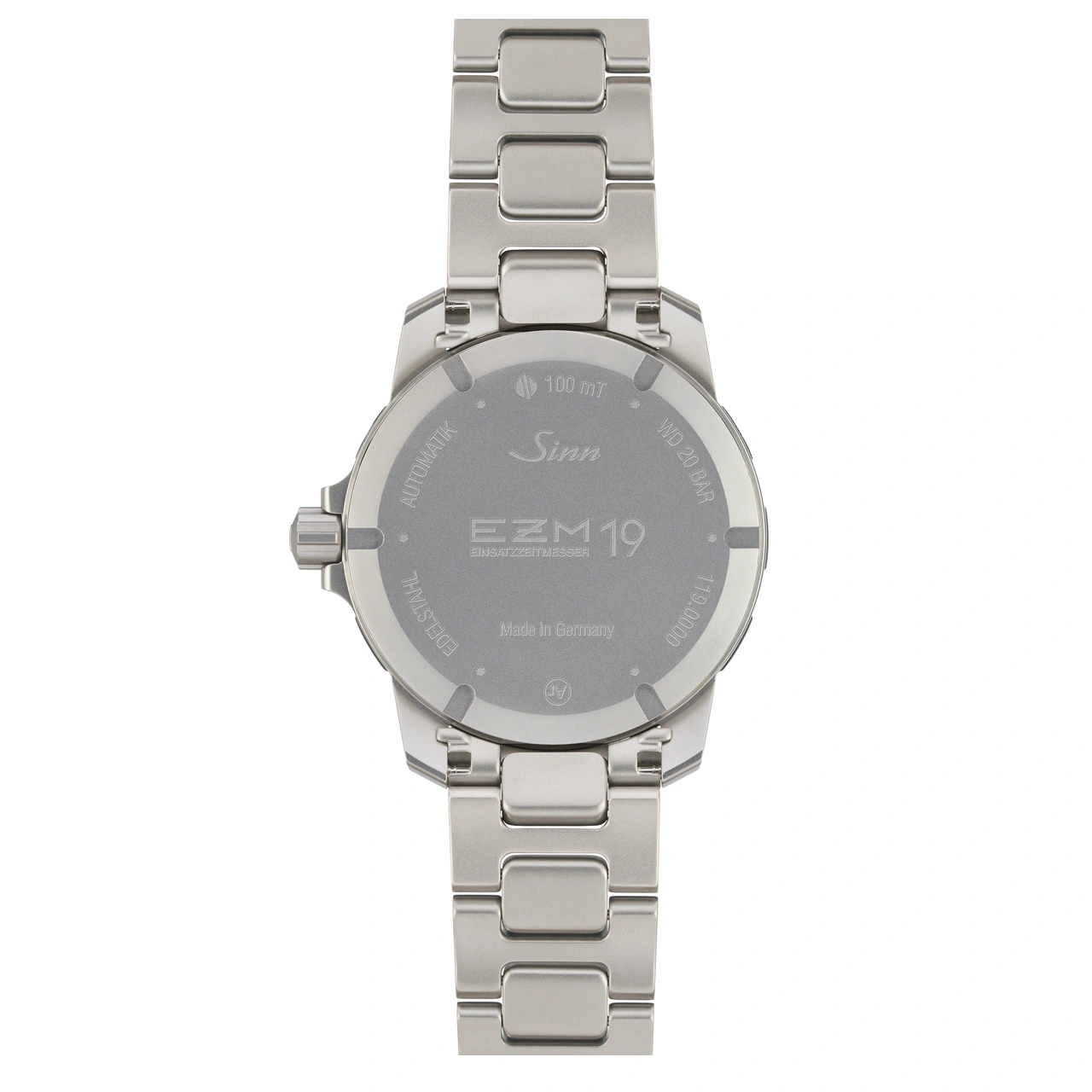
The steel receives a bead-blasted finish, removing unnecessary reflections and giving the case the understated grey character strongly associated with Sinn’s professional instruments. There are no polished bevels fighting for attention, and little attempt to make the watch appear luxurious in the conventional sense. Its quality is communicated through construction rather than decoration.
At 73.6 grams without the strap, it is also relatively light for a steel tool watch of this type. Combined with a conventional 20 mm lug width, the proportions should make it considerably easier to wear than the visual seriousness of the photographs might initially suggest.
Protection at the front comes from sapphire crystal with anti-reflective treatment on both sides. The crown screws down, the case back is screw-fastened and water resistance is rated to 20 bar. Low-pressure resistance is also specified, fitting naturally with the broad environmental capability expected of an EZM model.
The captive bezel and TEGIMENT connection
Rotating bezels are deceptively vulnerable components. They sit at the outer edge of the watch, where impacts are more likely, and a conventional bezel can potentially be knocked free from the case.
Sinn’s solution is its captive bezel construction. Rather than relying on the more common snap-on approach, the design is engineered so that the bezel remains securely attached to the watch. For an instrument intended for demanding professional use, it is exactly the sort of detail that makes sense even if the owner never has cause to appreciate it.
The bezel of the EZM 19 also receives Black Hard Coating on a TEGIMENT Technology basis. TEGIMENT is closely associated with Sinn’s approach to surface hardening, and here it provides the hardened foundation required for the black coating.
This is particularly relevant on a bezel, where scratches can otherwise become conspicuous quickly. The dark finish gives the watch a purposeful visual boundary around the dial, while the underlying surface technology is there to make that appearance considerably more durable.
The bezel therefore becomes both a central timing instrument and one of the technically interesting pieces of the external construction.
The familiar SW 300-1 beneath the specialist exterior
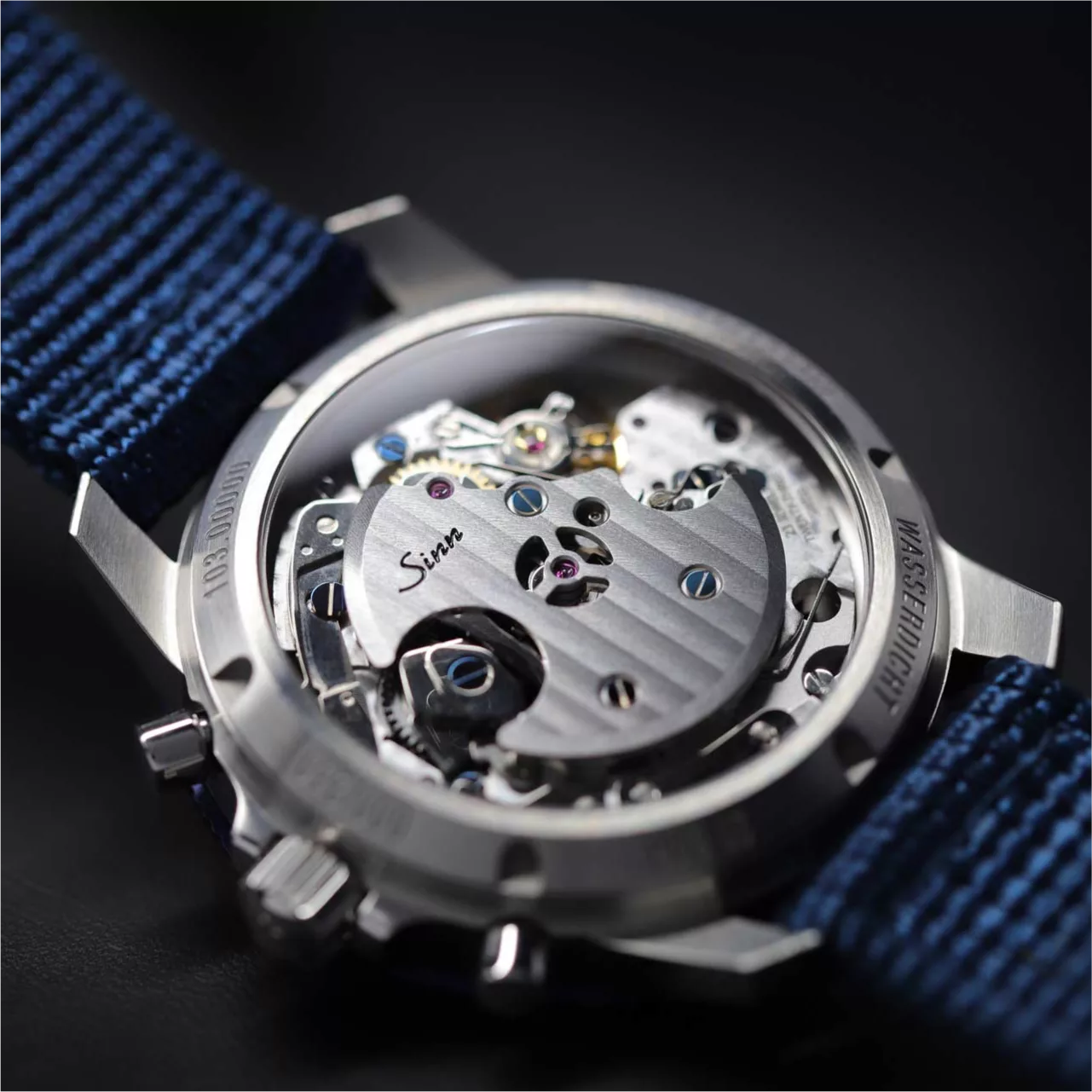
Inside the EZM 19 is the SW 300-1 automatic movement. It runs at 28,800 semi-oscillations per hour, uses 25 jewels and includes a stop-seconds function for precise setting. The movement also provides the straightforward indications required by the watch: hours, minutes, central seconds and date.
Some collectors may initially wish for something more exotic beneath such a specialised exterior, but there is a persuasive argument for the opposite. An operational instrument benefits from a proven, widely understood mechanical foundation.
The SW 300-1 is relatively slim, helping Sinn maintain the 11.4 mm case thickness, while its architecture is well established. It allows the interesting engineering of the EZM 19 to occur around the movement rather than forcing mechanical novelty into an area where novelty would provide little practical advantage.
That distinction is important. The intellectual value of the EZM 19 is not centred on haute horlogerie finishing or a complicated in-house calibre. It lies in how an established mechanical movement has been integrated into an entire system designed for a particular task.
Magnetic protection that goes well beyond the ordinary
One of the more serious specifications is the EZM 19’s Magnetic Field Protection, rated to 100 mT, equivalent to 80,000 A/m.
For context, the movement itself meets DIN 8309 anti-magnetic requirements, but Sinn’s additional case engineering takes the complete watch much further. Magnetic fields have become an increasingly relevant problem for mechanical watches because modern environments contain magnets in countless everyday objects and electronic devices.
For professional users operating around technical equipment, communications systems and other electronic hardware, greater magnetic resistance becomes even more understandable.
Once again, it is not a specification added in isolation. It forms part of a broader effort to ensure that the watch continues doing its relatively simple mechanical job while the environment around it becomes considerably less simple.
Keeping moisture away from the movement
Another recognisable Sinn technology appears in the form of the company’s Ar-Dehumidifying Technology.
Moisture is one of the persistent enemies of mechanical watches. Even where water resistance is excellent, small amounts of humidity contained within the case can potentially become problematic when temperature changes cause condensation.
Sinn’s dehumidifying system is intended to reduce that internal moisture and help maintain a stable environment around the movement. Among its practical benefits is greater resistance to fogging, an issue that would be particularly inconvenient in a watch whose entire reason for existing is immediate readability.
It is easy to think of technologies like this as secondary to the movement or dial, yet the EZM concept makes them particularly relevant. Reliability is not a single component. It comes from reducing as many potential points of failure as possible.
From extreme cold to extreme heat
The EZM 19 is specified to remain functionally reliable between -45°C and +80°C through Sinn’s Temperature Resistance Technology.
Those numbers sit far beyond the conditions most privately owned mechanical watches will encounter. That, however, is part of the appeal of Sinn’s engineering philosophy. The watch is not designed only around the comfortable circumstances in which most examples will eventually live.
Mechanical movements rely on lubricants whose behaviour changes significantly with temperature. Extreme cold can cause conventional lubricants to thicken, while high temperatures create their own challenges. Designing for such a broad operating range therefore requires more than simply creating a robust case.
For collectors, this capability may rarely be tested in full, but its presence changes the character of the watch. It reinforces the sense that the EZM 19 has been designed outward from an operational requirement rather than inward from a marketing concept.
The appeal of a watch that does not need to pretend
There are countless modern watches inspired by military instruments, aviation equipment, exploration gear and professional diving. Many are beautifully made, but their functional identity exists largely as styling.
The Sinn EZM 19 feels different because the design process appears to have started with a question: how should a mechanical wristwatch work for people coordinating complex operations?
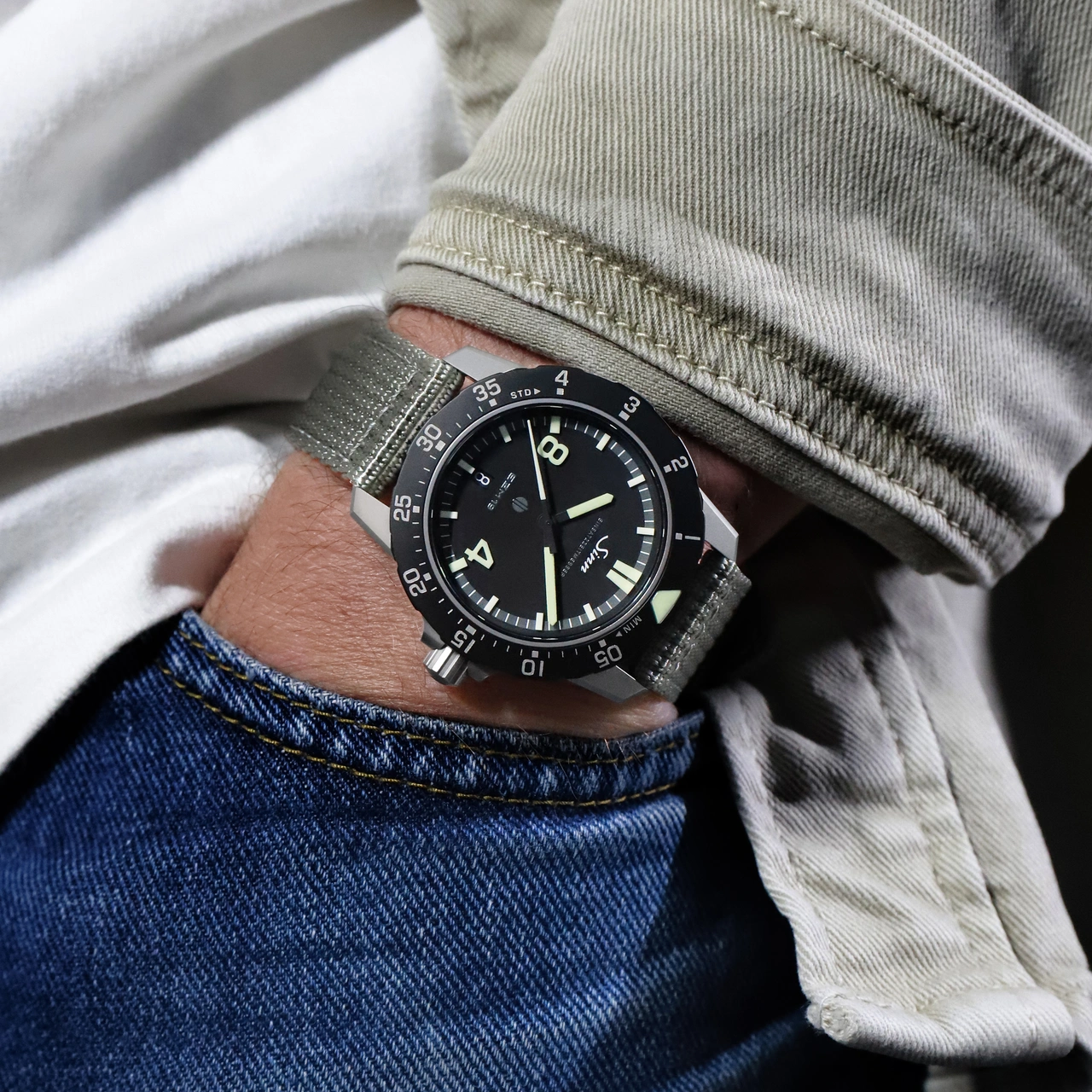
From there come the four-hour reference system, the adaptable bezel, the hierarchy of luminous colours and the extensive environmental protection. Even the restrained bead-blasted case seems to be the inevitable result of the brief.
This gives the watch a certain authenticity that is difficult to manufacture artificially. It does not have to imitate a vintage military instrument because it is already an instrument developed for a modern professional role.
That may also make the EZM 19 more interesting many years from now. Highly specialised watches often become some of the most fascinating pieces within a manufacturer’s catalogue because they capture a particular moment in design thinking. They show what happens when engineers are allowed to approach wristwatch design as problem solving rather than decoration.
A particularly thoughtful addition to the EZM family
The Sinn EZM 19 is unlikely to appeal to everyone, and that is part of what makes it compelling. Its four-hour markings are unusual. Its case is deliberately austere. Its technical specifications concentrate on reliability rather than spectacle, and its mechanical movement is chosen for proven function rather than exclusivity.
Yet viewed as a complete object, those choices form a remarkably coherent watch.
For enthusiasts of independent watchmaking, there is something refreshing about a manufacturer being willing to create a mechanical watch for such a specific purpose. Sinn has not simply taken an existing model, changed the dial colour and developed a story around it. The EZM 19 has a reason for its unusual arrangement, and that reason can be traced through almost every part of the design.
The hybrid ceramic luminous elements are there because darkness should not compromise the display. The colour coding exists because some information needs to register faster than other information. The four-hour markers reflect operational structure. The multifunctional bezel allows time to be viewed at different scales. Magnetic protection, dehumidifying technology and extreme temperature resistance all work towards keeping the mechanical instrument functioning when circumstances become less predictable.
It is this consistency that ultimately defines the EZM 19. There are watches with more elaborate movements, more decorative cases and more traditional beauty, but relatively few are built around such a tightly defined idea.
For collectors attracted to the engineering side of independent watchmaking, particularly those who appreciate Sinn’s ability to turn professional requirements into mechanical objects, the EZM 19 is a fascinating new chapter in the mission-timer story. It demonstrates that a genuinely functional watch does not need to be visually complicated to contain a great deal of thought. Sometimes the cleverest design is the one that makes a complex task look simple.