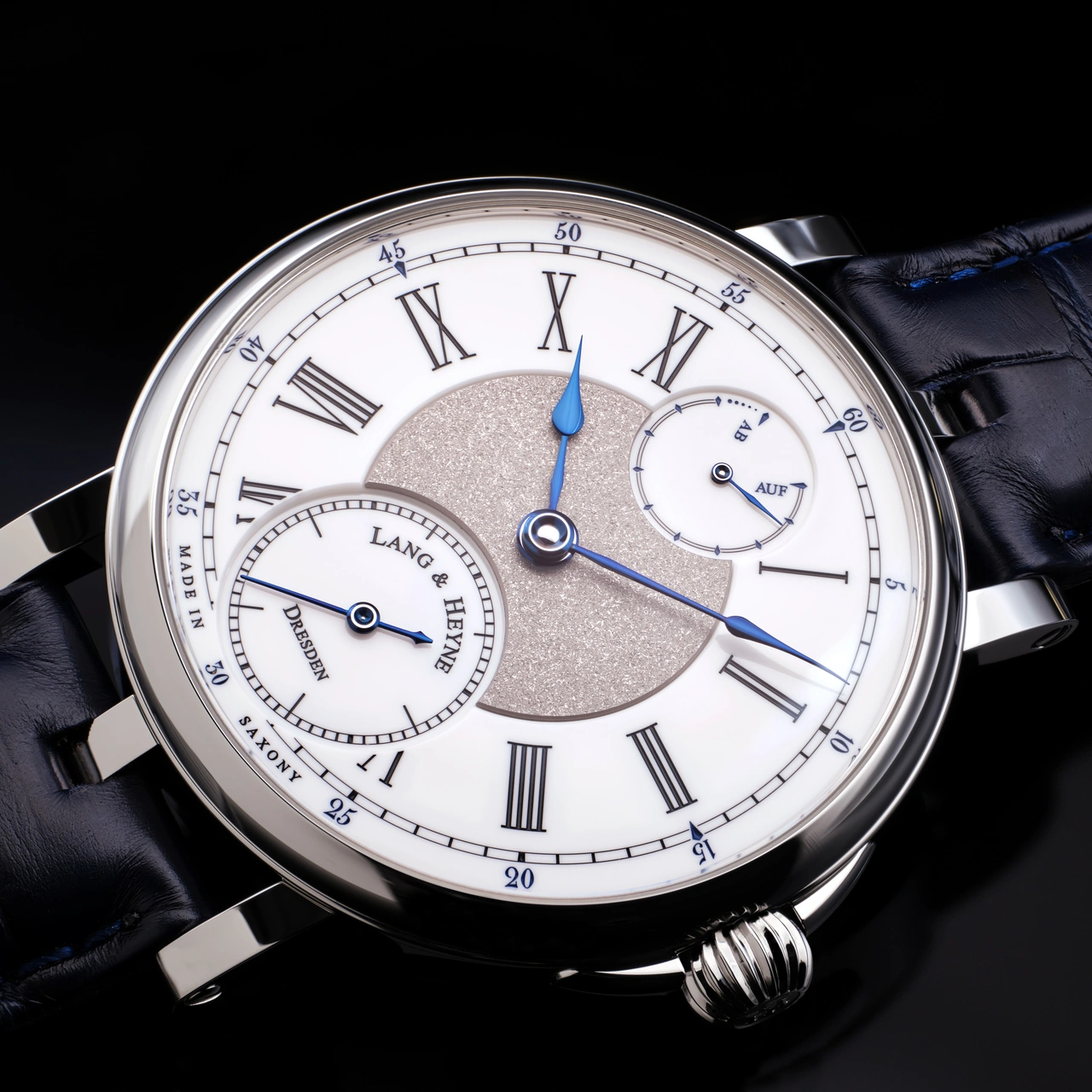
A watch crystal tends to attract very little attention when it is doing its job well. It sits above the dial, protecting delicate hands and movement components while allowing the smallest details to be read at a glance. Yet a few years of everyday wear can reveal an important difference between two otherwise similar watches: one crystal may remain remarkably clear, while another gradually collects fine scratches. Much of that difference comes down to the material used, and the choice is not quite as straightforward as sapphire being good and ordinary glass being bad. Each material has qualities that explain why watchmakers continue to use it.
What Is the Difference Between Sapphire Crystal and Standard Glass?
When people refer to standard glass on a watch, they usually mean mineral glass, rather than the untreated window glass found around the home. Mineral crystals are made from glass that has been shaped and often strengthened for use on the wrist, where changes in temperature, accidental knocks and daily handling are expected. Sapphire crystal is something quite different: despite its familiar name, it is not conventional glass at all. A third material, acrylic, also deserves consideration because of its long association with mechanical watches. Understanding these three choices helps explain what a crystal specification actually tells us about a timepiece.
Sapphire watch crystals are manufactured from synthetic sapphire, a form of crystalline aluminium oxide known as corundum. Natural sapphire is associated with precious gemstones, but the clear material used in watchmaking is grown under controlled conditions so it can be produced with the consistency required for precision components. The resulting crystal must then be cut, ground and polished to its final dimensions, sometimes with a pronounced curve or precisely shaped edge. This is demanding work because the very property that makes sapphire desirable on the wrist also makes it difficult to machine. Its hardness contributes to both its lasting appearance and its higher production cost.
Scratch Resistance: Where Sapphire Crystal Excels
The most significant advantage of sapphire is its resistance to scratching. On the Mohs scale, which ranks materials by their ability to scratch one another, sapphire scores 9 out of 10, while typical mineral glass sits around 5 to 6. The scale is not linear, but the practical difference is substantial: everyday contact with keys, grit and hard surfaces is much less likely to mark sapphire. That does not make it entirely scratchproof, particularly when exposed to sufficiently hard abrasive particles or other exceptionally hard materials. For a watch worn regularly over many years, however, sapphire can preserve a clean view of the dial in a way that standard mineral glass often cannot.
Mineral glass remains a sensible choice, especially where price, straightforward manufacture and practical durability matter. It can offer good transparency and performs better against scratches than softer acrylic, although ordinary wear will generally leave marks more readily than it does on sapphire. Some manufacturers use specially hardened mineral glass, including proprietary treatments intended to improve its resistance to surface damage. These treatments are meaningful, but they do not turn mineral glass into sapphire, and the exact performance depends on the formulation and manufacturing process. Once mineral glass is deeply scratched, replacing the crystal is usually more practical than attempting to polish it back to its original finish.
Is Sapphire Crystal Stronger Than Mineral Glass?
Scratch resistance should not be confused with resistance to breaking, a distinction that is often overlooked when comparing watch crystals. Sapphire is extremely hard, but hardness and toughness are different properties: a hard surface can resist abrasion yet still chip or crack after a concentrated impact. Mineral glass may tolerate certain knocks better, while acrylic is particularly valued for its ability to absorb impacts without shattering as readily. Crystal thickness, curvature, how it is supported by the case and the direction of a blow all affect the outcome. No watch crystal is indestructible, and a sapphire specification should never be taken as permission to treat a mechanical watch carelessly.
Clarity, Anti-Reflective Coatings and Crystal Shape
There is also the question of how clearly a crystal allows the dial to be seen. Sapphire can reflect noticeable amounts of light, which is why quality watchmakers frequently apply anti-reflective coatings to improve legibility in bright surroundings. A coating on the inner surface is sheltered from everyday abrasion, while coatings applied to both sides can further reduce reflections but leave the outer layer exposed to possible marking. Sometimes an apparent scratch on a sapphire watch is damage to this external coating rather than to the sapphire beneath it. The distinction matters because excellent visibility depends on optical treatment and design, not simply on choosing the hardest material.
The shape of the crystal matters almost as much as its composition. A flat crystal gives a modern, restrained appearance, while a domed or highly curved crystal can change the character of a watch by catching light and recalling earlier instrument designs. Producing those shapes in sapphire involves careful machining and polishing, particularly where the profile is intended to echo the raised acrylic crystals of vintage watches. A pronounced dome may introduce interesting reflections at certain viewing angles, so manufacturers must balance historical character with practical readability. When well judged, the result is not merely protection for the dial, but an integral part of the watch’s proportions and personality.
Why Some Watchmakers Still Use Acrylic Crystals
Acrylic should not be dismissed as an outdated alternative. Common on older watches and still used in some heritage-inspired designs, this transparent polymer is comparatively soft and can acquire fine scratches through ordinary use. Its appeal lies partly in its resilience to impacts and partly in the warm, distinctive appearance it gives to a traditional dial. Unlike mineral glass or sapphire, light scratches in acrylic can often be polished away, allowing a well-used watch to regain its clarity without replacing the crystal. For collectors who value historical accuracy, that combination of appearance, serviceability and authenticity can matter more than absolute scratch resistance.
Sapphire Crystal in German Watchmaking
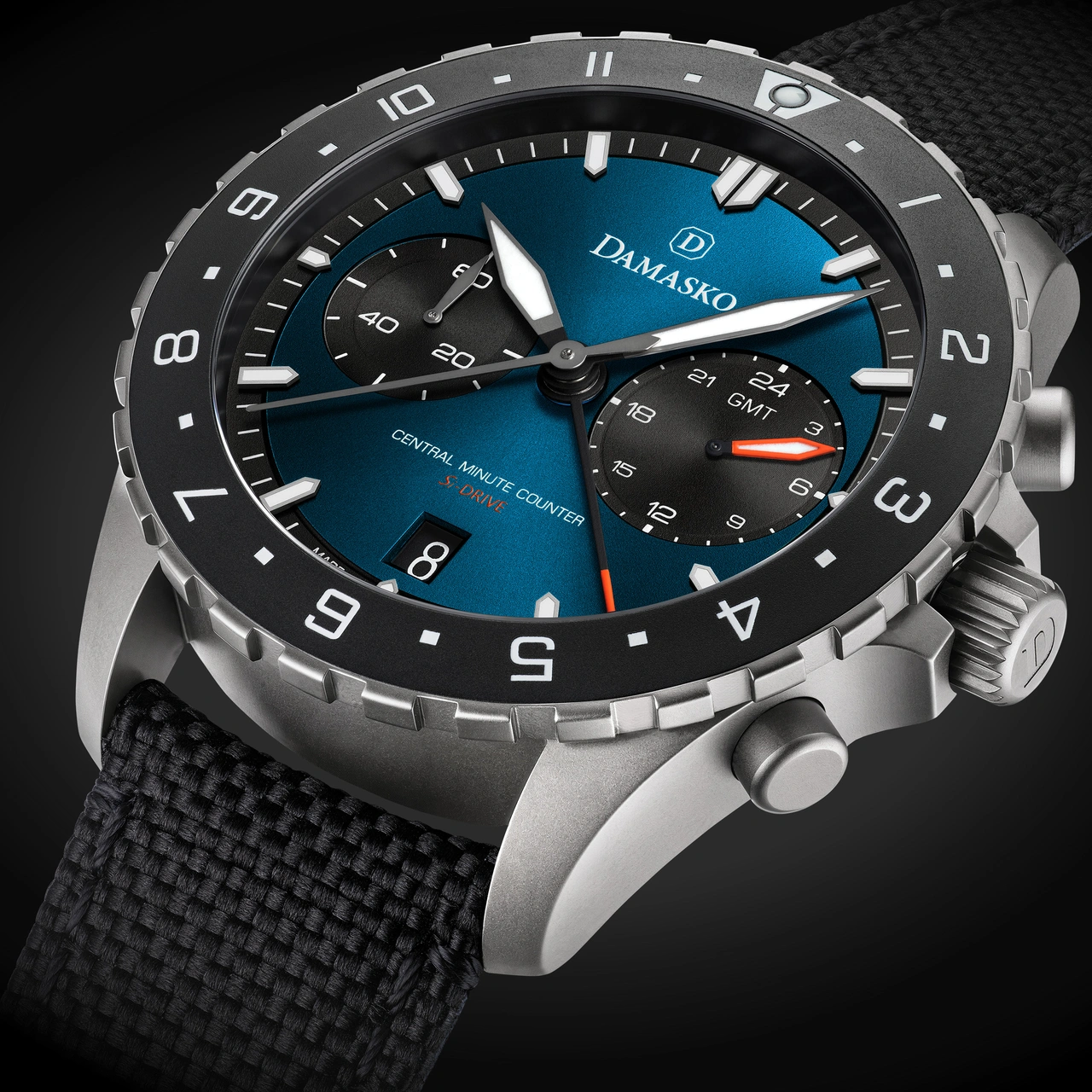
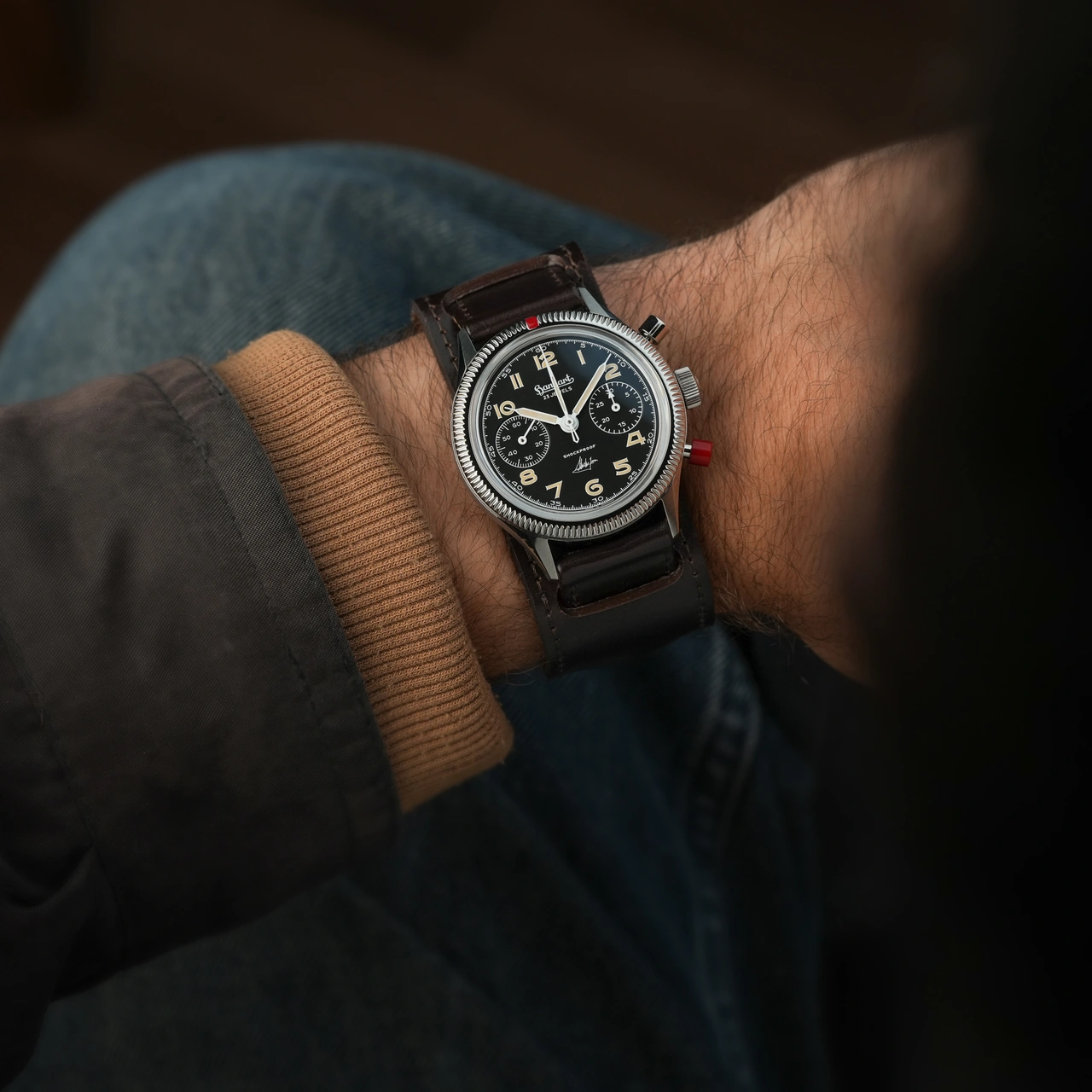
Among the independent German watchmakers represented by Define Watches, crystal selection illustrates how small engineering decisions serve a larger design purpose. Sinn’s 556 series uses sapphire on the front and transparent case back, with anti-reflective treatment specified on both sides of the front crystal to aid readability. Hanhart’s 417 ES takes a different visual direction, using a strongly domed sapphire crystal with an internal anti-reflective coating to retain the profile of its historic pilot’s chronograph. DAMASKO likewise places considerable importance on sapphire and anti-reflective treatment as part of its approach to robust, legible instrument watches. These choices are not decorative afterthoughts; they are considered elements of the complete watch.
Which Watch Crystal Is the Better Choice?
For anyone choosing a watch, sapphire is usually the more appealing option when long-term scratch resistance and a consistently clear dial are priorities. Mineral glass can still be appropriate in a well-designed, affordable timepiece, while acrylic retains a legitimate place where vintage character and impact behaviour are valued. It is also worth remembering that water resistance depends on the complete construction, including the crystal’s fit, case and seals, rather than the material alone. The most thoughtful watchmakers consider all these factors together, matching the crystal to the purpose and character of the watch. What looks like a simple transparent cover is, in fact, another small expression of the decisions that distinguish considered watchmaking.