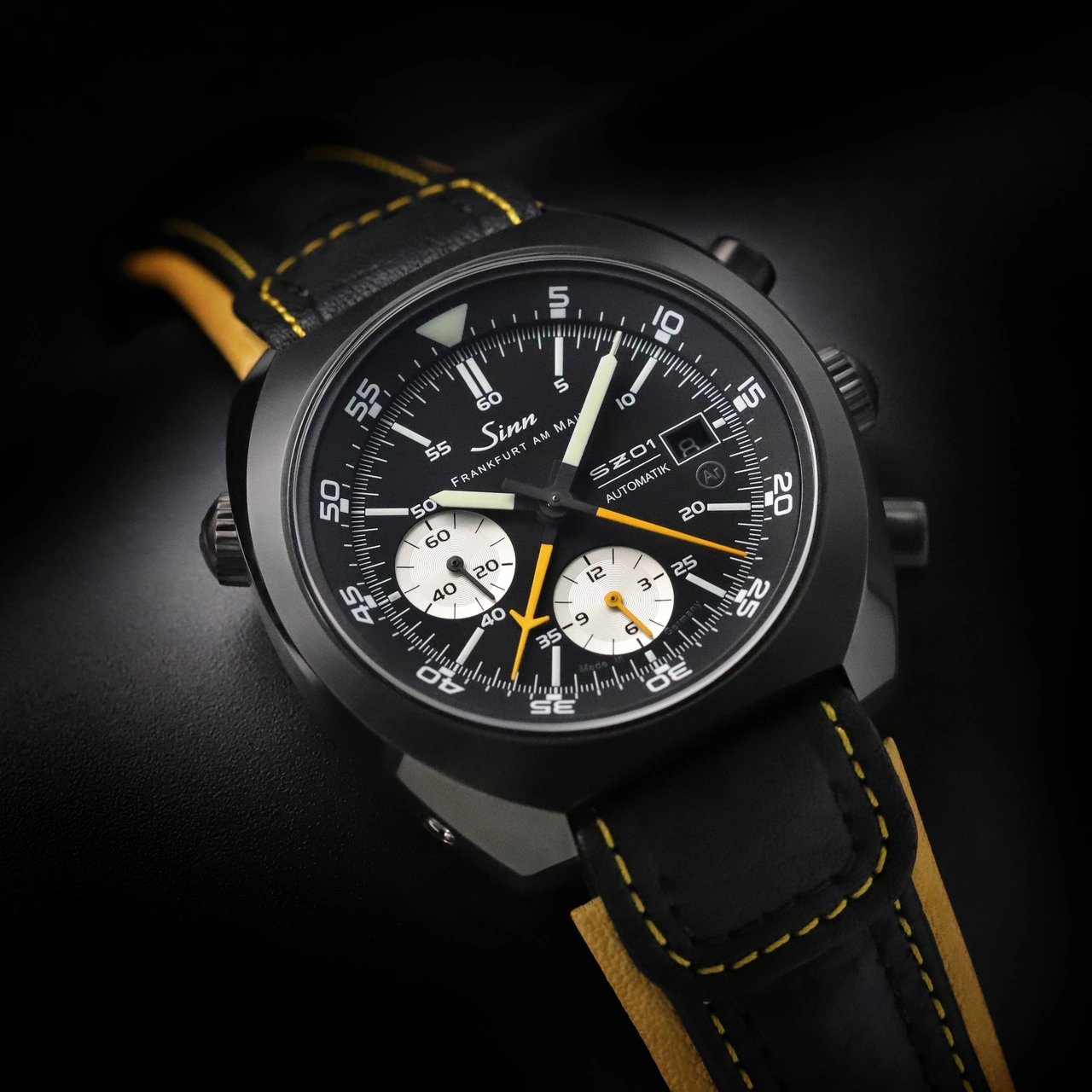
The underlying design remains recognisable, the technical foundations are left intact, and the differences reveal themselves gradually rather than demanding immediate attention. This is precisely the approach Sinn Spezialuhren has taken with the new 556 I F.A.Z. II G, a limited edition that introduces an unexpected colour scheme and several thoughtful commemorative details to one of the brand’s most familiar watches.
The Sinn 556 has earned its following through a fairly simple proposition: excellent legibility, sensible proportions, dependable mechanical engineering and an absence of unnecessary decoration. It is not the sort of watch that ordinarily attracts attention through elaborate complications or experimental case construction. Instead, its appeal lies in how successfully it performs the basic responsibilities of a wristwatch. That makes the 556 an interesting foundation for a commemorative edition, particularly one celebrating a partnership with an institution that has built its own reputation around precision, clarity and attention to detail.
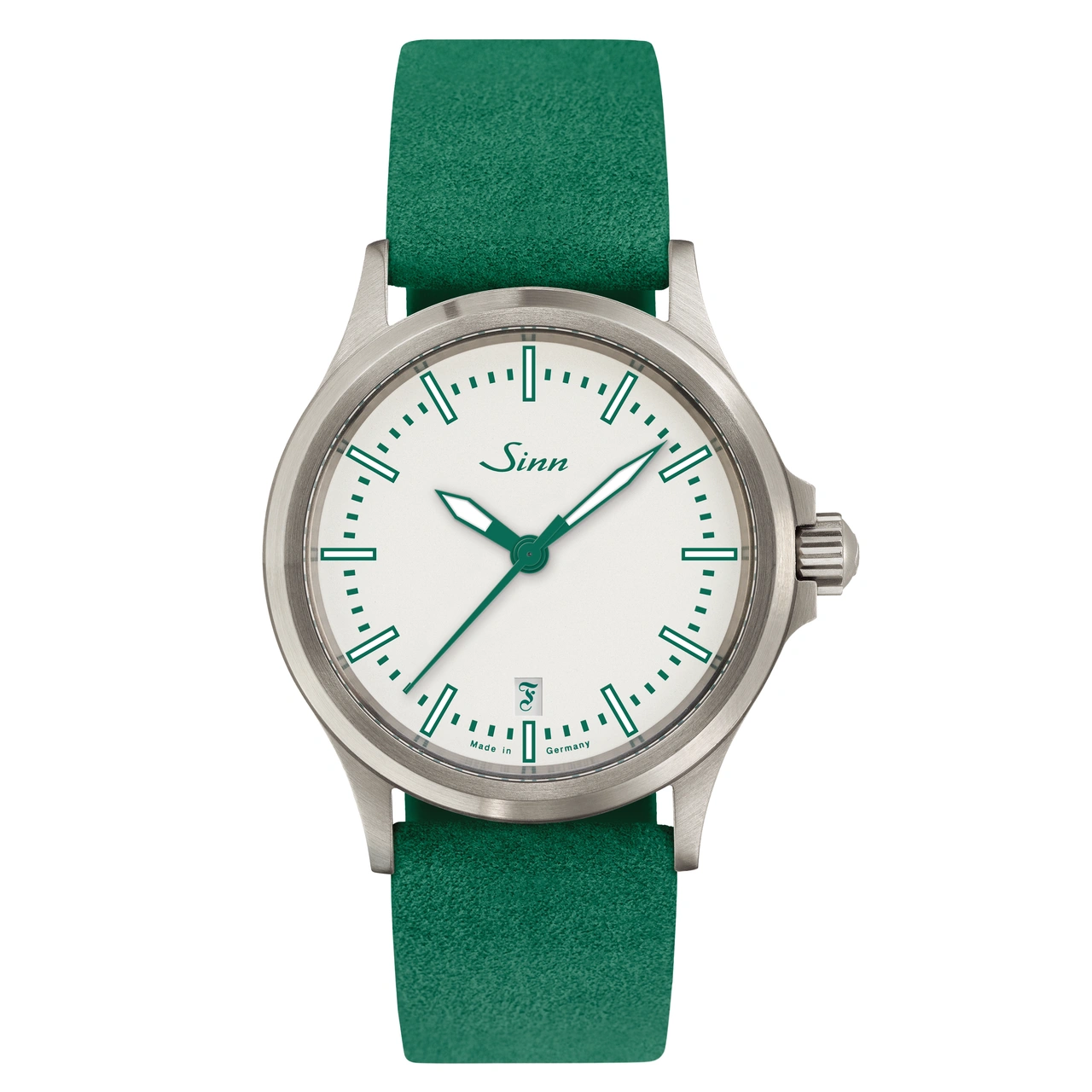
Created in collaboration with the Frankfurter Allgemeine Zeitung (F.A.Z.), the new 556 I F.A.Z. II G commemorates the 25th anniversary of the Frankfurter Allgemeine Sonntagszeitung (F.A.S.), the newspaper’s Sunday publication. Limited to just 100 individually numbered examples, the watch features a silver electroplated dial with green hands and indices, a modified date display and an engraved winding rotor. None of these changes fundamentally alters the character of the 556, but together they give this edition an identity that is quite distinct from the usual black-dial instrument watch.
A Partnership Rooted in Frankfurt
Watch collaborations have become increasingly common, although not all of them have a particularly convincing reason to exist. A familiar logo, an unusual dial colour and a limited production number can sometimes feel like little more than an exercise in creating another collectible variation. The relationship between Sinn Spezialuhren and the Frankfurter Allgemeine Zeitung has considerably more substance behind it.
Both organisations have longstanding connections to Frankfurt, and their successful partnership has already produced several special watch editions. Although operating in very different industries, they share an emphasis on precision, consistency and the importance of maintaining a recognisable identity. For a newspaper, credibility depends on the quality and reliability of its journalism. For a watchmaker such as Sinn, those same principles find expression in technical construction, performance and a commitment to functional design.
The 25th anniversary of the Frankfurter Allgemeine Sonntagszeitung provides a particularly appropriate occasion for another collaboration. A Sunday newspaper occupies an interesting position in the publishing world. While daily reporting is often concerned with delivering information quickly, the Sunday edition also provides an opportunity for reflection, longer-form journalism and a more considered examination of events. There is a pleasing parallel here with mechanical watchmaking, where the appreciation of time extends well beyond its immediate measurement.
Rather than creating an entirely new watch to celebrate the occasion, Sinn has returned to the 556, a model that expresses many of the qualities on which the brand has built its reputation. The result feels like a collaboration designed around shared principles rather than simply an opportunity to place two names on the same product.
A Silver Dial That Changes the Personality of the 556
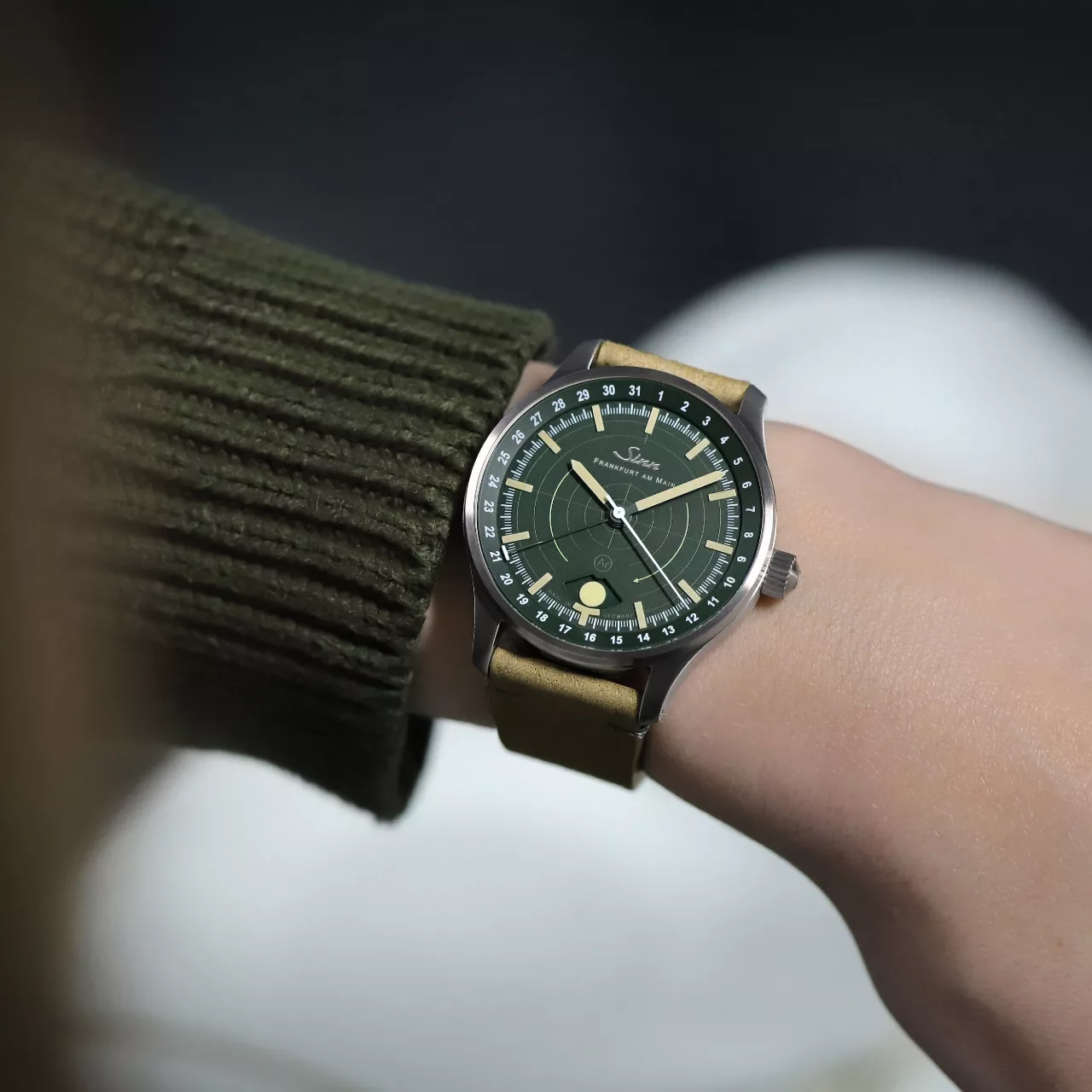
The most immediate departure from the standard Sinn 556 is the dial. Where many familiar versions of the model rely on the strong contrast of white markings against a black background, the 556 I F.A.Z. II G adopts a silver electroplated surface accompanied by green hour indices and hands.
It is a relatively modest adjustment on paper, but colour plays an important role in determining how a watch is perceived. The conventional black-dial 556 has a distinctly purposeful appearance, with its straightforward instrument-inspired layout and minimal ornamentation. The silver dial of this anniversary edition softens that character considerably. It gives the watch a more refined, slightly dressier presence without requiring Sinn to change the case architecture or introduce decorative details that would feel out of place.
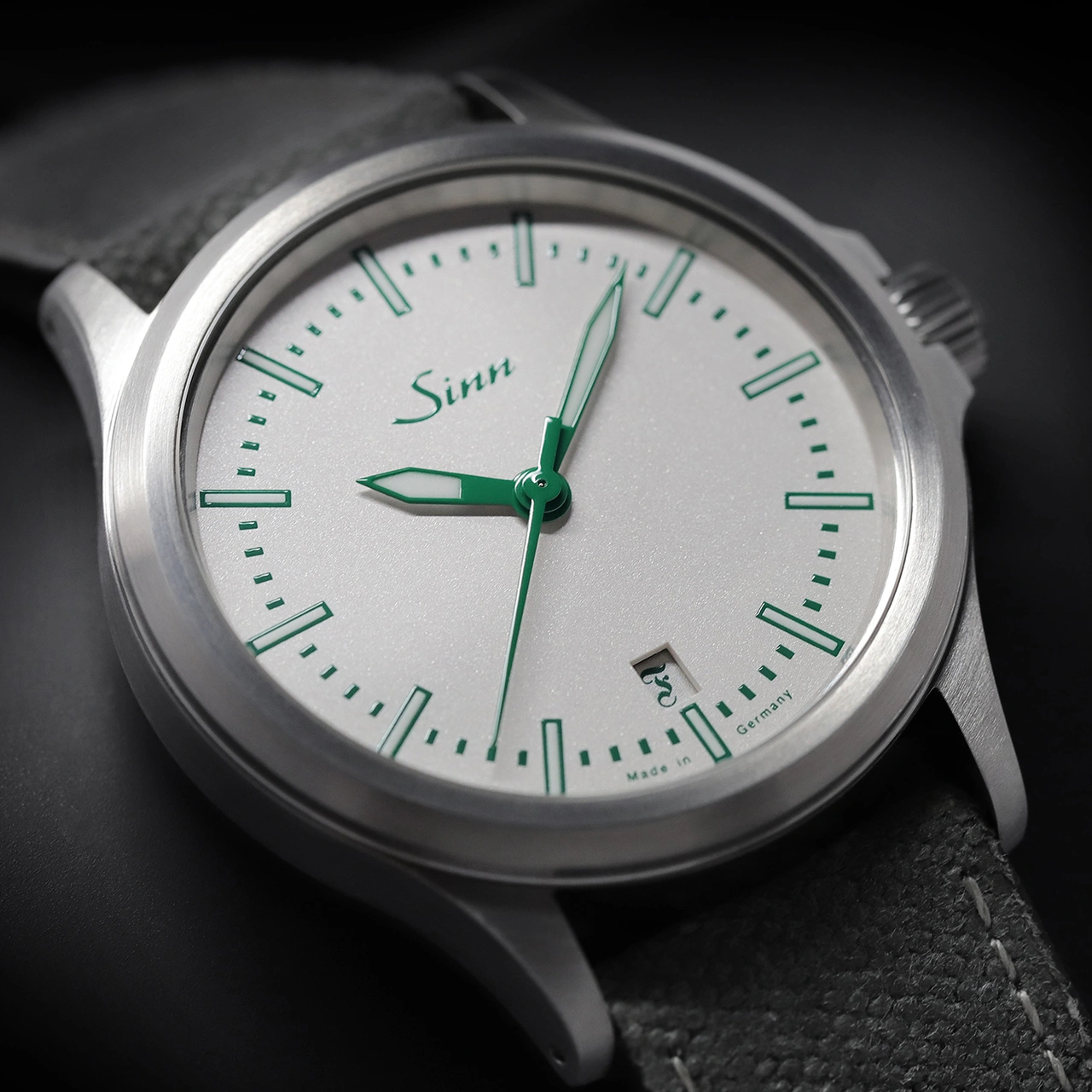
The green accents are particularly interesting. Green has become a popular colour in contemporary watchmaking, although it is usually expressed through a fully coloured dial. Sinn has approached the colour differently here, using it primarily for the hands and indices. Against the silver background, these green elements become an important part of the overall composition, providing visual interest while preserving the spare, carefully organised layout of the 556.
There is also a practical consideration to this combination. A silver dial with coloured markings creates a different relationship between light, contrast and readability than the stark black-and-white arrangement of the standard model. Much will depend on how the surfaces appear under changing lighting conditions. The double-sided anti-reflective treatment on the front sapphire crystal is therefore especially welcome, helping to minimise distracting reflections.
The hour indices and the hour and minute hands are also coated with luminescent material. This is an important detail because the unusual colour combination might otherwise risk moving the watch too far towards a purely decorative interpretation. Sinn has retained the practical qualities expected from the 556, allowing the new colours to provide character without abandoning the fundamental requirements of an instrument watch.
What makes the dial successful as a design concept is its restraint. There are no oversized anniversary graphics competing with the hands, no elaborate decorative patterns and no unnecessary additions to the familiar arrangement. The proportions and simplicity remain recognisably Sinn, even though the overall impression is markedly different.
The Smallest Detail May Be the Most Memorable
Perhaps the most charming feature of the Sinn 556 I F.A.Z. II G is also one of its least obvious. Sinn has modified the date display so that the numeral “1” is replaced by the letter “F” from the Frankfurter Allgemeine Zeitung.
For most of the month, the date display performs its ordinary function. However, when the first day of the month arrives, the traditional numeral gives way to the newspaper’s distinctive initial. It is a clever way to incorporate the partnership into the actual operation of the watch, rather than treating the collaboration as a decorative addition.
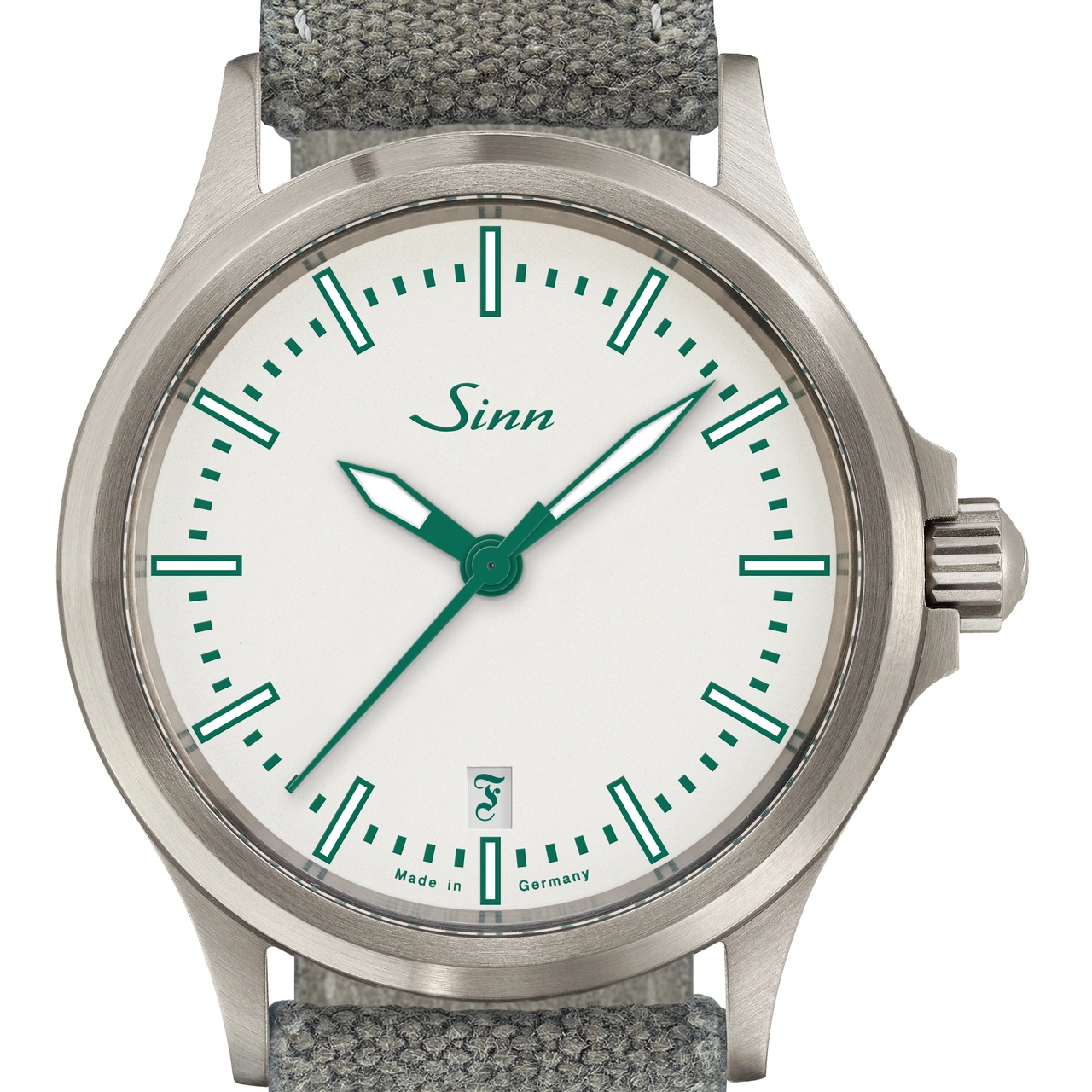
There is an appealing sense of discovery in such a detail. The date window is something that owners of an automatic watch will regularly interact with, particularly when adjusting the calendar after the watch has stopped. By making a small alteration to this familiar display, Sinn has introduced an element of personality that becomes part of the ownership experience.
The modification is also an example of effective design restraint. Many commemorative watches rely on prominent logos, text or anniversary emblems to communicate their significance. Here, the reference is contained within an existing complication and occupies no additional dial space. It is distinctive without being intrusive, and it arguably says more about the thought behind the collaboration than a much larger anniversary inscription would have achieved.
Although the date modification is hardly a major mechanical complication, it is precisely the kind of unusual detail that can make a limited-edition watch memorable. Collectors often appreciate these small variations because they establish a meaningful distinction from the regular production model without compromising the original design.
The Familiar 38.5 mm Case Remains a Strength
Beneath the revised dial, the Sinn 556 I F.A.Z. II G retains the practical case construction that has made the collection a favourite among enthusiasts. Manufactured from satinised stainless steel, the case measures 38.5 mm in diameter and 11 mm thick, with a 20 mm lug width.
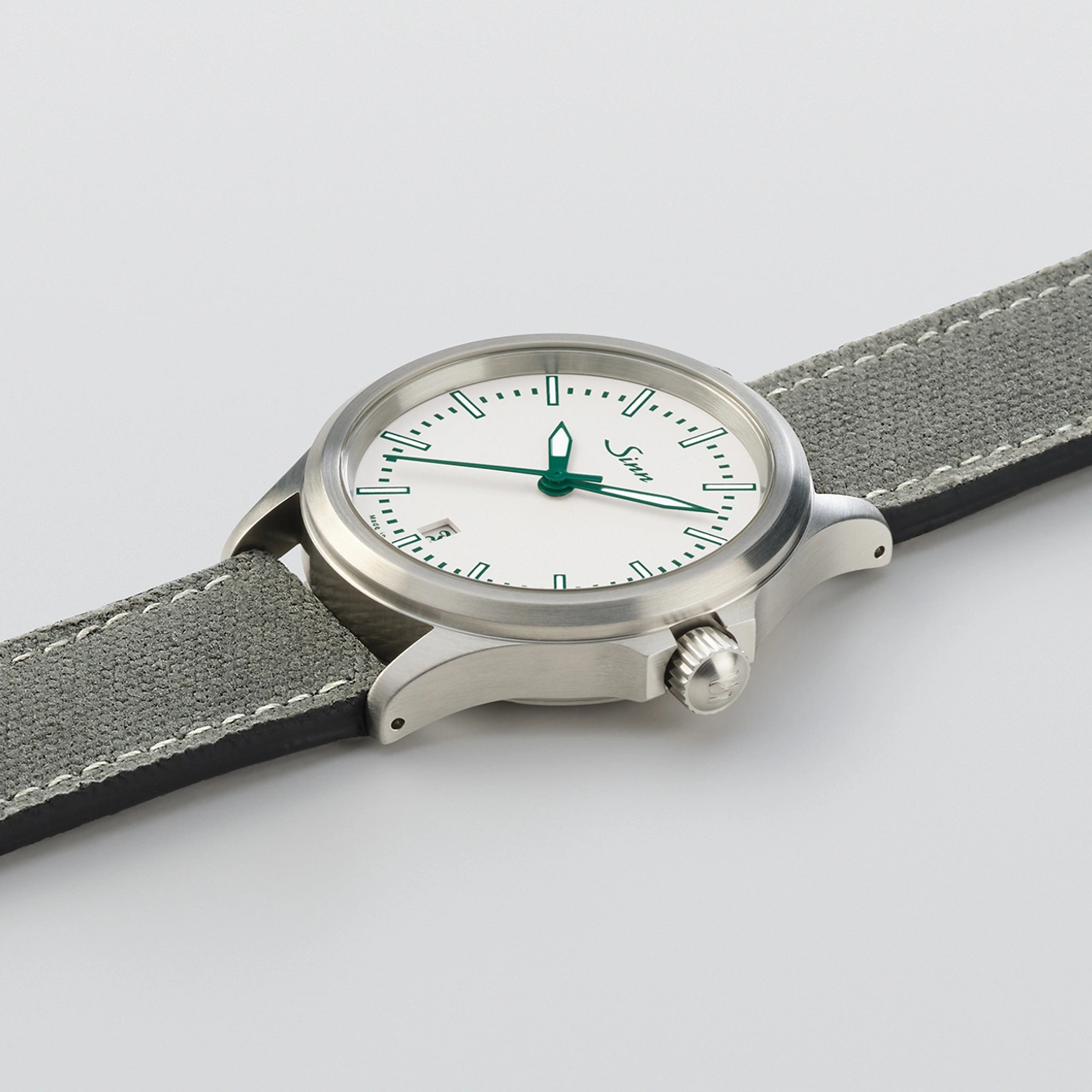
These dimensions strike an appealing balance between a traditional compact wristwatch and the more substantial proportions commonly associated with contemporary sports models. At 38.5 mm, the case has enough presence to accommodate a clear, spacious dial without becoming unnecessarily large. The relatively modest thickness also helps maintain a versatile profile, allowing the watch to sit comfortably in settings where a bulkier instrument watch might appear out of place.
The satinised finish is another important part of the design. Rather than relying on highly polished surfaces to create visual impact, Sinn has maintained a subdued appearance that allows the dial to provide the primary point of interest. It also reinforces the utilitarian origins of the watch and gives the steel case a pleasingly technical character.
One of the more impressive aspects of the 556 series is the level of water resistance achieved without an excessively thick case. The 556 I F.A.Z. II G is water-resistant and pressure-resistant to 20 bar, equivalent to a nominal depth rating of 200 metres. It also meets the technical requirements of DIN 8310 and is low-pressure resistant.
This provides considerable reassurance for ordinary daily activities and is a reminder that the anniversary edition has not sacrificed technical capability for visual refinement. The screw-down crown and screw-fastened case back contribute to this robust construction, while the scratch-resistant sapphire crystal provides protection for the dial.
For a watch with a relatively elegant silver and green appearance, these specifications are quite substantial. This contrast between restrained styling and practical engineering is one of the qualities that continues to make Sinn an interesting alternative to more conventional luxury watch brands.
Inside the Case: The SW 200-1 Automatic Movement
The movement selected for the 556 I F.A.Z. II G is the SW 200-1, a Swiss-made automatic calibre that has become a familiar presence in modern mechanical watchmaking. It features 26 bearing jewels, operates at 28,800 vibrations per hour, or 4 Hz, and includes a stop-seconds function for precise time setting.
The SW 200-1 is not an exotic calibre, nor does it attempt to compete with the highly decorated manufacture movements found in the upper reaches of independent watchmaking. Its appeal is more practical. This is a well-established mechanical architecture with a strong reputation as a dependable everyday movement, supported by the availability of parts and servicing knowledge.
That distinction matters when assessing a watch such as this. The Sinn 556 was never intended to be a showcase for complicated movement finishing or elaborate horological inventions. Its underlying philosophy is to provide a capable, well-constructed mechanical watch that can be worn frequently and maintained over the long term. In that context, the SW 200-1 remains a sensible choice.
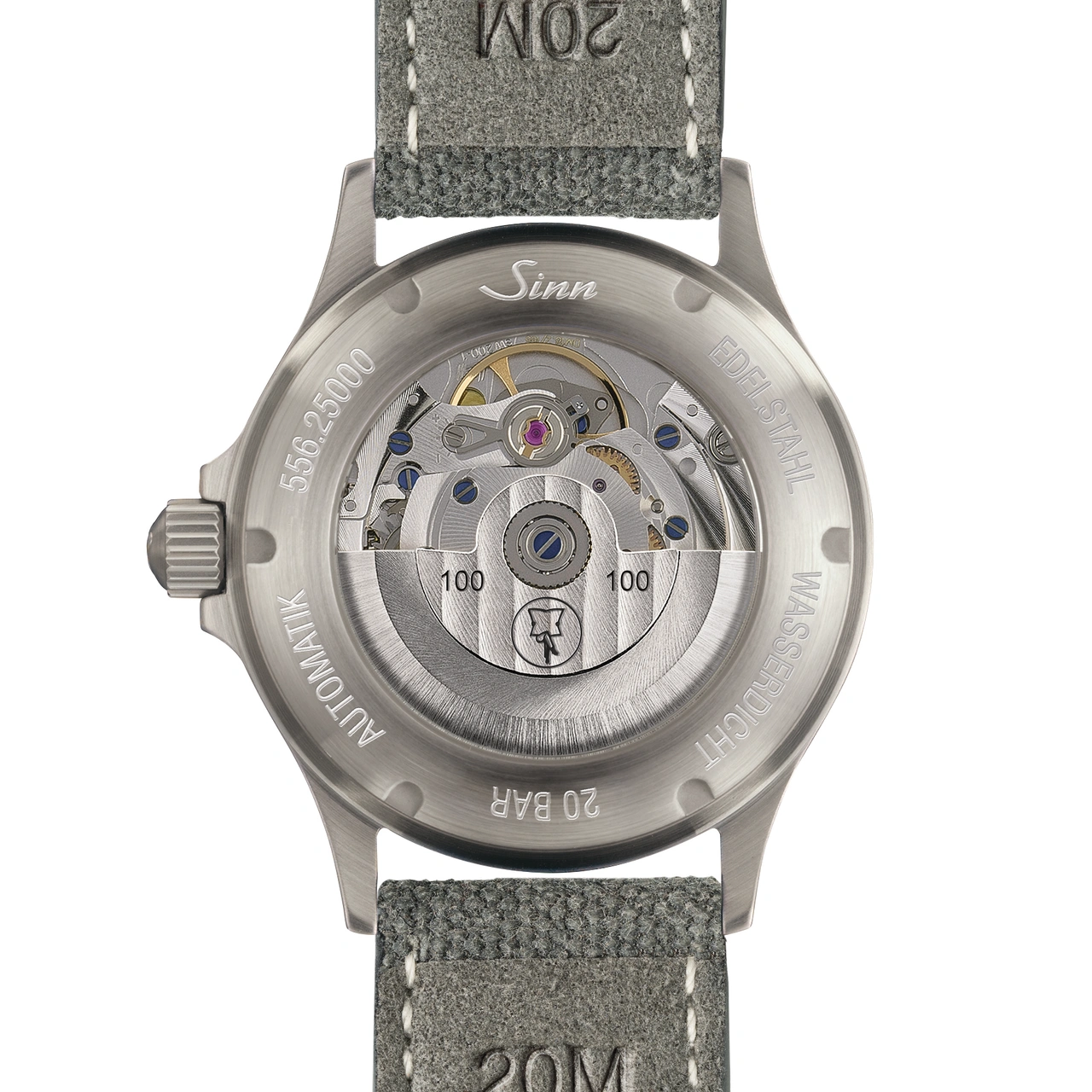
The movement also offers a stop-seconds function, allowing the seconds hand to be halted when the crown is pulled into the time-setting position. For enthusiasts who appreciate accurate synchronisation, it is a useful feature that complements the otherwise uncomplicated hours, minutes, seconds and date functions.
Another important specification is the movement’s anti-magnetic protection in accordance with DIN 8309. Magnetic interference remains a relevant consideration for mechanical watches, particularly in environments filled with everyday electronic equipment. Sinn’s adherence to this standard fits neatly with the brand’s wider commitment to functionality.
From a collector’s perspective, the SW 200-1 may be the least unusual part of the anniversary edition, and that is not necessarily a criticism. The interest here lies primarily in the design, the connection to the F.A.Z. and the limited production, while the movement provides a reliable mechanical foundation beneath those more individual elements.
A Case Back That Tells the Other Half of the Story
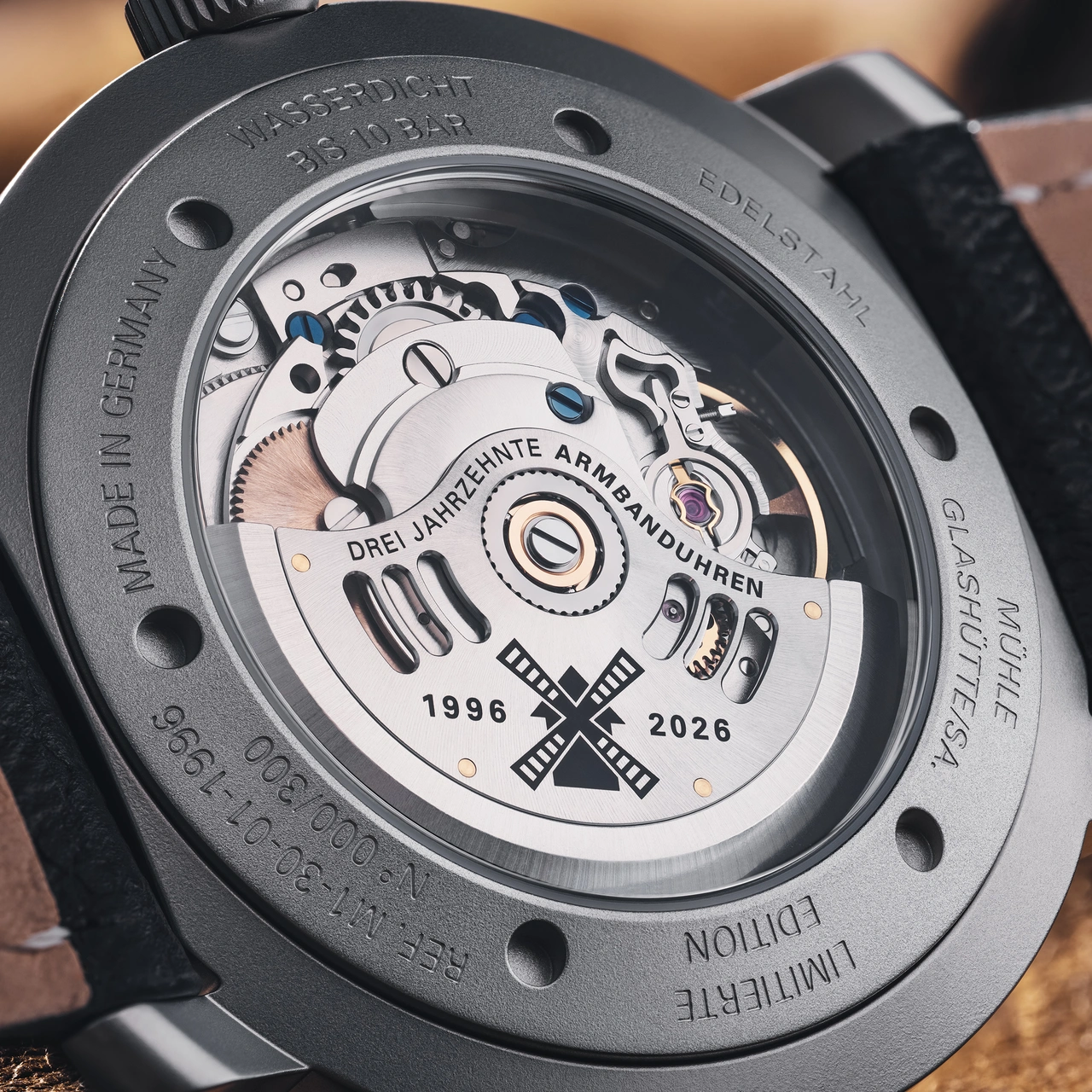
The reverse of the Sinn 556 I F.A.Z. II G provides another opportunity to appreciate the collaboration. Through the transparent sapphire crystal case back, owners can view the automatic movement and its winding rotor, which carries a special engraving of the F.A.Z.’s famous “Kluger Kopf” emblem.
Translated as “Bright Mind”, the emblem is associated with the newspaper’s longstanding advertising campaign, which has become an enduring part of its visual identity. The campaign’s memorable imagery has frequently featured notable individuals concealed behind an open newspaper, inviting the viewer to consider the person and intellect behind the publication.
Its inclusion on the winding rotor is a fitting choice. Rather than placing the emblem prominently on the dial, Sinn has positioned it where it can be appreciated by the owner when the watch is removed from the wrist. It introduces another layer of detail without interrupting the functional appearance of the time display.
The rotor engraving also gives the automatic movement a more individual identity. While the SW 200-1 itself remains a familiar calibre, the commemorative rotor links it directly to this particular release. There is something appealing about a mechanical component becoming part of the storytelling, especially when the modification is visible through the transparent case back.
Each watch also carries its individual limited-edition number, identifying it as one of the 100 examples produced. For collectors, this is another distinguishing feature, although the more compelling aspect is the way the individual elements work together. The date modification, dial colours, rotor engraving and anniversary connection form a coherent theme rather than appearing as unrelated special-edition embellishments.
Does the Limited Edition Offer Something Different?
The question with any commemorative watch is whether it provides enough individuality to justify choosing it over the standard model. In the case of the 556 I F.A.Z. II G, the answer depends largely on what the prospective owner values in the original Sinn 556.
Those drawn primarily to the collection’s stark, instrument-like appearance may still prefer the familiar black dial. The bold contrast and extremely direct presentation of the standard model remain difficult to improve upon from a purely functional perspective. The silver and green anniversary edition is not necessarily intended to replace that formula, and it would be a mistake to judge it solely by whether it performs the same visual role.
Instead, this edition brings a different personality to an established watch. Its lighter dial, restrained use of green and unusual date display create an appealing combination of technical simplicity and decorative individuality. The watch retains the robust case, sapphire crystals and reliable automatic movement, but its overall aesthetic moves towards a more refined interpretation of the original design.
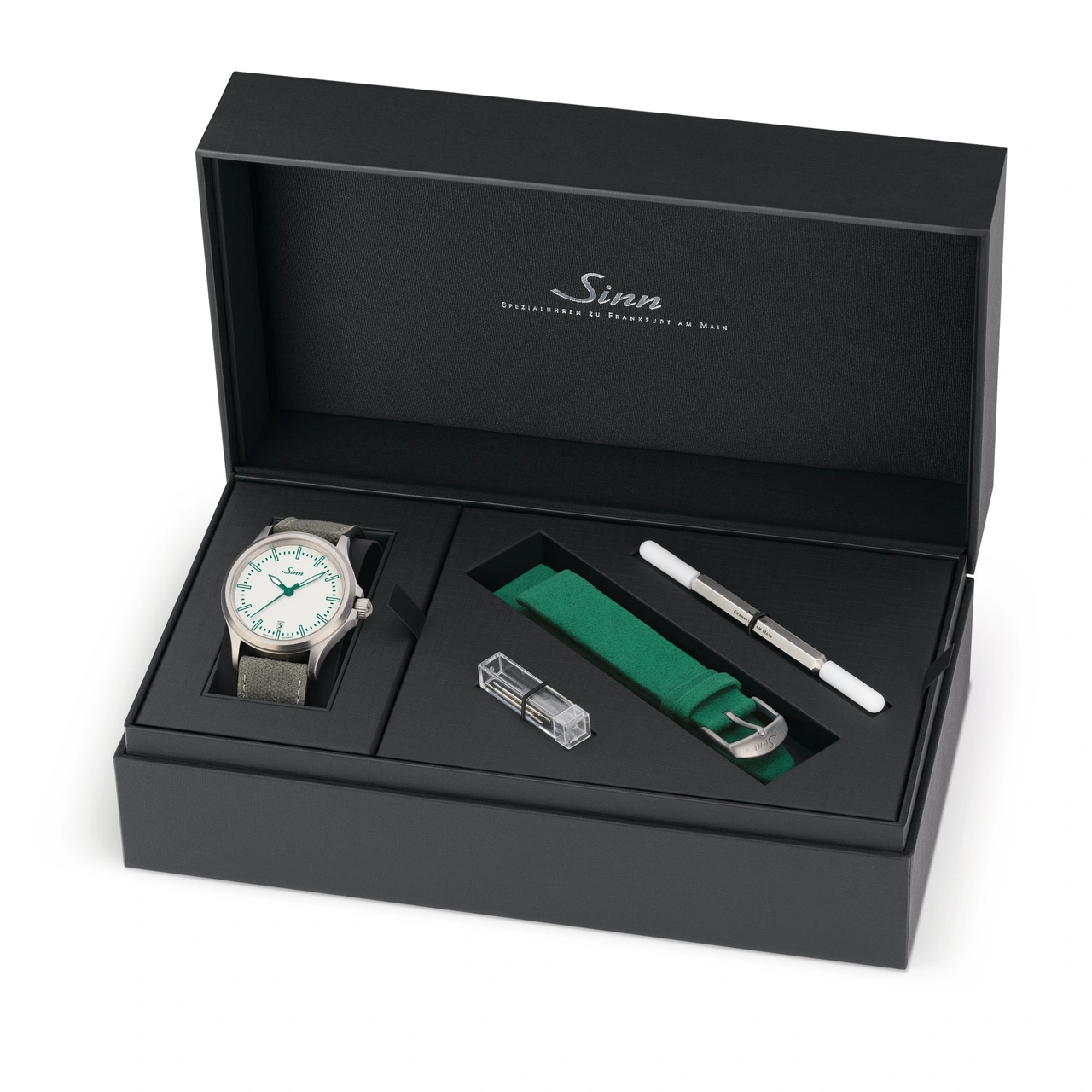
The limitation to 100 examples adds another dimension, particularly for collectors who appreciate unusual Sinn references. However, scarcity alone does not guarantee long-term collectability or future value. The stronger argument for this edition is that its distinctive features have a clear reason for existing. They relate directly to the anniversary and the two institutions involved, giving the watch a story that extends beyond its production number.
It is also a reminder that independent-minded watchmaking does not always require mechanical extravagance. Sometimes an interesting design decision, a clever modification to an existing component or a well-judged collaboration can be enough to produce something genuinely memorable.
Final Thoughts: An Anniversary Edition With Its Own Identity
The Sinn 556 I F.A.Z. II G succeeds as an interesting special edition because it understands what makes the original watch appealing. The 556’s clear proportions, practical engineering and functional simplicity remain intact, while the silver and green dial gives the design an identity that is immediately recognisable yet refreshingly different.
Its most engaging features are not especially complicated. The letter “F” within the date display is a wonderfully understated reference to the F.A.Z., while the engraved “Kluger Kopf” rotor provides a further connection to the newspaper’s history. Together, these details give the watch a genuine sense of occasion without overwhelming the restrained design language that defines Sinn.
The 38.5 mm stainless steel case, 200-metre water resistance and SW 200-1 automatic movement ensure that this is still a watch intended for regular use, not merely an anniversary object destined to remain in a presentation box. That is an important distinction, especially for enthusiasts who value the practical side of mechanical watch ownership.
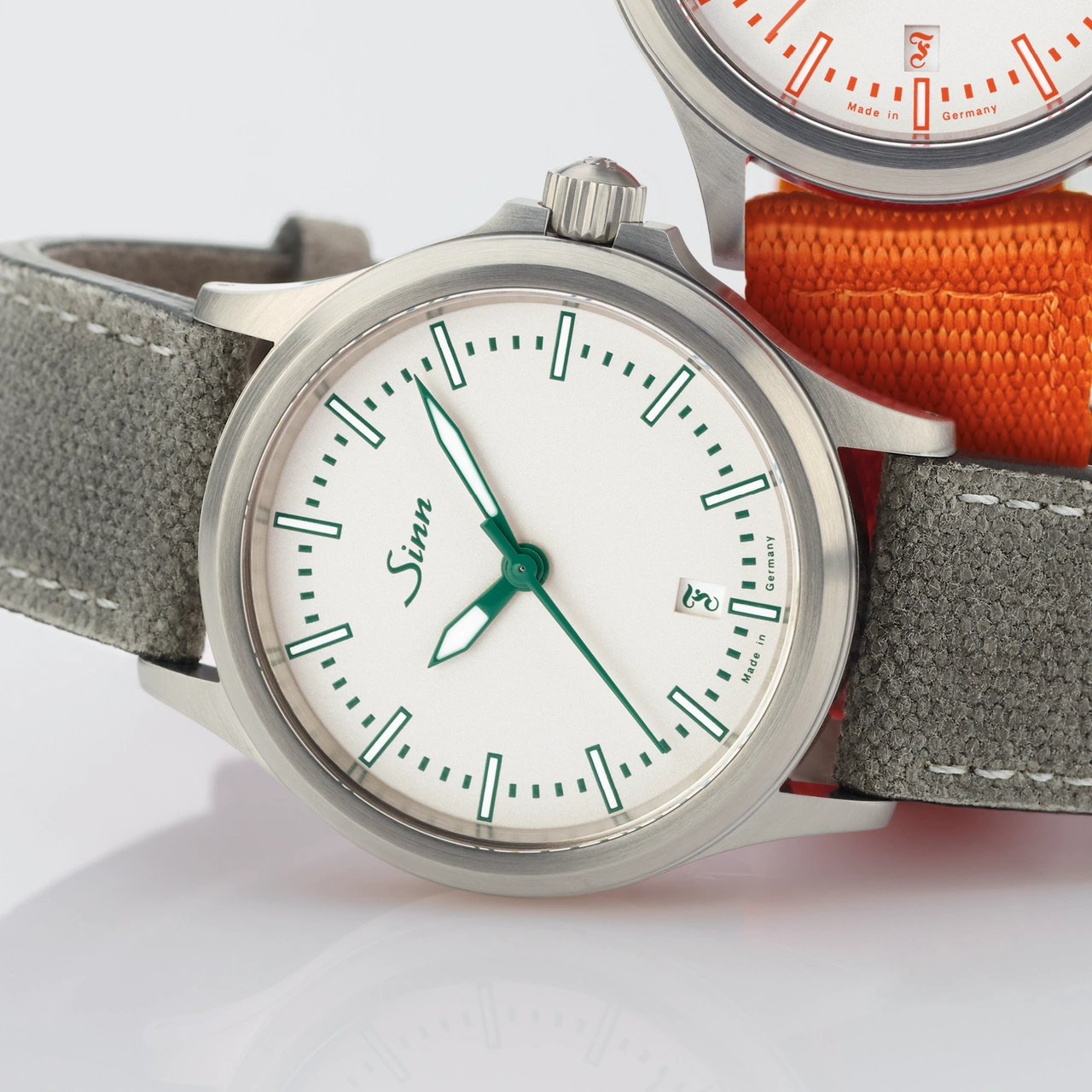
Limited to just 100 individually numbered examples, the Sinn 556 I F.A.Z. II G will naturally appeal to collectors with an interest in Sinn’s special editions and Frankfurt’s watchmaking heritage. Yet its wider attraction is perhaps simpler. It demonstrates how an established and carefully resolved design can take on an entirely different personality through a handful of meaningful changes.
In a watch industry where limited editions can sometimes feel predictable, the 556 I F.A.Z. II G offers an appealing alternative. It is thoughtful rather than extravagant, distinctive rather than unconventional for its own sake, and unmistakably connected to the Sinn philosophy. For enthusiasts who appreciate both the technical and cultural stories behind independent-minded German watchmaking, that combination makes this anniversary edition particularly interesting.