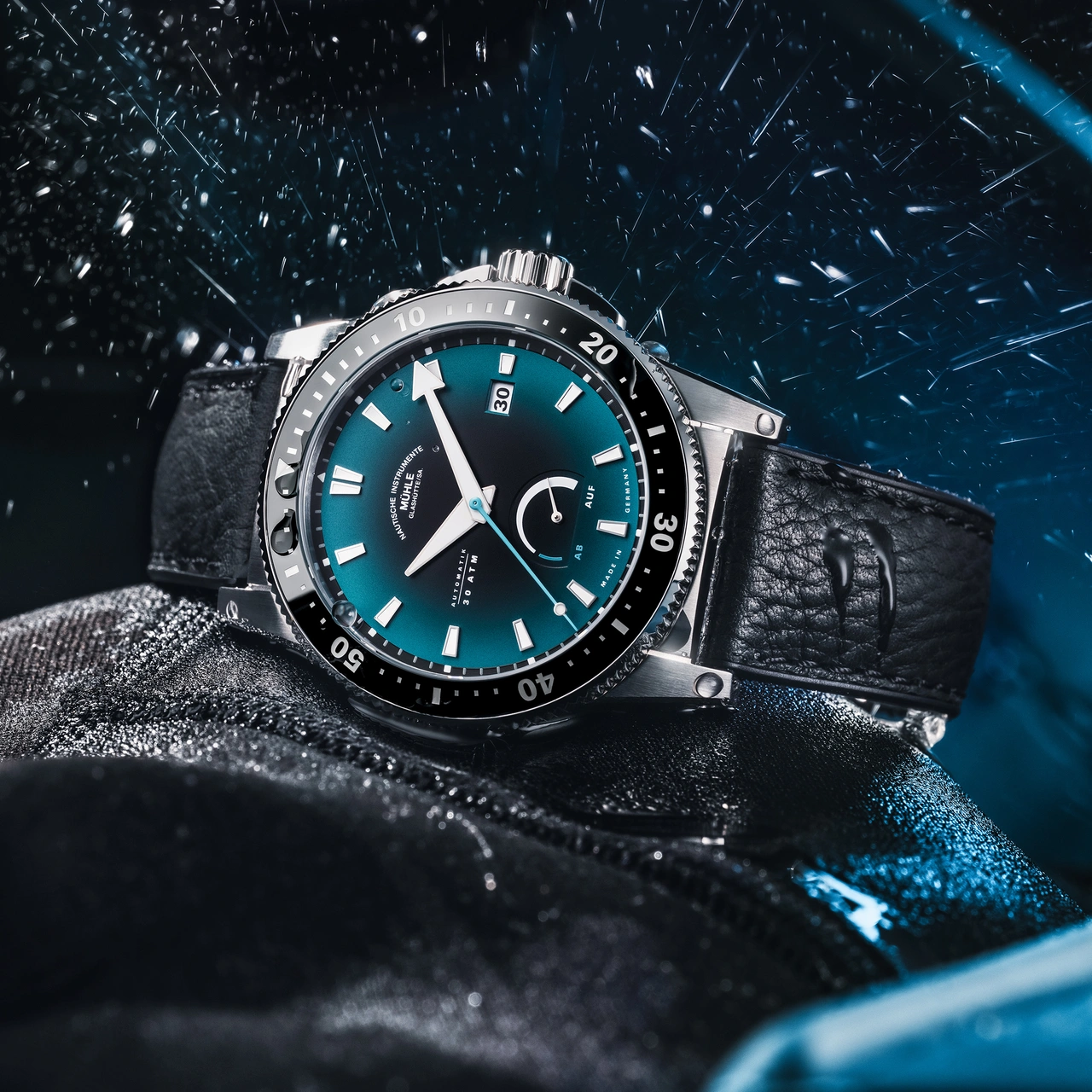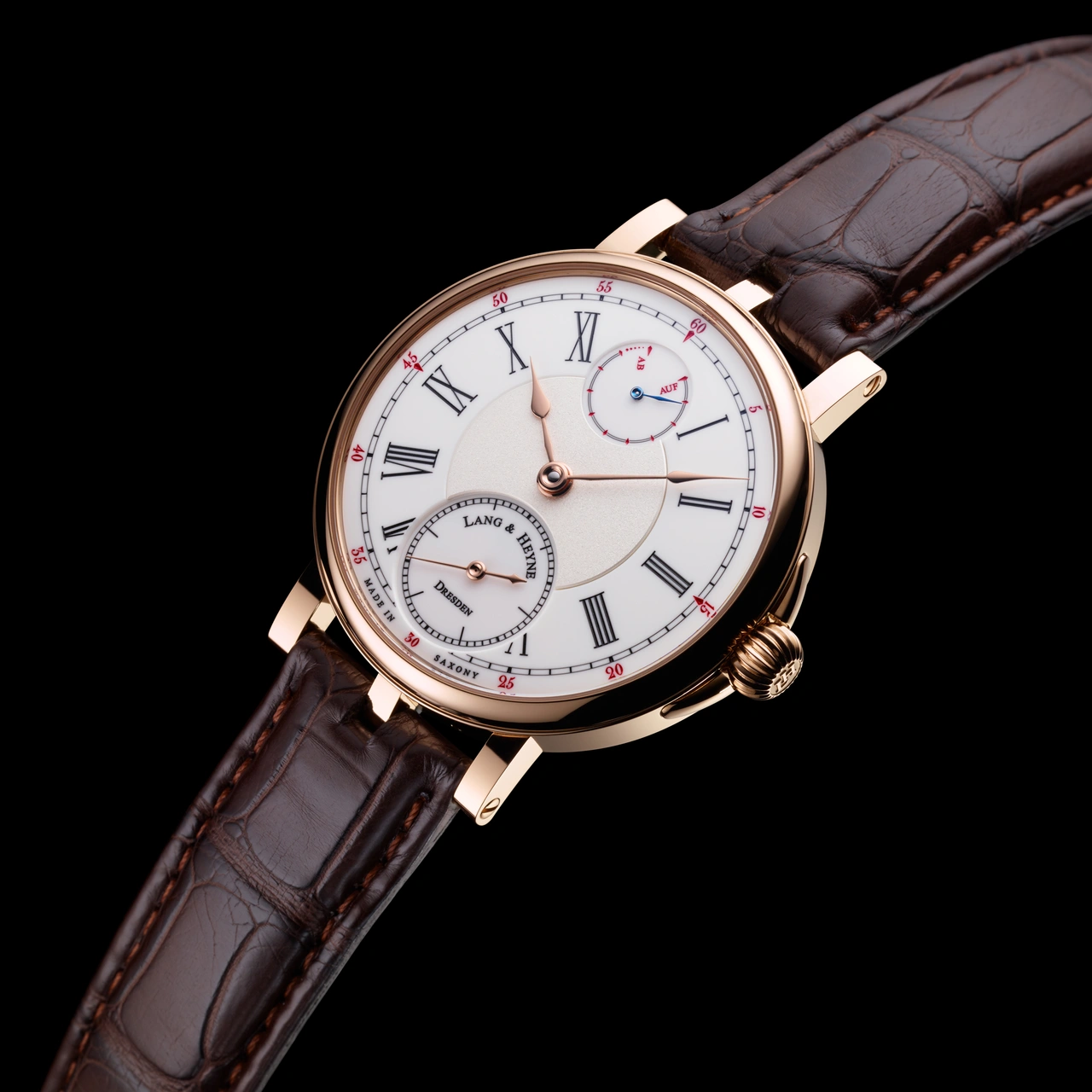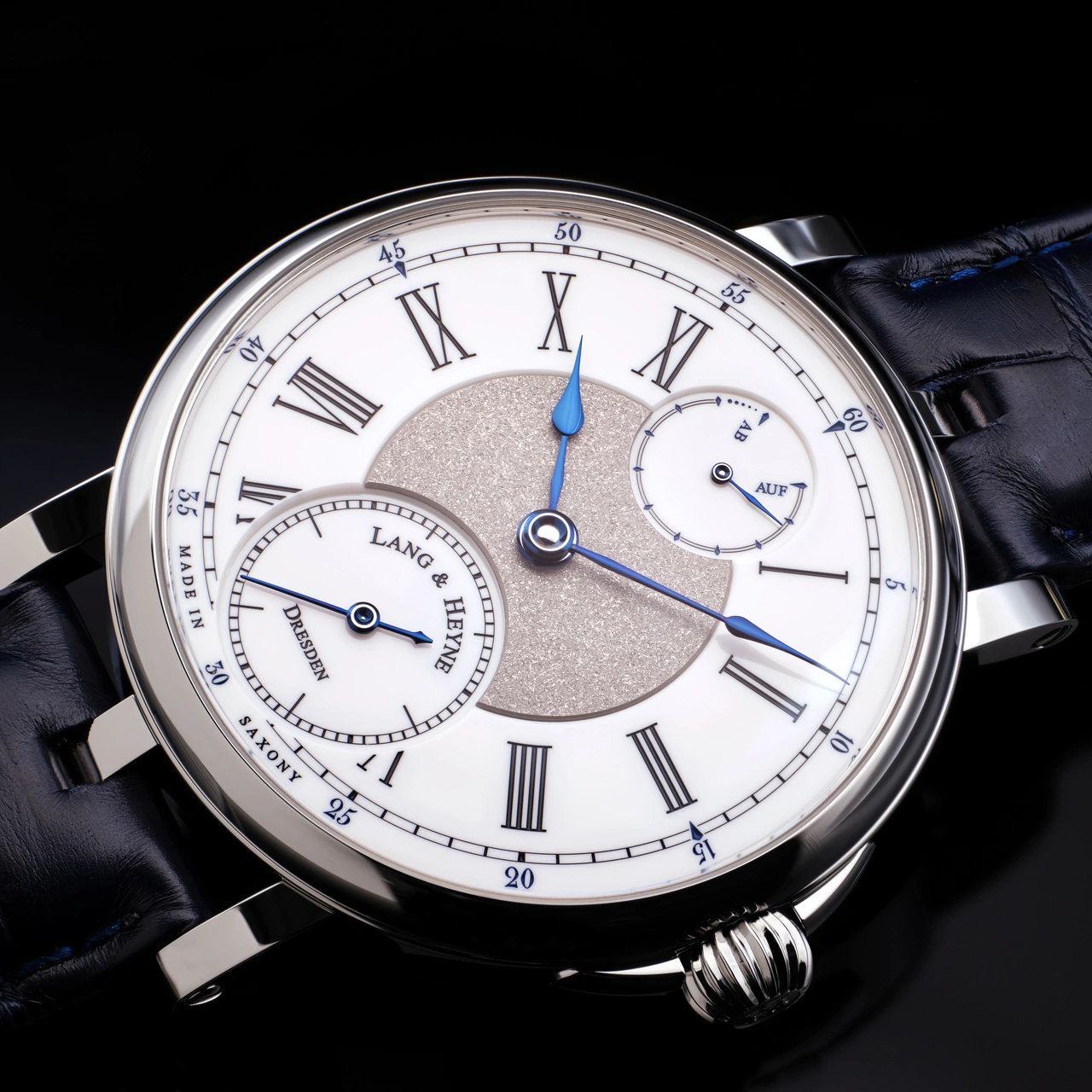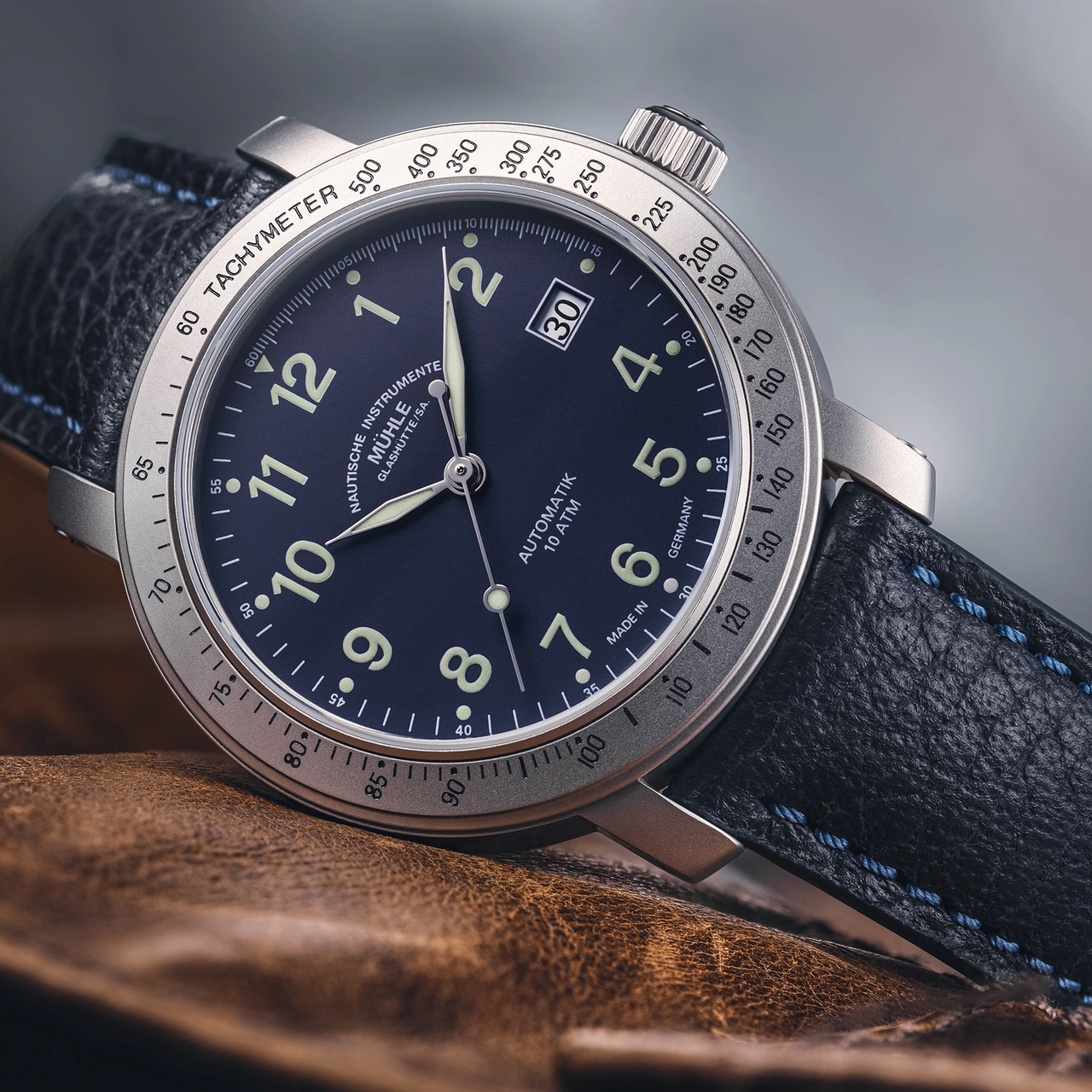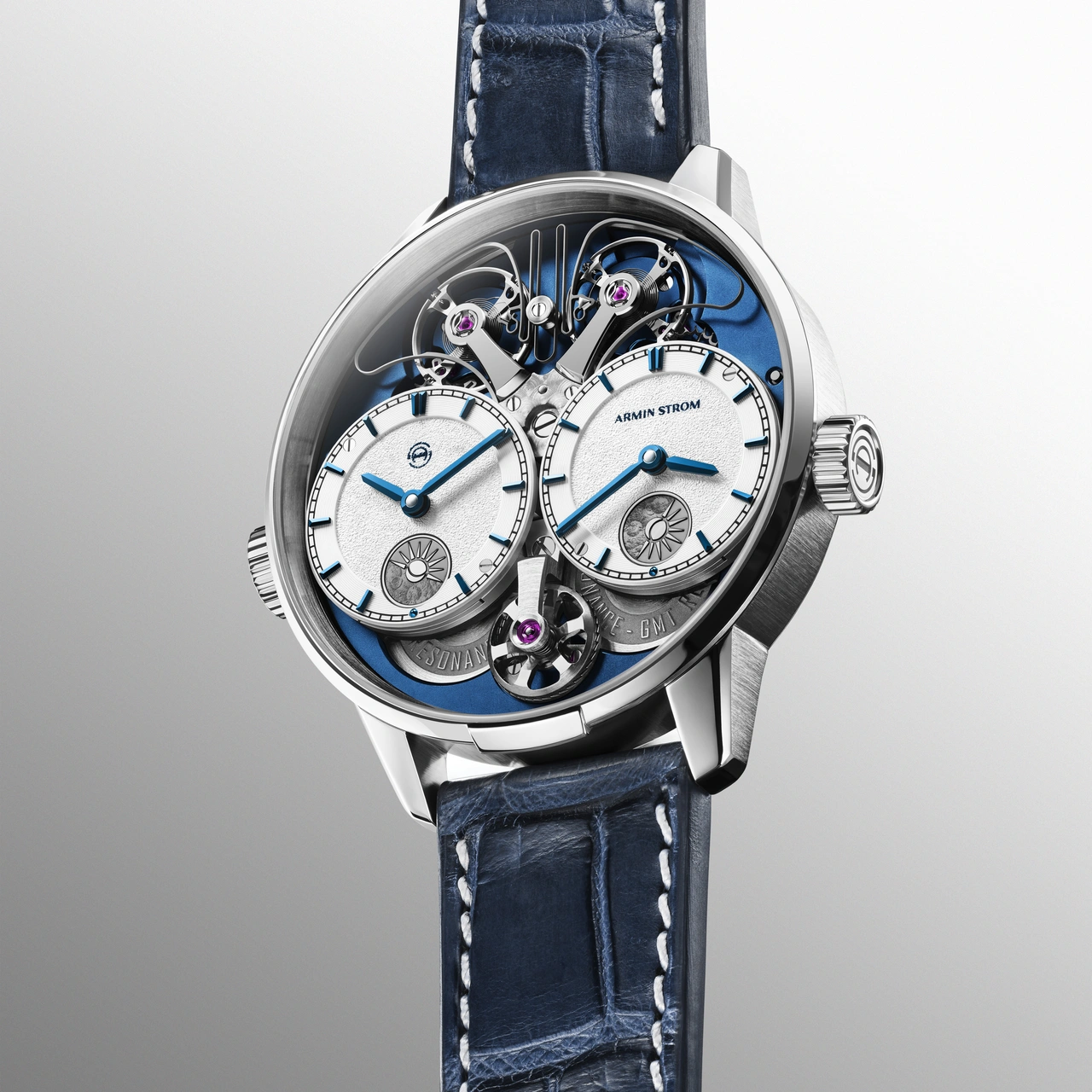
 Not every watch needs to look as though it has arrived from the future. There is a quiet pleasure in a watch that recalls a gentler visual language, where proportions are considered, colours are restrained, and each detail has a reason for being there. Retro flair, when handled well, is not simply nostalgia. It is a way of reminding us that good design often lasts because it was never trying too hard in the first place.
At Define Watches, we often find that these pieces create a different kind of pause. They are not necessarily the loudest watches in the room, nor the most technically aggressive, but they invite a longer look. A smaller case, a clean dial, a leather strap with the right tone, or a fluted bezel can shift the whole mood of a watch. It becomes less about statement and more about character.
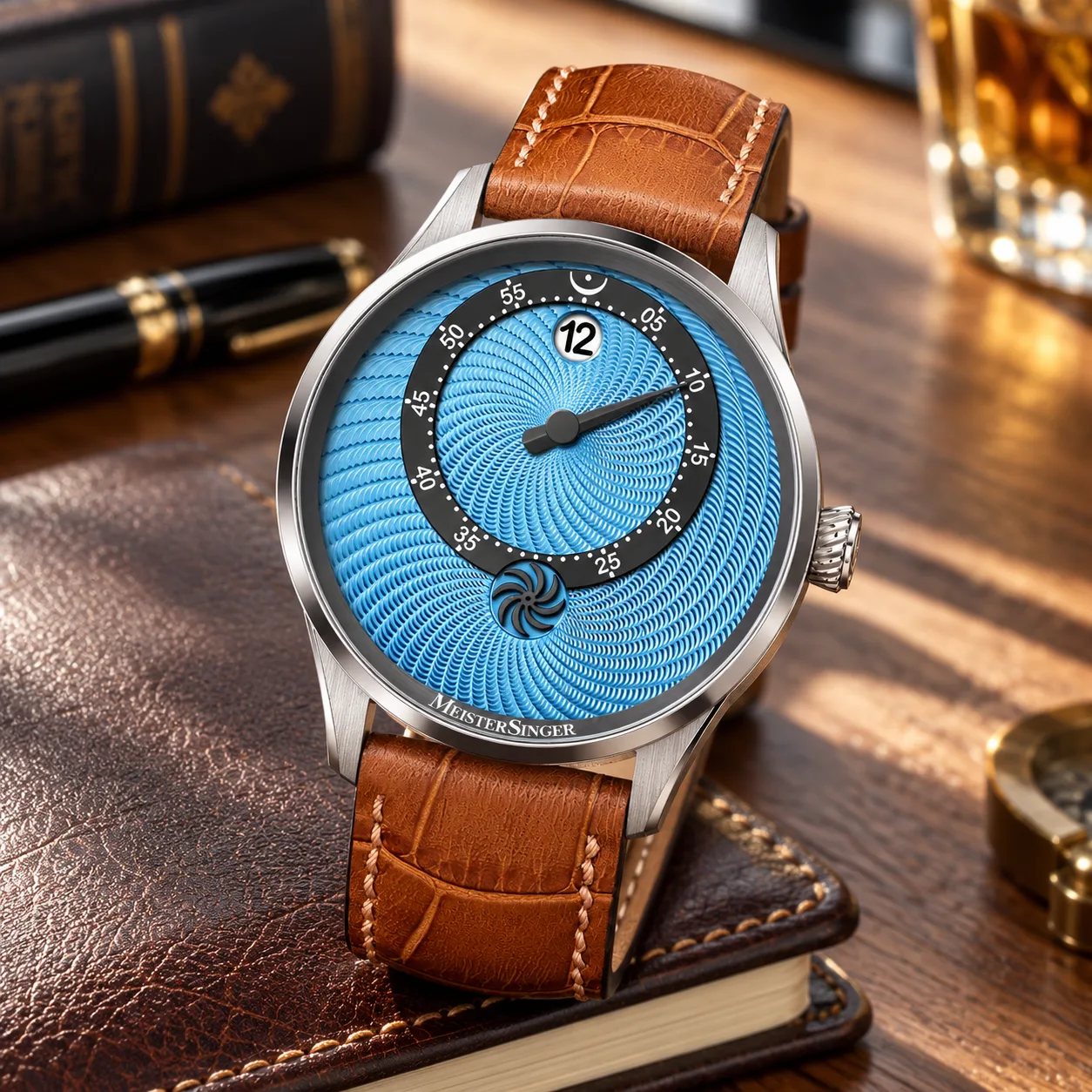
Much of this charm begins with proportion. Many retro-inspired watches sit comfortably under 44mm, and often well below that, which gives them a natural ease on the wrist. Models such as the Hentschel H2 Klassik, Damasko DF10 Black & White, Damasko DK36/2 Old Radium, MeisterSinger Neo, and Tutima Grand Flieger show how a watch can have presence without relying on size alone. Their dials tend to favour clarity, balance, and small design cues that reward attention rather than demanding it.
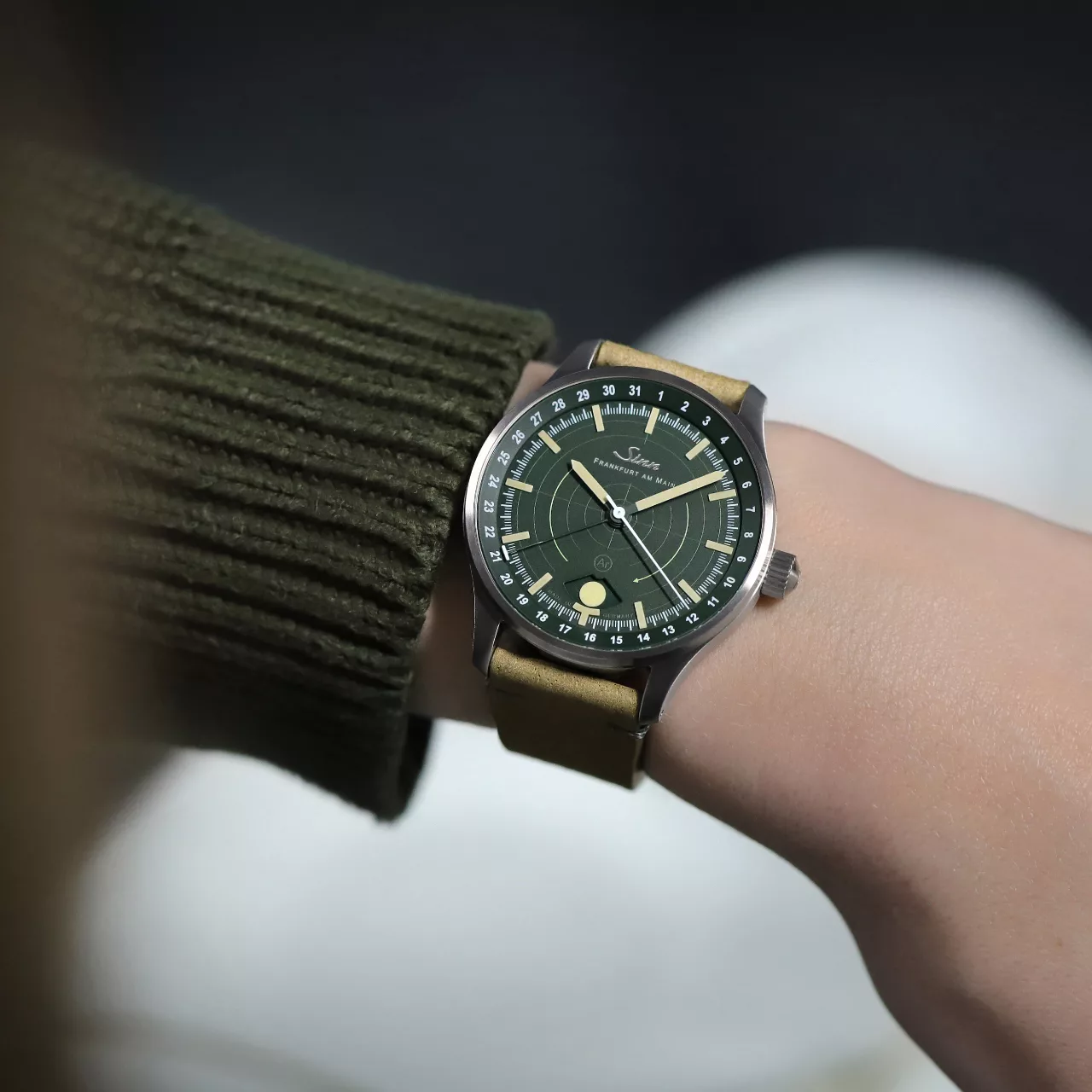
That restraint does not mean these watches are plain. A warm lume tone, a roulette date display, a compact chronograph layout, or a traditional pilot-style handset can bring personality without clutter. The Habring² Erwin Roulette is a good example of how a modest concept can feel playful and mechanically interesting at the same time. Sinn’s more traditional instrument-style watches also show how direct, practical design can carry a certain period character without becoming costume-like.
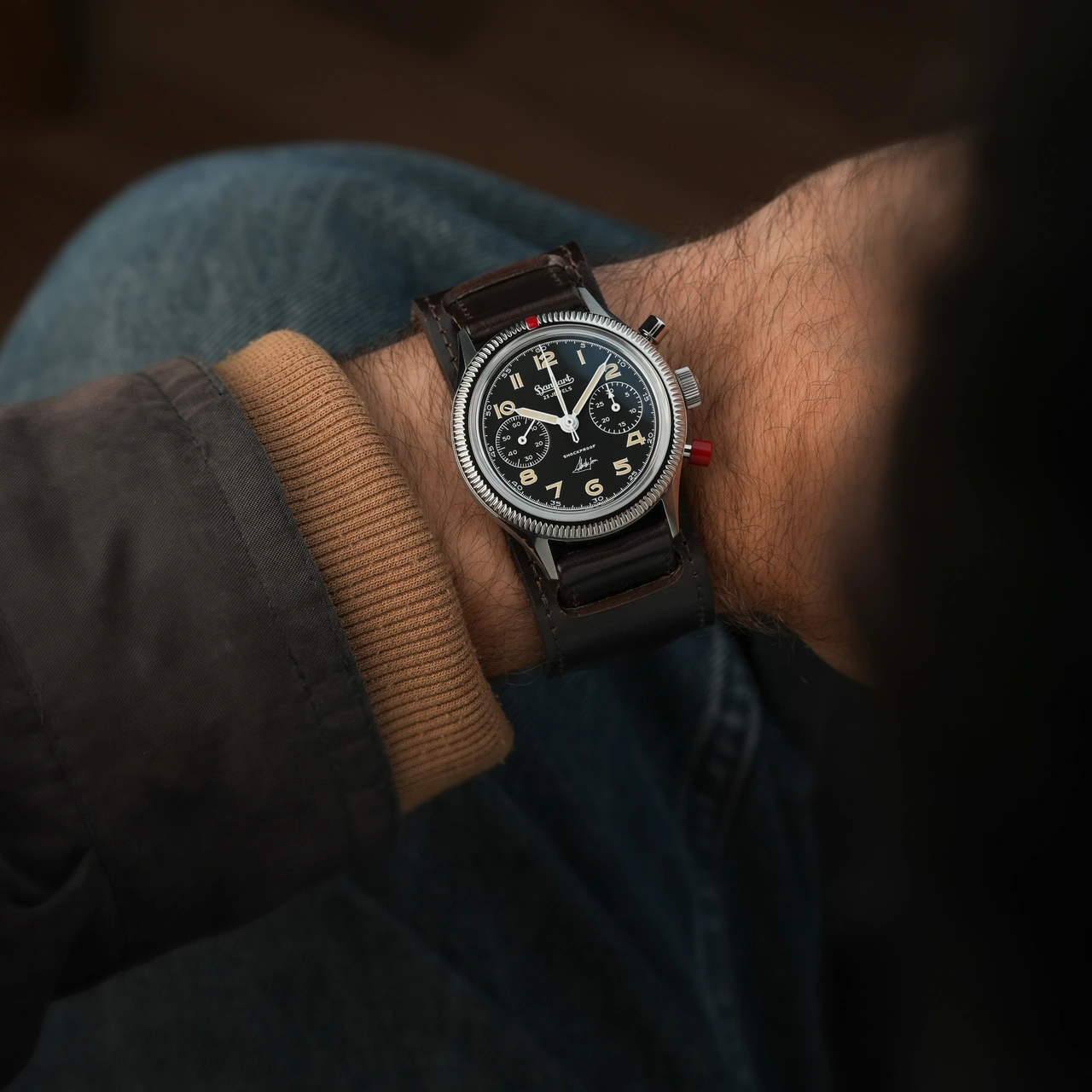
Straps and bezels play their part too. A classic leather band can soften a tool watch, while a fluted bezel can bring a dressier rhythm to an otherwise functional design. These are not just decorative choices, as they affect how the watch feels in daily use and how the eye reads the case. Retro design often works best when each surface, line, and material has enough breathing room to be noticed.
The movement inside is just as important to this feeling. Manual-wind watches, three-hand layouts, and traditional chronographs create a more direct relationship between owner and mechanism. Winding a watch each morning is a small ritual, but it changes the way we think about the object on the wrist. Pieces from Hanhart, Dornblüth & Sohn, Alexander Shorokhoff, and Moritz Grossmann remind us that mechanical watchmaking is not only about accuracy, but about touch, sound, tension, and serviceability.
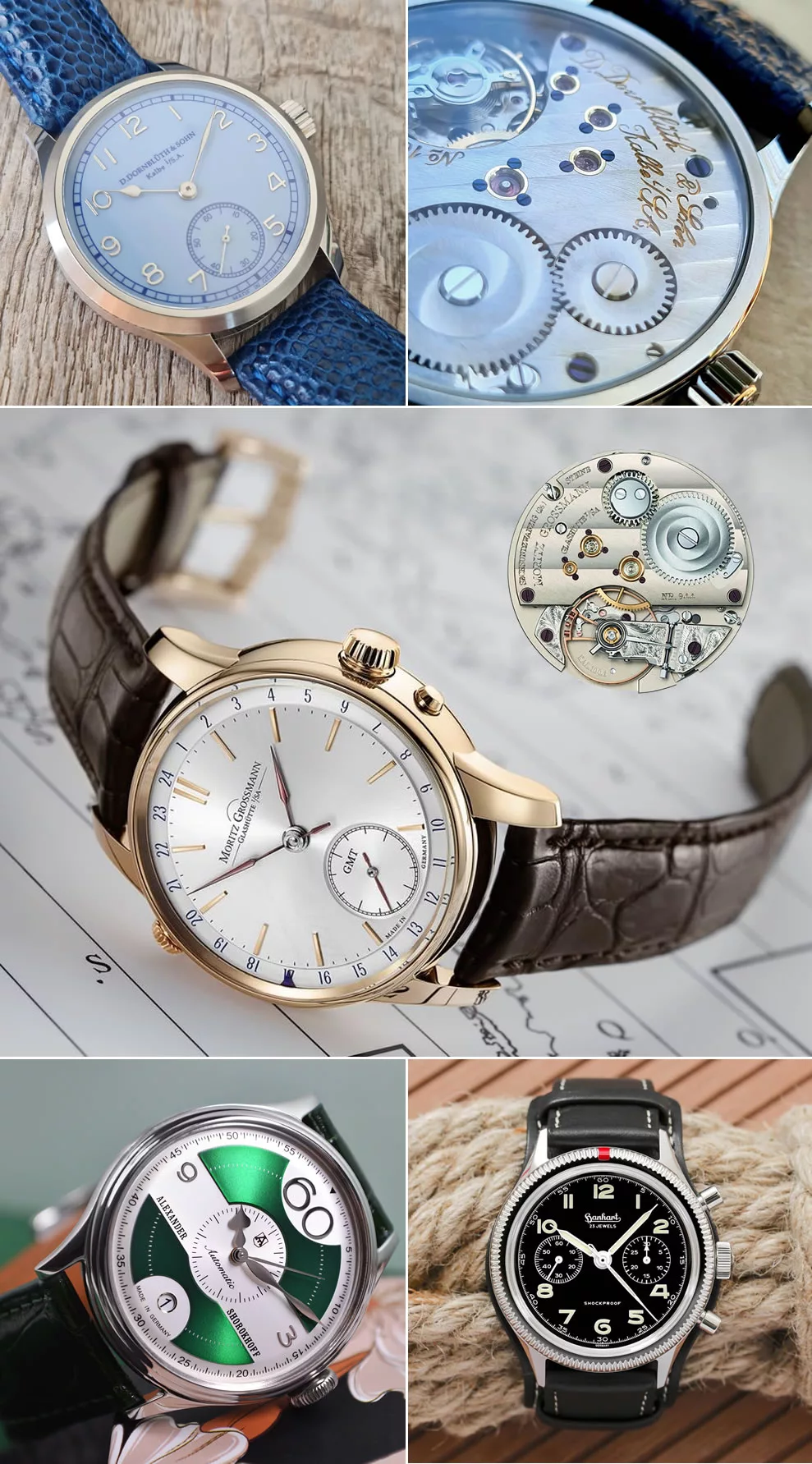 This is where older ideas still matter. Movements designed to be repaired, adjusted, and understood by skilled watchmakers carry a different philosophy from disposable precision. A hand-wound chronograph or a finely finished three-quarter plate movement has an honesty to it, especially when its architecture can be seen through the case back. The appeal is not only that the watch works, but that it can be read as a piece of mechanical thought.
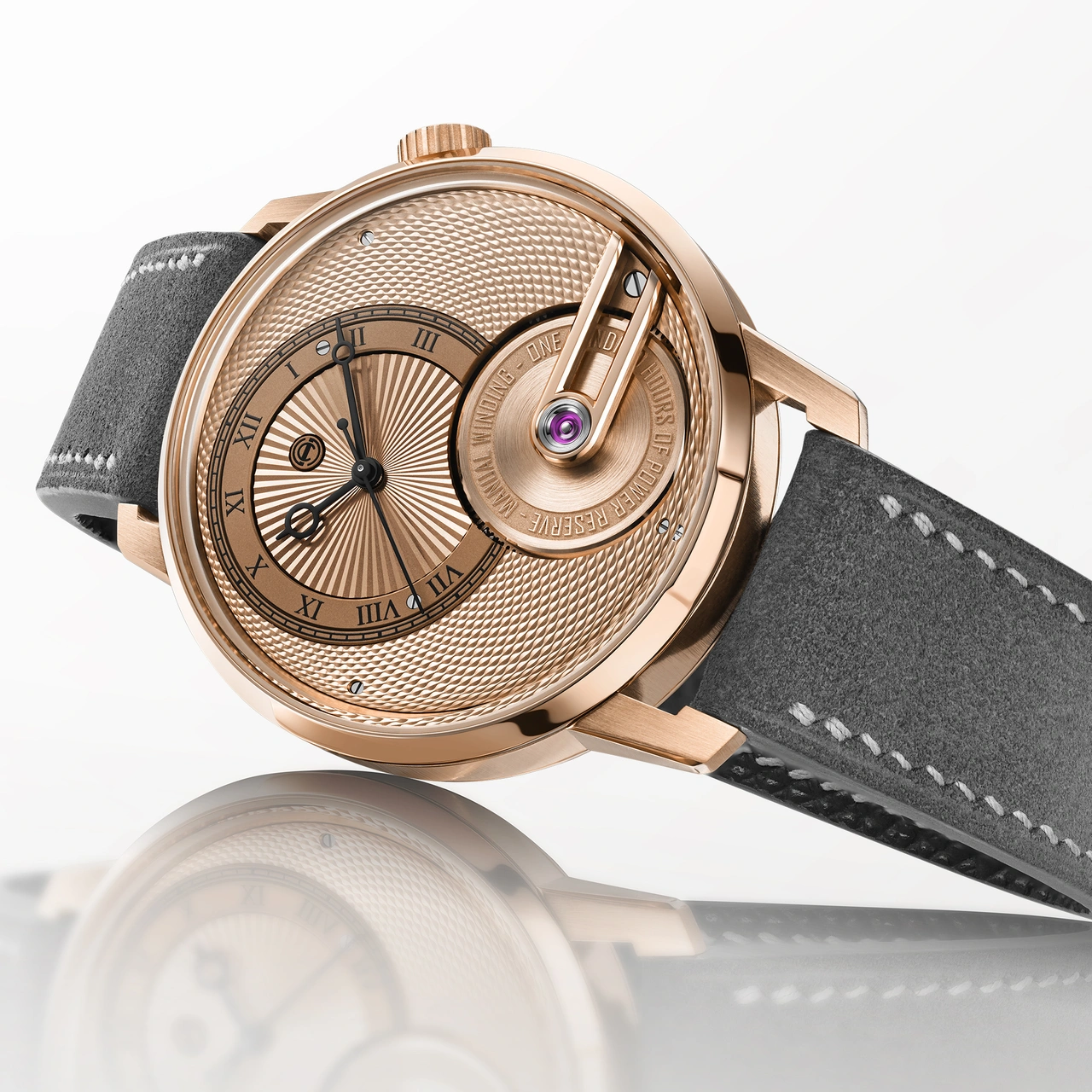
Finishing adds another layer again. Guilloché dials, engraved bridges, skeletonised details, flame-blued hands, ceramic dials, polished bevels, and hand-applied decoration all require care that cannot be rushed. Watches from Jaeger & Benzinger, Benzinger, Habring², and Dornblüth & Sohn often carry this human evidence beautifully. The result is not showiness, but a sense that somebody has spent time with the piece before it reached its owner.
That human touch is especially clear in small production and limited edition watches. Careful oversight, hand-adjustment, and artisanal finishing make each piece feel less industrial, even when the technical foundation is highly precise. A Jaeger & Benzinger Edition 6, for example, can pair classical dial craft with an open view of movement decoration that feels deeply traditional. A five-minute repeater or hand-finished movement bridge goes further still, reminding us that complexity and charm can live in the same case.
Classic complications also suit this retro mood because they connect timekeeping with older forms of practical imagination. Moonphases, perpetual calendars, small seconds, repeater modules, and large dates all come from a period when watchmakers solved problems mechanically, using wheels, springs, cams, levers, and careful calculation. The Habring² perpetual calendar, Mühle-Glashütte moonphase models, the Teutonia small seconds, and Dornblüth & Sohn’s Quintus Big Date all show different ways of giving function a more poetic shape. These complications are useful, but they also let a watchmaker show judgement.
There is also something comforting about a complication that does not announce itself too loudly. A moonphase drifting through its aperture or a small seconds hand moving in its own register brings life to a dial without disturbing it. A large date can make daily legibility feel more considered, while a perpetual calendar quietly manages one of watchmaking’s most charming puzzles. These features feel at home in retro-inspired design because they reward patience rather than speed.
Perhaps that is the real appeal of retro flair. It gives us a brief visual holiday from the constant pressure to be new, faster, sharper, and louder. A well-designed watch with vintage character does not ask us to abandon modern standards, it simply reminds us that restraint, repairability, proportion, and craft still have value. For a few minutes, while looking at a dial, winding a movement, or noticing a hand-finished surface, time feels a little more human again.