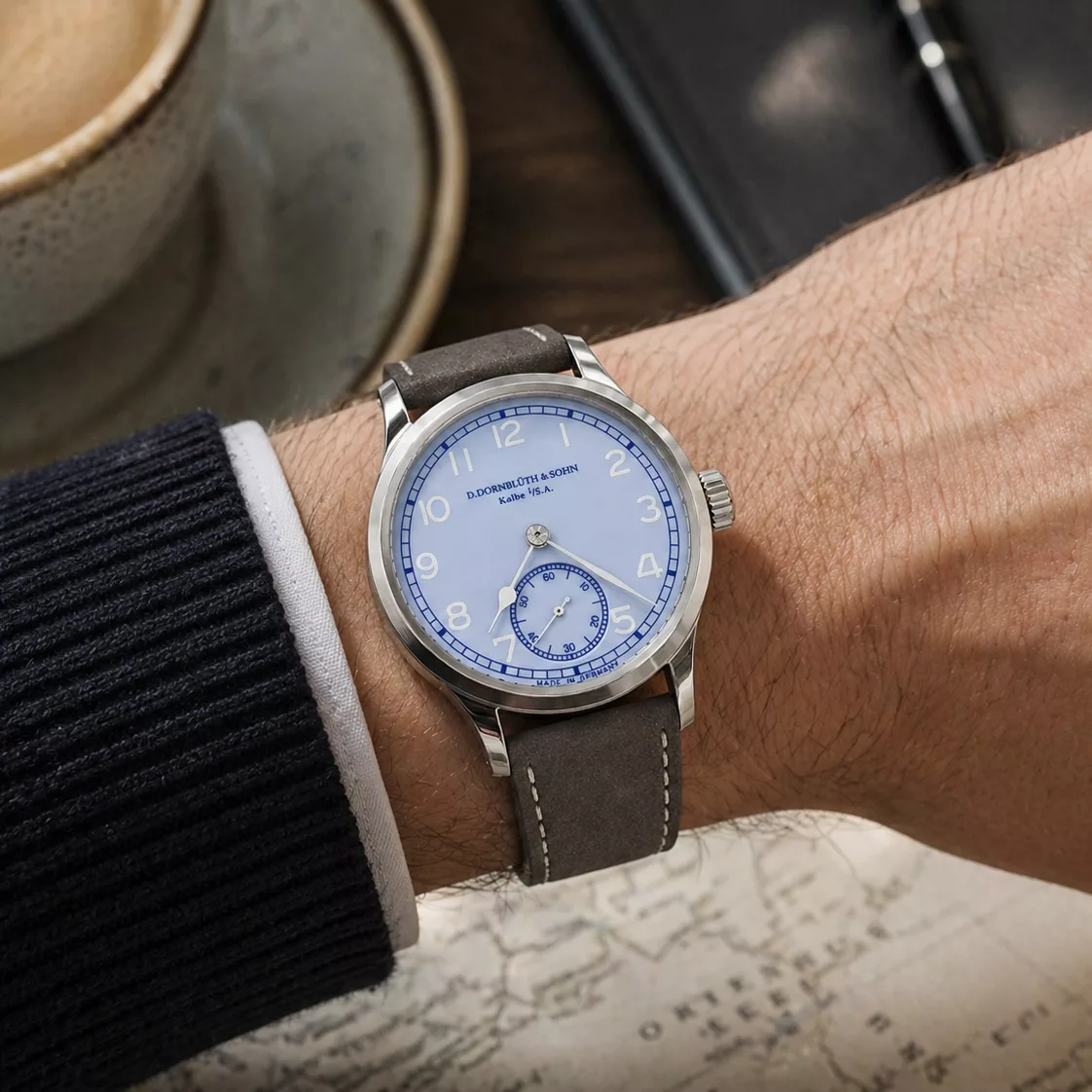
There are watch brands that are best understood through specifications, and then there are those that need to be understood through people. Dornblüth & Sohn belongs firmly in the second category. Its watches are not only mechanical instruments, but the result of family memory, handwork, patient refinement, and a deeply personal view of what German watchmaking can be. For Define Watches, Dornblüth & Sohn has always represented one of the clearest examples of independent horology at its most sincere, where a watch is shaped as much by character as by calibre design.
The story begins on a gloomy November evening in 1959, in what was then Karl-Marx-Stadt, known today once again as Chemnitz. Dieter Dornblüth, a young watchmaker from Salzwedel in Saxony-Anhalt, was working in a furnished room after spending several years in the Erzgebirge to deepen his horological knowledge. He had been repairing a sterling silver pocket watch with a large eccentric seconds display and a sturdy, beautifully made movement. By the time the repair was complete, the watch had made such an impression on him that returning it to its owner felt almost like parting with an old companion.

That same evening, Dieter sat down and began designing his own wristwatch movement, inspired by the robust architecture of the pocket watch he had just handed back. It was not an exercise in trend or convenience. He was not concerned with making the thinnest or most commercial movement possible, but with creating something strong, legible, mechanically honest, and built according to his own instincts. The first plans were drawn, and the first wheels were already placed on the plate, when his professional life suddenly changed direction.

Dieter was called to Kalbe, also in Saxony-Anhalt, to take over the abandoned watchmaking business of Elsa and Paul Beckmann. The small repair workshop soon became a successful operation, eventually growing to seven employees. With the demands of daily work, customer repairs, and running the business, the dream of a Dornblüth calibre disappeared into a workbench drawer. For forty years, the idea rested there quietly, known only to Dieter and left untouched by the passing fashions of the watch industry.
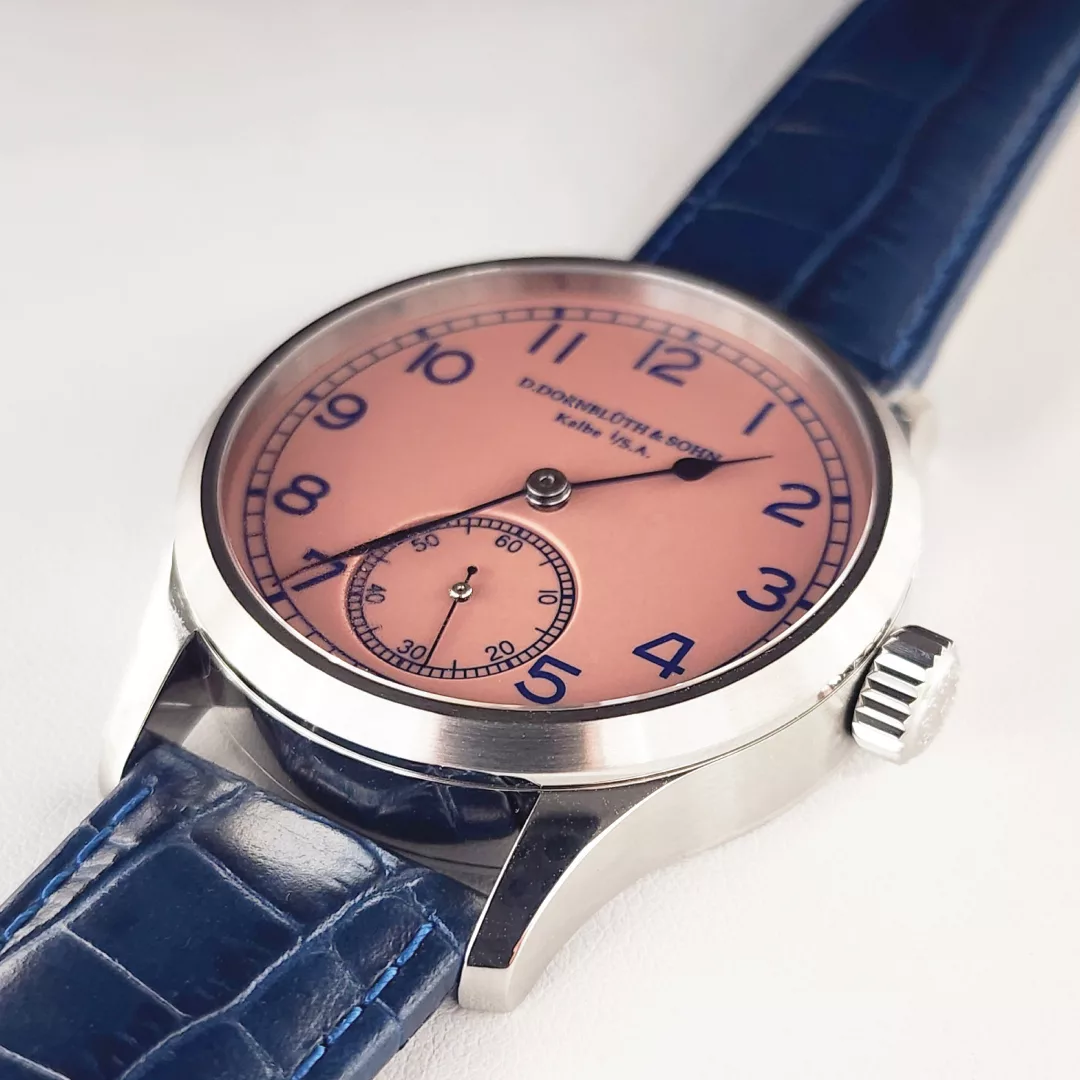
The turning point came on 1 October 1999, Dieter Dornblüth’s 60th birthday. His son Dirk, by then a master watchmaker himself, presented his father with a stainless steel wristwatch he had created by hand, its movement based on the legendary Glashütte calibre 60.3. The gift moved Dieter deeply, and it prompted him to share the story of the movement he had designed in 1959. That evening, father and son began sketching the idea of a base calibre on a paper napkin, bringing a dormant vision back to life in the most fitting way imaginable.
This is one of the reasons Dornblüth & Sohn holds such a special place in the independent watchmaking landscape. Its story does not begin in a boardroom, nor with a marketing strategy, but with a repaired pocket watch, a father’s unfinished idea, and a son’s handmade birthday gift. The manufacture that followed was built around a philosophy that remains rare today: precision watches can still be made by passionate craftspeople using traditional tools, practical ingenuity, and an uncompromising respect for mechanical clarity. This approach naturally limits production, with only a small number of watches made each month, but it also gives each piece a sense of human presence that cannot be replicated at scale.
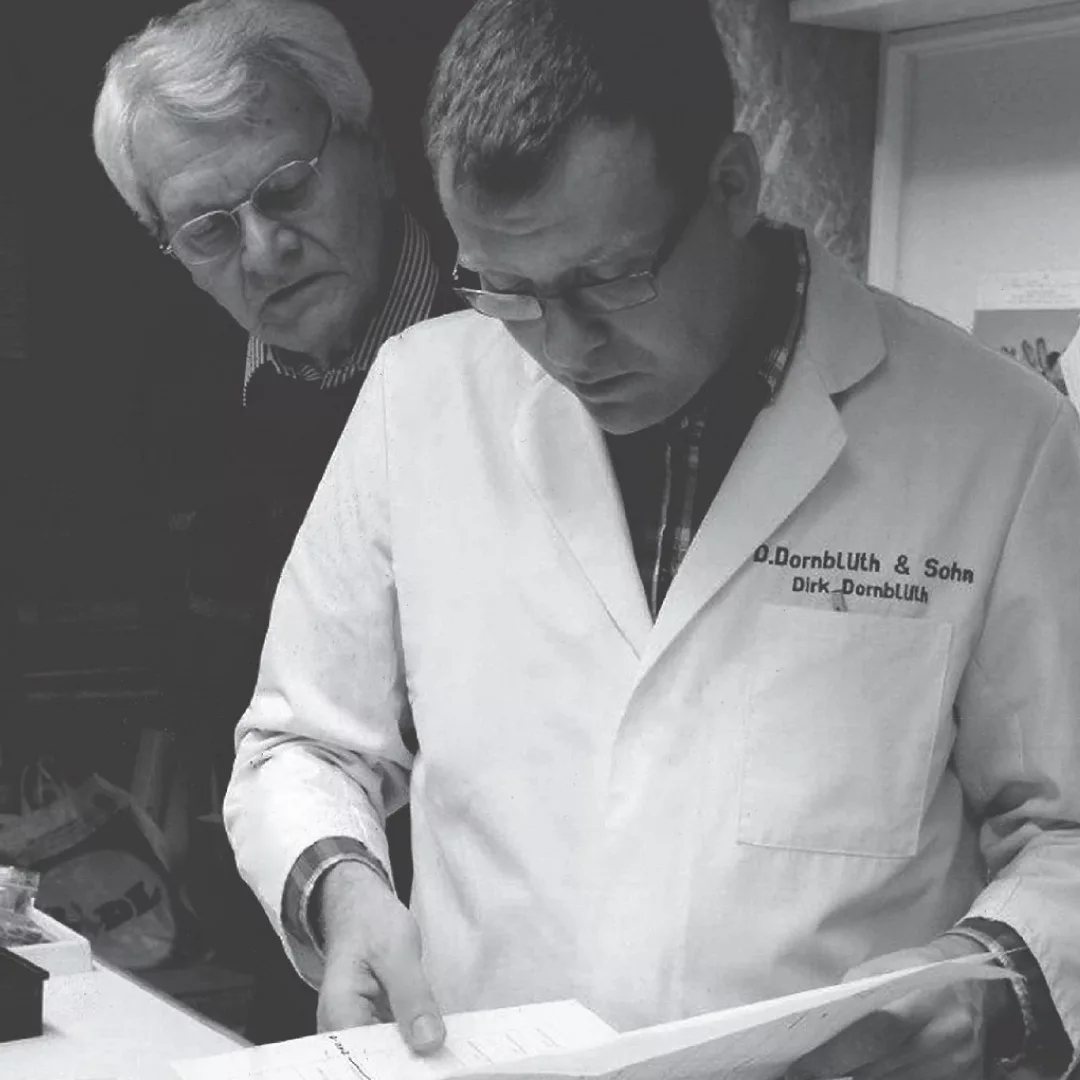
Define Watches has had the privilege of knowing Dornblüth & Sohn not only through its watches, but through the people and values behind them. That relationship has always been grounded in shared respect for traditional craft, modesty, and mechanical substance over noise. Dornblüth pieces do not seek attention in the way many modern luxury watches do. Instead, they reward close inspection, from the depth of the dial layout to the warmth of the movement finishing and the unmistakable feeling that each watch has passed through skilled hands rather than an anonymous production line.
The movements themselves tell much of the story. Dornblüth calibres are known for their traditional 18,000 semi-oscillations per hour, a solid three-quarter plate, a Glucydur screw balance with Nivarox-1 spring, and swan-neck fine adjustment mounted on a hand-engraved balance cock. Screwed gold chatons, polished steelwork, crown wheels with double sunburst finishing, and hand engraving filled with yellow gold all contribute to a movement architecture that feels rooted in classical German watchmaking. These details are not decorative afterthoughts, but part of a wider philosophy where construction, finishing, and legibility are treated as connected disciplines.

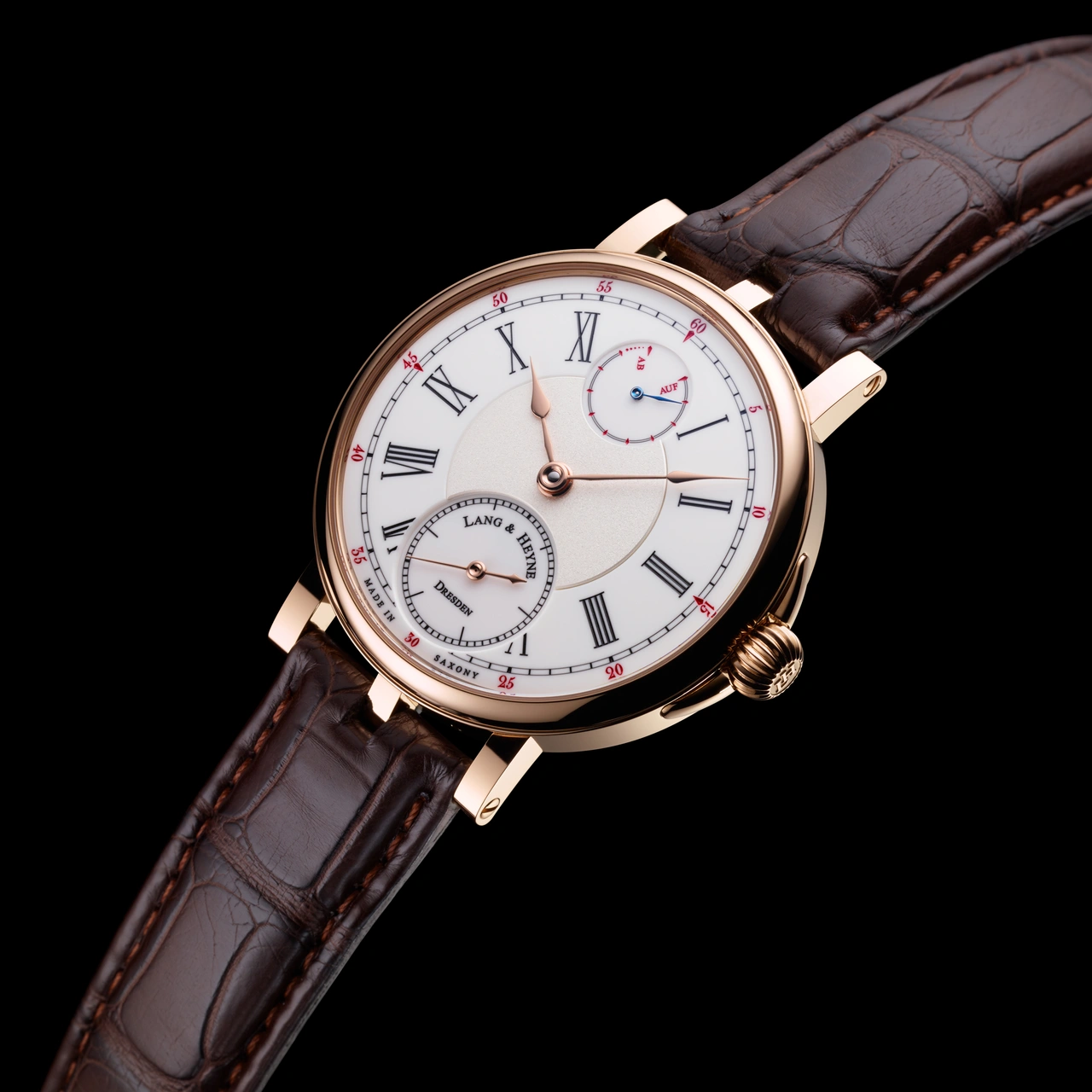
One of the most significant developments in Dornblüth’s history came from the question of balance on the dial. When father and son were designing their sturdy calibre, the small seconds near 9 o’clock left an empty space opposite it. Rather than accept the visual imbalance, Dirk began looking through old auction catalogues and found inspiration for placing a power reserve indicator near 3 o’clock. This was not merely a design choice. The challenge was to create an “Up-and-Down” display that avoided the friction and distortion often found in conventional power reserve mechanisms.
The solution came in a wonderfully Dornblüth way. While waiting at a local garage for his car to be repaired, Dieter noticed small engine models in a display case, including a model of a differential gear from a car’s rear axle. He borrowed the model, took it back to the workshop, and worked with Dirk to translate the idea into watchmaking terms. The result was a three-wheel mechanism measuring no more than 2.98 mm high, allowing the power reserve indication to be integrated into the movement without increasing its external dimensions. With fewer wheels in mesh, friction was reduced and the display could indicate the mainspring’s winding state with impressive precision.

From that solution, the calibre 99.2 was born. It is a wonderful example of how Dornblüth & Sohn approaches mechanical problems, not by overcomplicating them, but by looking for a clear, robust, and elegant answer. The story also says much about the Dornblüth character. Inspiration could come from a century-old pocket watch, a paper napkin, an auction catalogue, or a model differential in a country garage. What matters is the willingness to think carefully, work by hand, and let each mechanical decision serve the integrity of the watch.
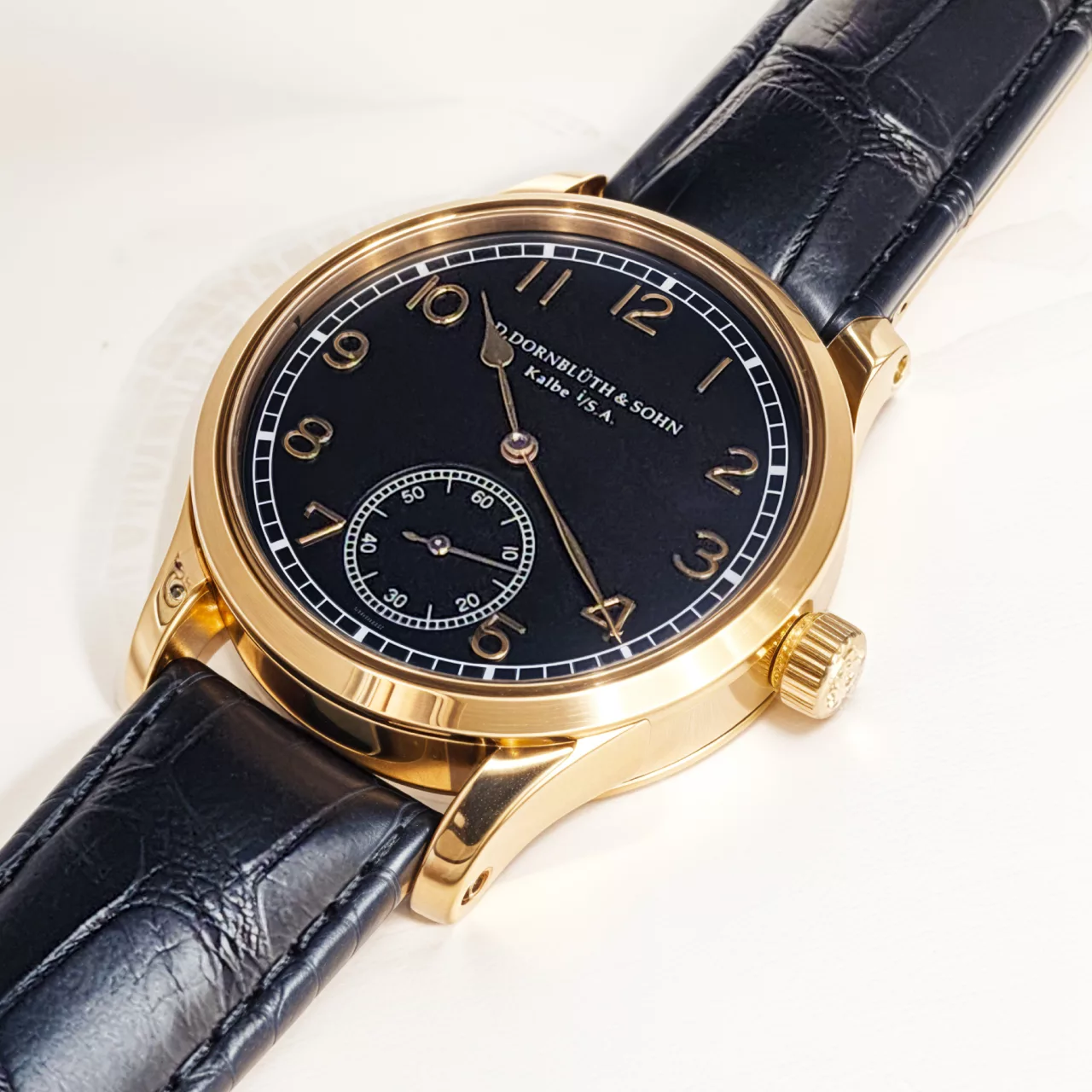
For collectors who value independent watchmaking, Dornblüth & Sohn offers something increasingly uncommon. These watches are personal without being sentimental, traditional without feeling static, and technically serious without becoming cold. They carry the unmistakable language of German craft, yet they also carry the story of a father and son who chose to build on an idea that had waited forty years for its moment. That combination of memory, restraint, ingenuity, and handwork is why Dornblüth & Sohn continues to resonate so strongly with Define Watches and with those who appreciate watches made for the right reasons.