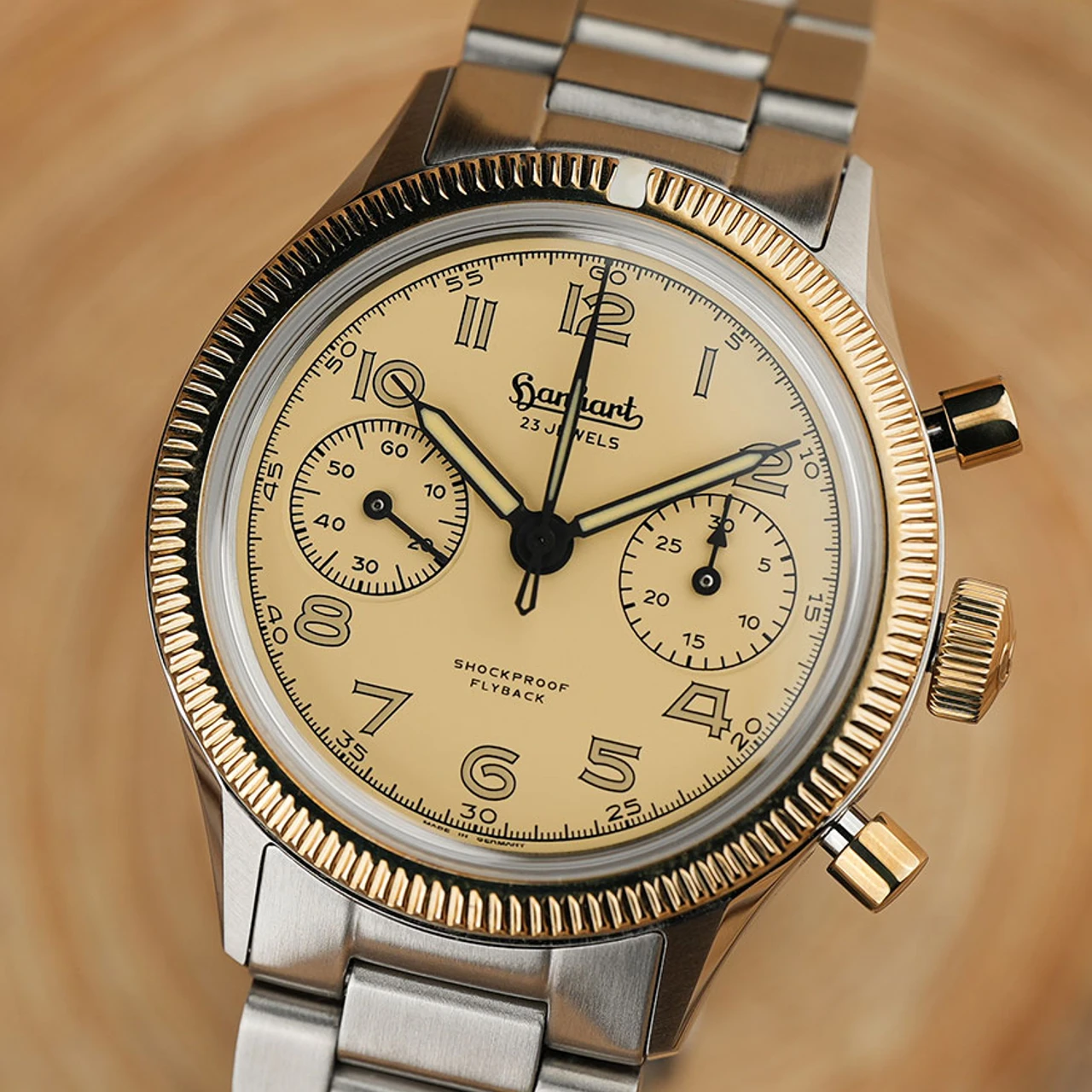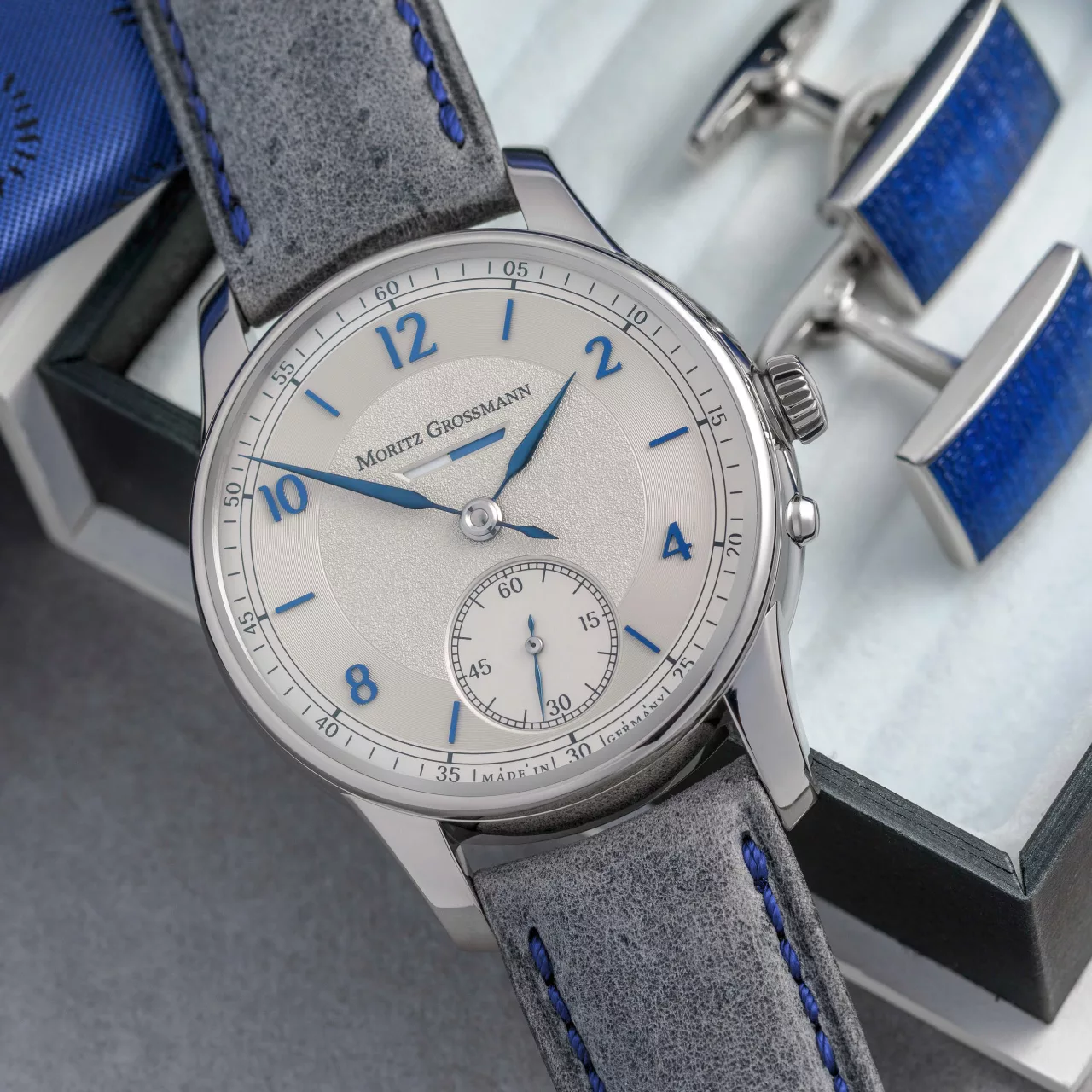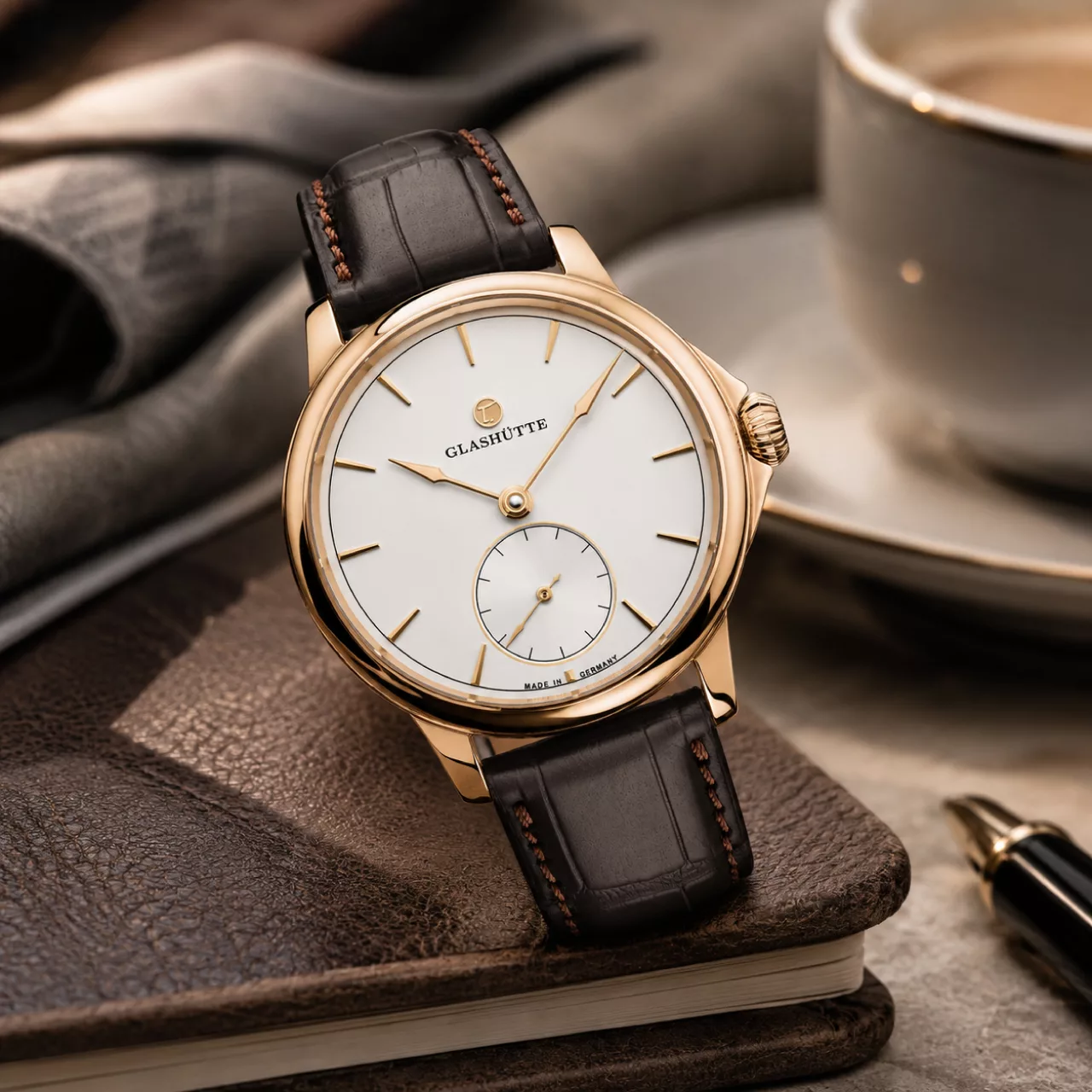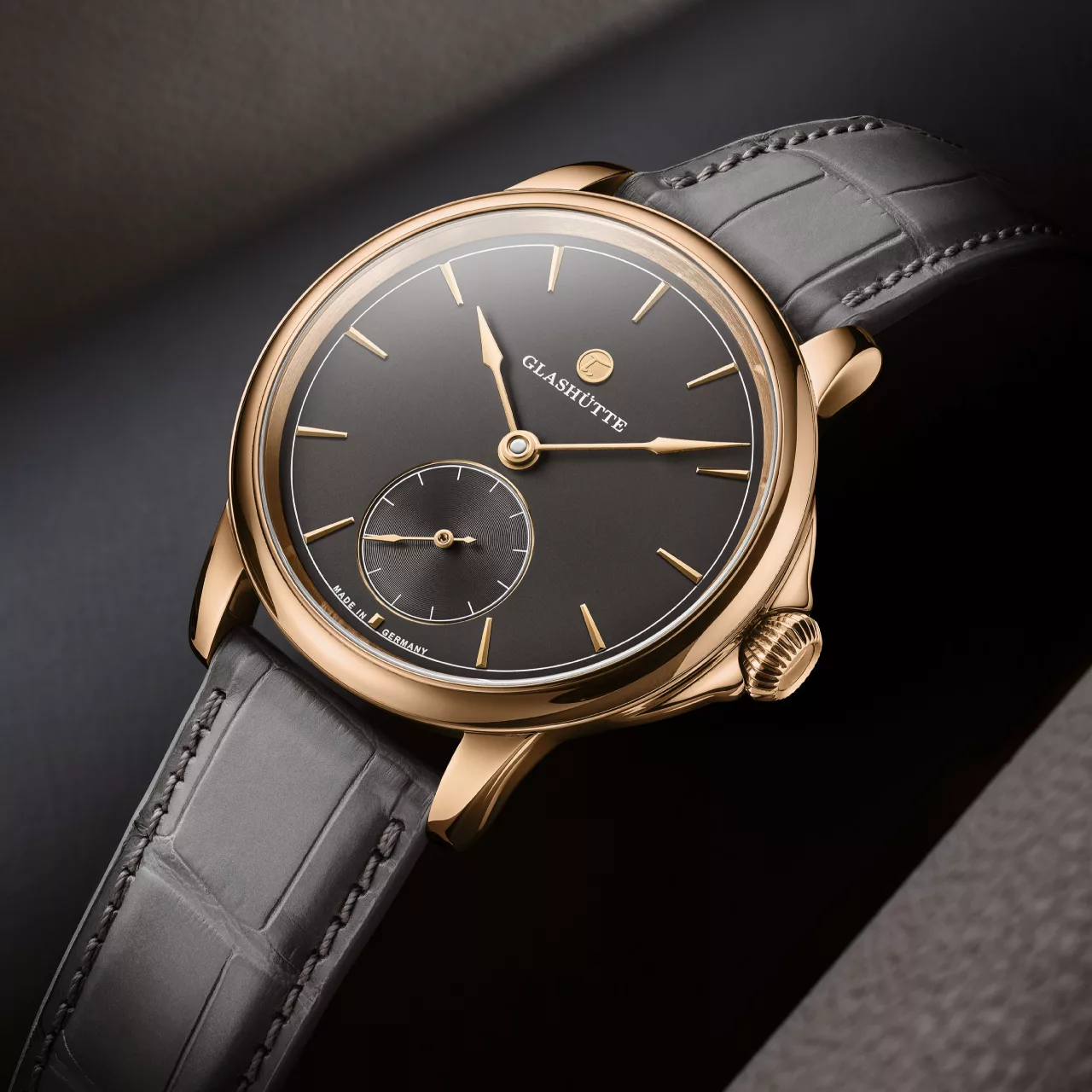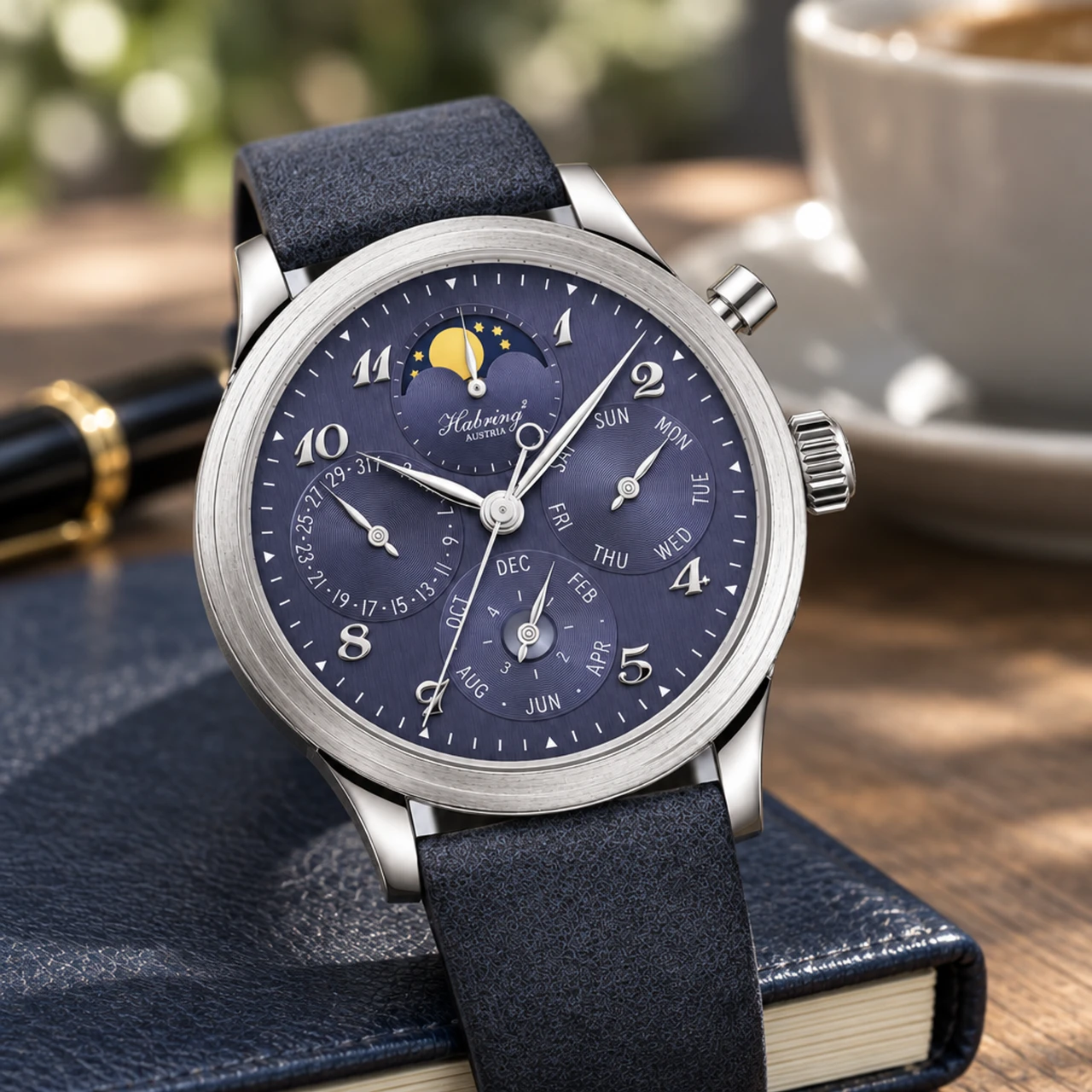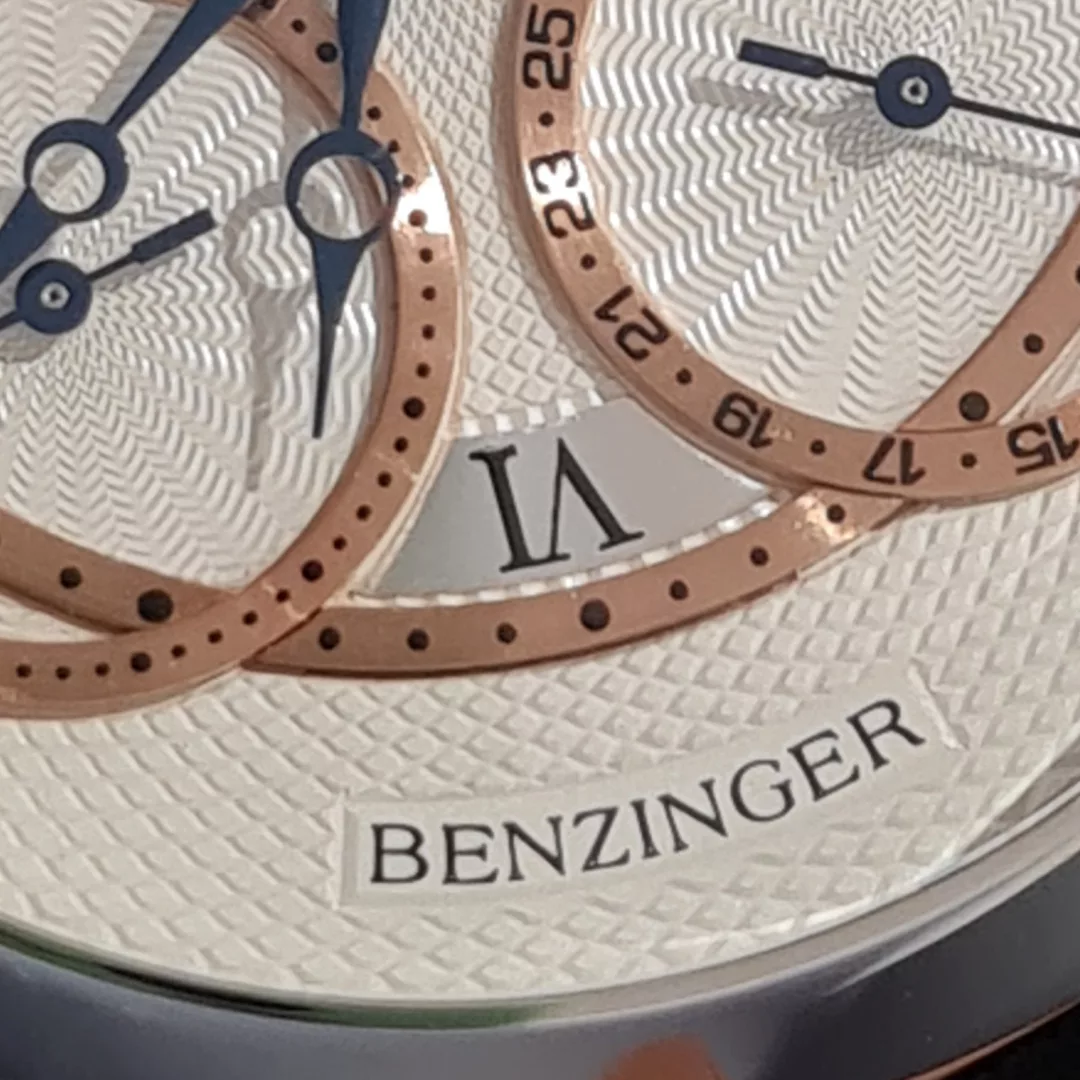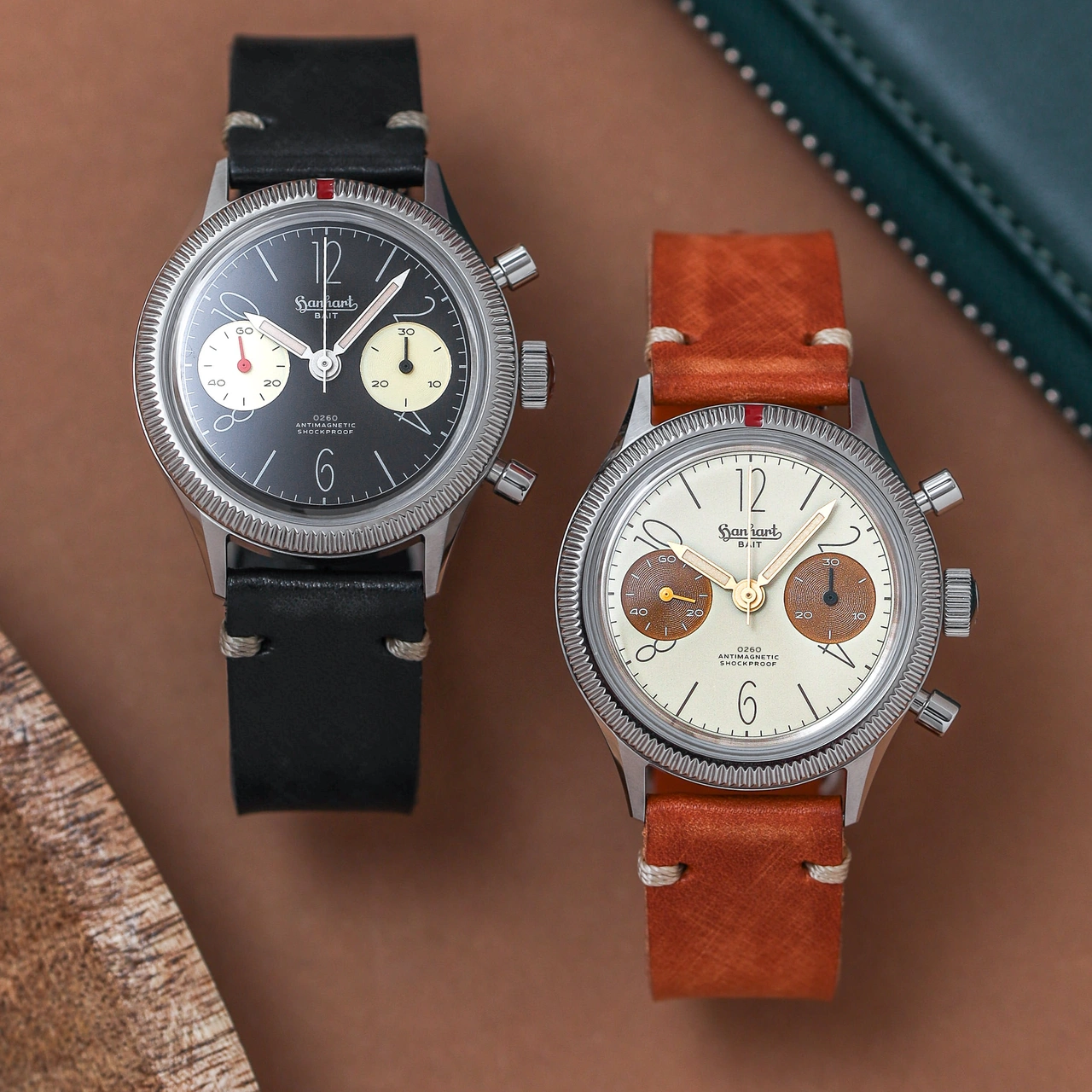
Two watches left on a bedside table on Friday evening will tell rather different stories by Monday morning. One, picked up and strapped on, may still be running, or will be after a few turns of the crown and an hour on the wrist. The other will have stopped at some point on Sunday, and it will stay stopped until its owner sits down and winds it. They simply draw their energy in different ways, and that difference shapes the experience of ownership more than almost any other decision a buyer makes. It affects how the watch feels on the wrist, what can be seen through the back, and what the watch asks of its owner each day.
How Each Type Is Powered
Every mechanical watch runs on a coiled mainspring housed in a barrel, and the only real question is how that spring is tensioned. In a hand-wound watch the answer is the crown: the owner turns it, a short train of wheels carries the motion to the barrel, and the spring is wound until it will take no more. An automatic adds a second route. A weighted rotor, usually a semicircular mass pivoted at the centre of the movement, swings with every movement of the arm, and a set of reduction gears converts that swinging into winding. A slipping arrangement in the barrel lets the spring shed any excess, so the watch cannot be overwound by an active day. Most automatics can also be wound from the crown, which means the rotor is best thought of as an addition to the hand-wound principle, not a replacement for it.
Living With an Automatic
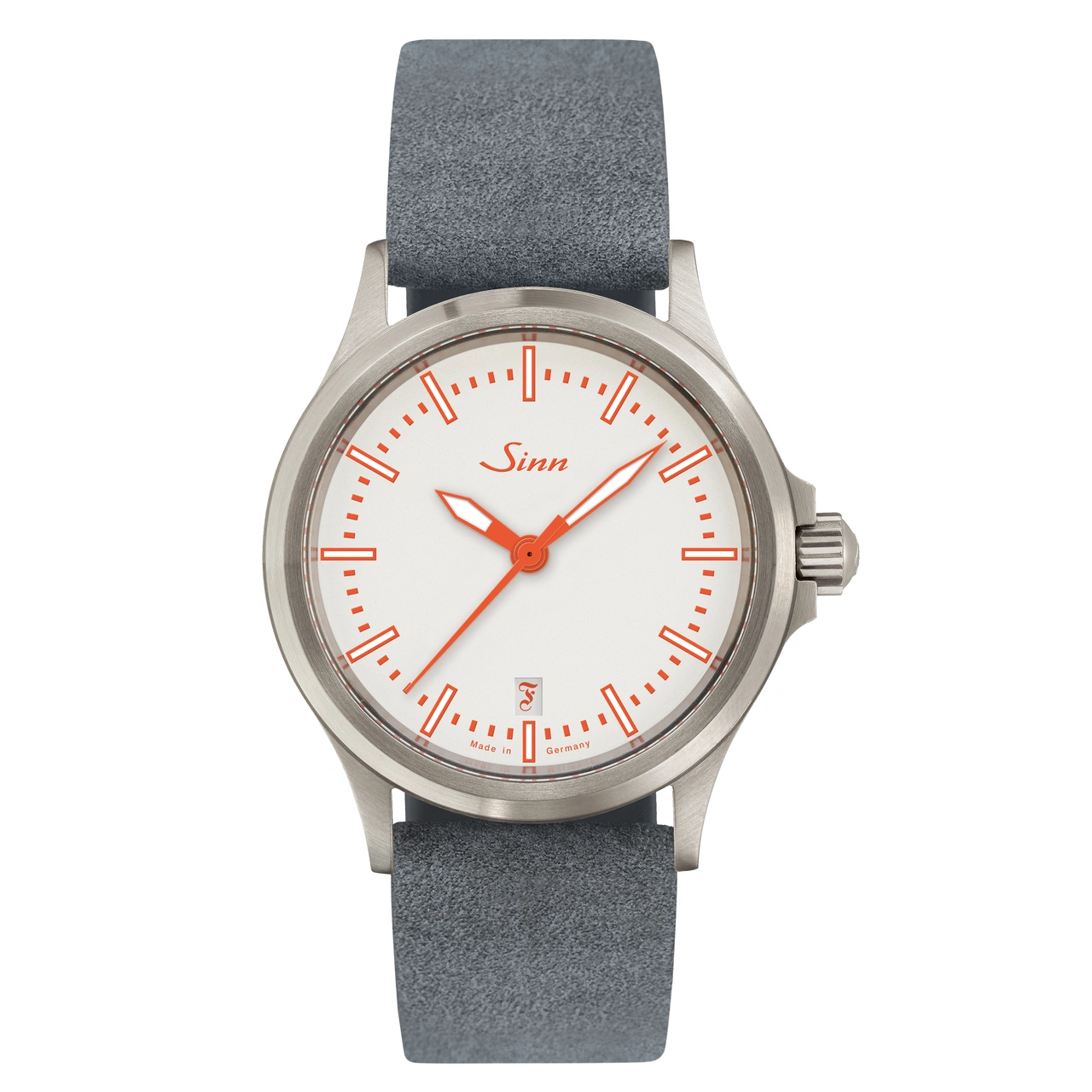
The appeal of an automatic is that it asks for very little. Worn through an ordinary day, it gathers enough energy to run through the night and well into the next morning, and a watch worn daily may go for months without the crown being touched for anything other than the date. That suits the way most people actually use a watch, which is why the great majority of modern mechanical watches are built this way. It is also the natural choice for a tool watch. A model such as the Sinn 556 is designed to be put on and relied upon, and where a crown screws down against the case to protect the seals, there is some sense in a mechanism that leaves it undisturbed. The one thing an automatic does require is wear: a quiet day at a desk winds it less than a long walk, and a watch that is taken off each evening after only a few hours may never build a full reserve.
The Daily Ritual of Winding
A hand-wound watch makes a different bargain. It will not run unless someone winds it, and for many owners that is precisely the attraction. The half minute spent turning the crown each morning is a small, regular contact with the mechanism, and the feel of it is surprisingly individual: the fine clicking of the ratchet, the gradual firming as the spring fills, the definite stop at the end. Workshops such as Dornblüth & Sohn, whose 99.1 is a hand-wound watch in the traditional Saxon manner, give considerable attention to this action because it is the part of the movement the owner experiences directly. There is also a practical honesty to the arrangement. The owner always knows how much energy the watch has, because the owner put it there, and a watch wound at the same time each day runs in the steadier part of its mainspring’s range.

Thickness and the View Through the Caseback
The rotor and its winding gears occupy space, and in a conventional automatic they sit as an extra layer on top of the movement. Other things being equal, a hand-wound calibre is therefore somewhat slimmer than its automatic counterpart, and the case built around it can be slimmer too. The difference is often no more than a millimetre or two, but on the wrist that is enough to notice, particularly under a shirt cuff. This is one reason hand winding has remained the classic choice for dress watches, where a low, flat profile is part of the design. It is not an absolute rule, of course. Case construction, crystal shape and water resistance all contribute to height, and a robustly built hand-wound watch can easily stand taller than a carefully proportioned automatic.
The difference is rather more obvious when the watch is turned over. Through a glass caseback, an automatic shows its rotor first, and since the rotor covers roughly half of the movement at any moment, the view beneath is always partial and always shifting. Some owners enjoy that sense of motion. A hand-wound movement, by contrast, is laid entirely open: the bridges or the three-quarter plate, the winding wheels turning as the crown is worked, the balance beating without interruption. For makers who put a great deal of handwork into finishing, this unobstructed view is a strong argument for leaving the rotor out. For a tool watch with a solid steel back, on the other hand, the question hardly arises, and the convenience of the rotor carries no visual cost at all.

Daily Wear or Part of a Rotation
How a watch will be worn matters as much as how it is built. For someone who owns one watch and wears it every day, an automatic is the path of least resistance, and it will seldom need attention. For someone who rotates between several watches, the advantage narrows considerably. An automatic left in a drawer for three or four days will have stopped just as surely as a hand-wound one, and it must be wound and reset before it goes back on the wrist. In a rotation, then, both types need restarting, and a simple hand-wound watch with no date to correct is often the quicker of the two to bring back to life. MeisterSinger illustrates the choice neatly, since its single-hand watches are offered in both forms: the N°01 is wound by hand, while the closely related N°03 winds itself.
Servicing Considerations
Both types need periodic servicing, in which the movement is dismantled, cleaned, oiled and regulated, and the appropriate interval is the one the manufacturer recommends. In general terms, an automatic has more components than a comparable hand-wound movement, including the rotor bearing and the reversing or reduction wheels of the winding system, and these are among the parts that work hardest over the years. A hand-wound watch has fewer parts to wear, although its crown, stem and seals are handled every day and deserve to be checked when the watch is serviced. In practice neither type is fragile, and a well-made movement of either kind will run for decades if it is looked after. The difference is one of degree, and it is seldom a sound reason on its own for preferring one over the other.

Ultimately, the decision is less technical than it first appears. Both systems keep time equally well, and both will outlast their first owner if treated with ordinary care. What separates them is temperament. A buyer who wants a watch that simply runs, who wears the same piece most days and values not having to think about it, will probably be happiest with an automatic. A buyer who enjoys a moment of involvement each morning, who likes a slimmer case or wants to see the whole movement through the back, will find that a hand-wound watch rewards the small effort it asks for. At Define Watches, we find that many enthusiasts end up owning one of each, which is perhaps the most honest answer. The two are not rivals so much as two ways of being on good terms with the same mechanism.