Anyone who owns more than one mechanical watch knows the small moment on a Monday morning when the watch chosen for the week is lifted from its box and found to be perfectly still. The hands rest wherever they were when the movement ran out of energy, usually some time on Sunday, and the date is a day or two behind. Nothing is wrong, of course. The watch has simply spent everything it was given, and a few turns of the crown will bring it back to life. That quiet interval between the last winding and the moment the balance stops is the power reserve, and it says a good deal about how a movement has been designed.
The energy itself is held in the mainspring, a long ribbon of specialised alloy coiled inside a toothed drum called the barrel. Winding the crown, or the motion of a rotor in an automatic watch, tightens the spring around a central arbor. As it tries to uncoil, the spring turns the barrel, the barrel drives the gear train, and the escapement releases that energy in tiny, measured portions to keep the balance swinging. A mechanical watch is in this sense a rather elegant exercise in rationing. The whole movement exists to let a tightly wound spring relax as slowly and as evenly as possible, over many thousands of turns of the escape wheel, instead of all at once.
Why most watches run for about two days
For a great many mechanical watches the reserve falls somewhere between roughly forty and fifty hours, and the figure is not an accident. A barrel has to fit within a movement of wearable size, sharing the space with the gear train, the balance and the winding work. Within that barrel, the spring can be made thicker and stronger, or thinner and longer, but not both. A reserve of about two days is the traditional compromise: comfortably more than the twenty-four hours between daily windings, with a margin for a forgotten morning, yet achievable with a single barrel of modest diameter. It also keeps a watch wound daily in the upper part of its reserve, which matters more than it might seem.
The reason is torque. A mainspring does not deliver its force evenly from full to empty. Modern alloys and the reverse curve given to the spring have flattened the delivery considerably compared with the steel springs of earlier generations, but the force still tapers as the spring unwinds and drops away quite steeply in the final hours. Less torque at the barrel means less impulse at the balance, so the balance swings through a smaller arc. In principle a balance and spring should keep the same period whatever the size of the swing, but in practice no watch achieves this perfectly, and the rate tends to drift as the amplitude falls. A watch that is nearly run down is therefore seldom keeping its best time.
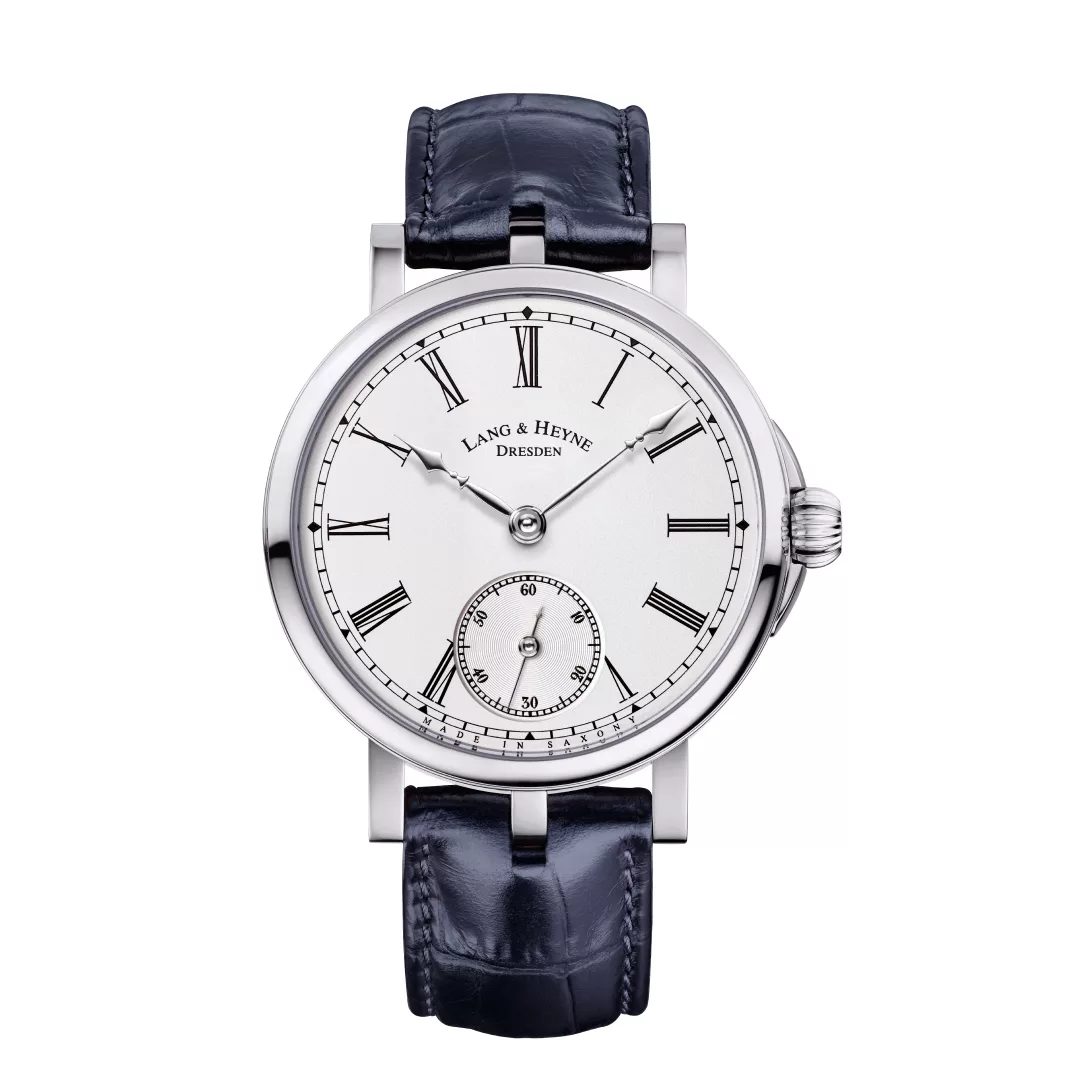
Watchmakers have wrestled with this for centuries. The fusee and chain of early pocket watches and marine chronometers used a cone-shaped pulley to even out the pull of the spring, and constant-force devices of various kinds have pursued the same goal by storing energy in a small secondary spring close to the escapement. Both are demanding to make and correspondingly rare. The more common answer is simply good design and careful adjustment: a spring and barrel matched properly to the movement, a balance of sensible size, and regulation carried out with the watch in several positions and states of wind. This is the kind of patient work on which firms such as Lang & Heyne in Dresden have built their reputations, in hand-wound watches such as the Friedrich III.
How longer reserves are achieved
When a maker wants a watch to run for considerably longer, there are only a few routes available, and each has a cost. The first is a longer, thinner spring in a larger barrel, which gives more turns but takes space from everything else in the movement. The second is to use two barrels, typically coupled in series so that their turns add together, which is how many watches with reserves of several days are built. The third is to make the movement more frugal, by lowering the frequency of the balance or altering the gear ratios so that the barrel turns more slowly. Every one of these choices reduces the energy reaching the balance at any given moment unless the spring is strengthened to compensate, so a long reserve done well is a matter of balancing the whole movement, not of adding a bigger tank.

A complication that earns its place
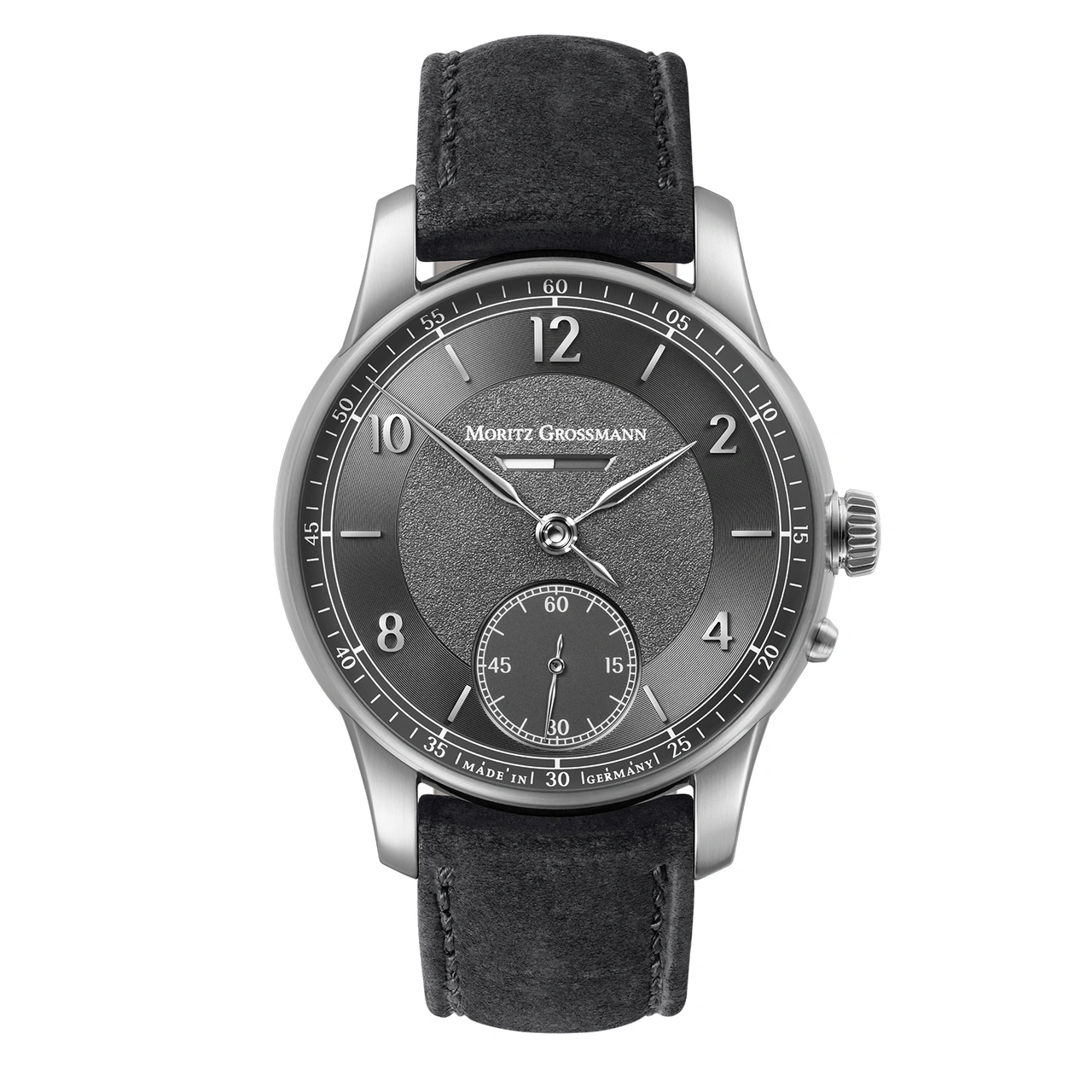
All of this explains the appeal of the power-reserve indicator, a display that shows how much running time remains. Mechanically it is cleverer than its modest appearance suggests. The indicator has to register winding, which adds turns to the spring through the arbor, and running, which removes them through the barrel, and it must combine the two into a single reading. This is usually done with a small differential or a comparable arrangement of gears. The result may be a hand on a sector, a disc beneath an aperture or a linear display. Moritz Grossmann takes the last of these approaches in its BENU Power Reserve, where a slim horizontal bar on the dial shifts from one colour to another as the hand-wound movement runs down.
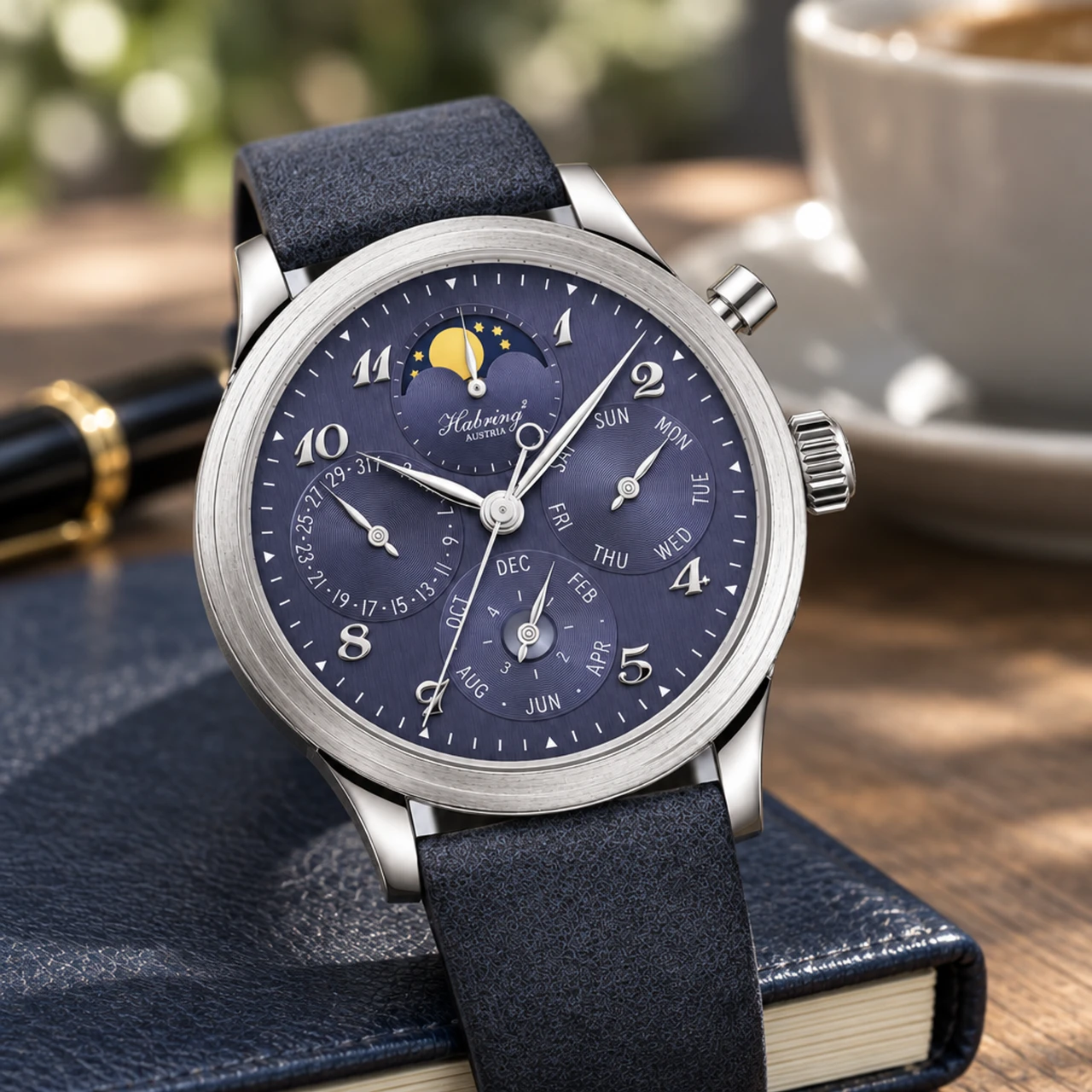
It is on hand-wound watches that the indicator makes the most sense. An automatic watch worn each day tops itself up continuously, and its mainspring is fitted with a slipping bridle so that it cannot be overwound, which means the wearer rarely needs to think about the state of wind at all. A manually wound watch depends entirely on its owner. The indicator shows at a glance whether the watch was wound this morning, and it encourages the habit of keeping the spring in the upper part of its range, where the torque is most even and the timekeeping at its best. Many owners manage perfectly well without one. The hand-wound Felix from Habring², for example, asks only for a few moments with the crown each morning, a ritual that many enthusiasts regard as part of the pleasure.

Living with several watches
For those who rotate between watches, a few habits follow naturally. A hand-wound watch is best wound at about the same time each day, gently, until the crown comes to a firm stop, and never forced beyond it. An automatic that has stopped benefits from a number of turns of the crown before it goes on the wrist, since the rotor alone can take many hours of wear to build a full reserve. Letting a watch run down and rest between wearings does it no harm. A winder is a convenience, most useful for watches with calendars that are tedious to reset, and not a necessity. Where a manufacturer gives specific guidance on winding or on setting a date mechanism, that guidance should always take precedence.
Perhaps the power reserve is best understood as the most honest figure a mechanical watch has to offer. It describes a finite store of energy, put there by the wearer’s own hand or movement, and spent at a rate the watchmaker has taken a great deal of trouble to control. At Define Watches, we find that understanding this changes how a stopped watch is seen: less an inconvenience than an invitation to pick it up, wind it, set it and look at it properly again. A watch that runs for two days and one that runs for a week are both doing the same remarkable thing, turning the slow relaxation of a coiled spring into an orderly account of the hours.