There is a small moment familiar to anyone who wears a tool watch. The bedroom light goes off, or the car slips into a long tunnel, and for a few seconds the dial on the wrist is brighter than anything else in view. Hands and markers that were plain white a moment earlier now stand out in green or pale blue, and the time can be read at a glance without reaching for a switch. It feels faintly like a trick, yet nothing in the watch has been turned on. No battery is involved and no button has been pressed. The dial is simply returning light that it gathered earlier in the day.
The material responsible is known to enthusiasts as lume, short for luminous compound. In a modern watch it is a fine crystalline pigment, mixed with a clear binder and applied to the hands, the hour markers and often the bezel, either printed in layers or filled into small recesses. The pigment is photoluminescent, which means it absorbs energy from light and releases it again slowly as a visible glow. This distinguishes it from the luminous paints of the past, which produced their own light continuously through radioactivity. The difference matters a good deal, both for the safety of the people who make and wear watches and for the way the glow behaves over an evening and over the decades.
From radium to tritium
The first widely used luminous paint, introduced in the early twentieth century, combined a phosphor, typically zinc sulphide, with a very small quantity of radium. The radiation from the radium excited the phosphor constantly, so the dial glowed all night whether or not it had seen daylight. Soldiers, pilots and sailors valued this enormously, and luminous dials became standard on military watches and instruments. The cost emerged later, most notoriously among the dial painters who worked with the material by hand and suffered grievously for it. Radium also has a very long half-life, so an old dial remains radioactive long after it has stopped glowing, because the radiation gradually destroys the phosphor it was meant to excite.
From around the 1960s the industry moved to tritium, a radioactive form of hydrogen that emits far weaker radiation, unable to pass through a watch crystal or case. It was a considerable improvement in safety, and tritium paint served on dials for some three decades. Its limitation is a half-life of a little over twelve years, which means the glow weakens steadily and has largely gone within a generation. Collectors know these dials by their markings and by the warm cream colour the compound often takes on with age. Tritium has not disappeared entirely, since some makers seal the gas in tiny glass tubes that glow without charging, but painted tritium dials belong to the past.
How modern lume charges and fades
The change that defines the present came in the 1990s, when a pigment based on strontium aluminate, developed in Japan, offered a glow much brighter and longer lasting than the old zinc sulphide phosphors without any radioactivity at all. It is best known under the name Super-LumiNova, the Swiss-made version used across much of the watch industry. The pigment behaves rather like a reservoir. Light, particularly the ultraviolet and blue part of the spectrum, lifts electrons in the crystal into a higher energy state, where they are briefly trapped. They then fall back gradually, releasing the stored energy as visible light. Sunlight fills the reservoir in moments, while warm indoor lighting does so more slowly and less completely.
The emptying is not even, and this explains most of what owners notice. The glow is at its most intense in the first minutes after exposure, drops quickly, and then settles into a long, faint tail that can persist for hours. It is tempting to conclude that the lume has failed by midnight, but the eye is changing at the same time. In darkness human vision becomes far more sensitive over twenty minutes or so, and a dial that looks dim on stepping indoors from sunshine may be perfectly readable to someone waking at four in the morning. The quantity of pigment matters as much as its grade, which is why thick, generously filled markers outlast thin printed numerals so comfortably.

Why instrument makers take it seriously
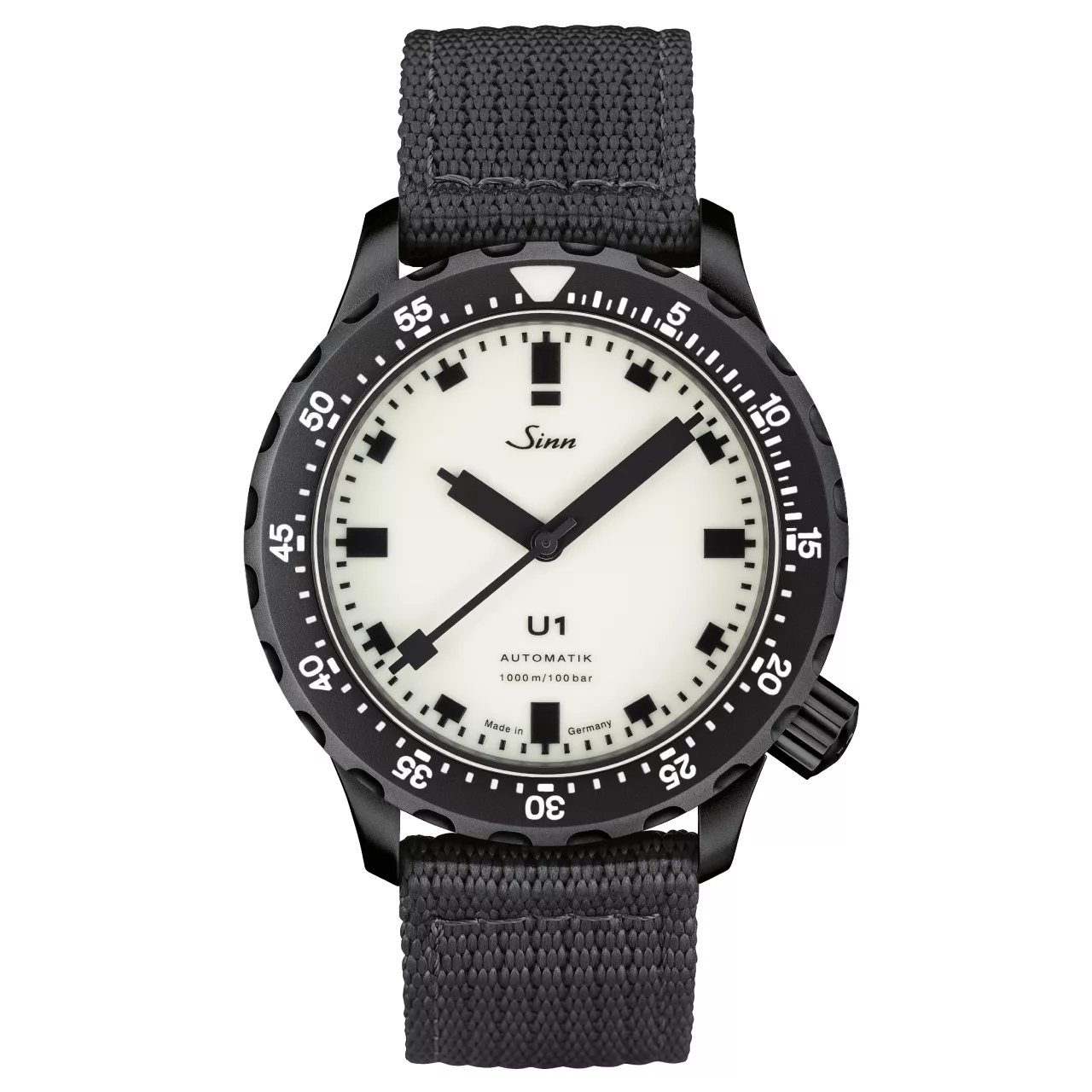
For makers of instrument watches, lume is part of the function, not decoration. The recognised standards for divers’ watches require that the time, the bezel marking and an indication that the watch is running can all be read in darkness, and a watch built for professional use is designed around that requirement. Sinn is a good example. On diving watches such as the U1 and the T50, the broad hands, block markers and the reference mark on the bezel are luminous, and the mission timers of the EZM family are laid out so that the indications that matter most are the ones the eye finds first. Damasko follows the same reasoning on watches such as the DK32 and the DSub10, with matt black dials and crisp white markers that offer strong contrast by day and a clear pattern by night.
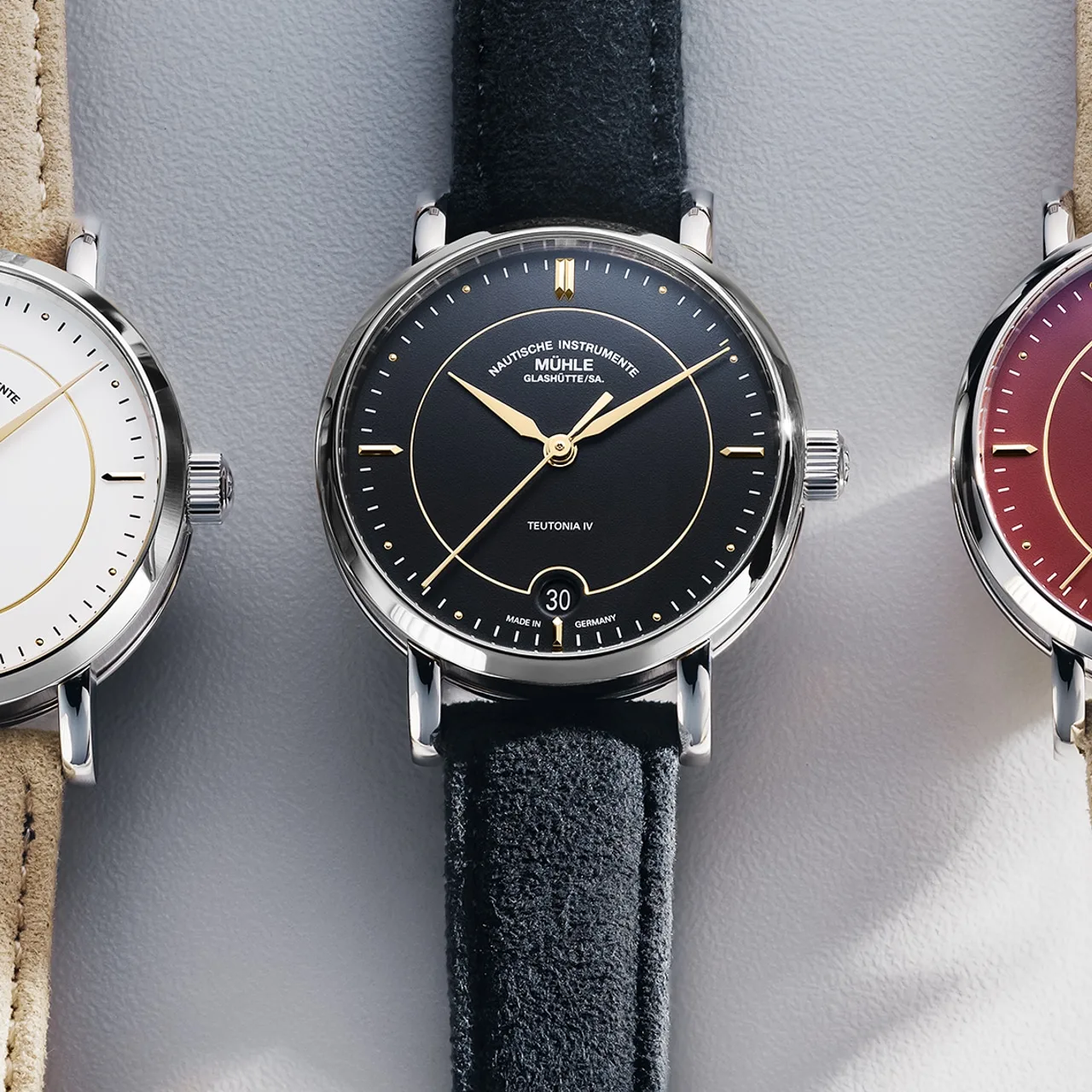
Mühle-Glashütte approaches the question from the sea. The firm’s roots lie in nautical instruments, and the S.A.R. Rescue-Timer was developed with the crews of the German sea rescue service, who needed a watch that could be read instantly on a pitching deck at night. Its dial is deliberately simple, with large luminous markers and hands that leave no doubt about orientation. This is perhaps the most useful lesson in judging lume. Brightness in a photograph says little, since any dial looks dramatic after a burst of ultraviolet light. What counts is whether the hour hand can be told from the minute hand, whether twelve o’clock is obvious, and whether the glow is even across every marker after an hour in the dark.
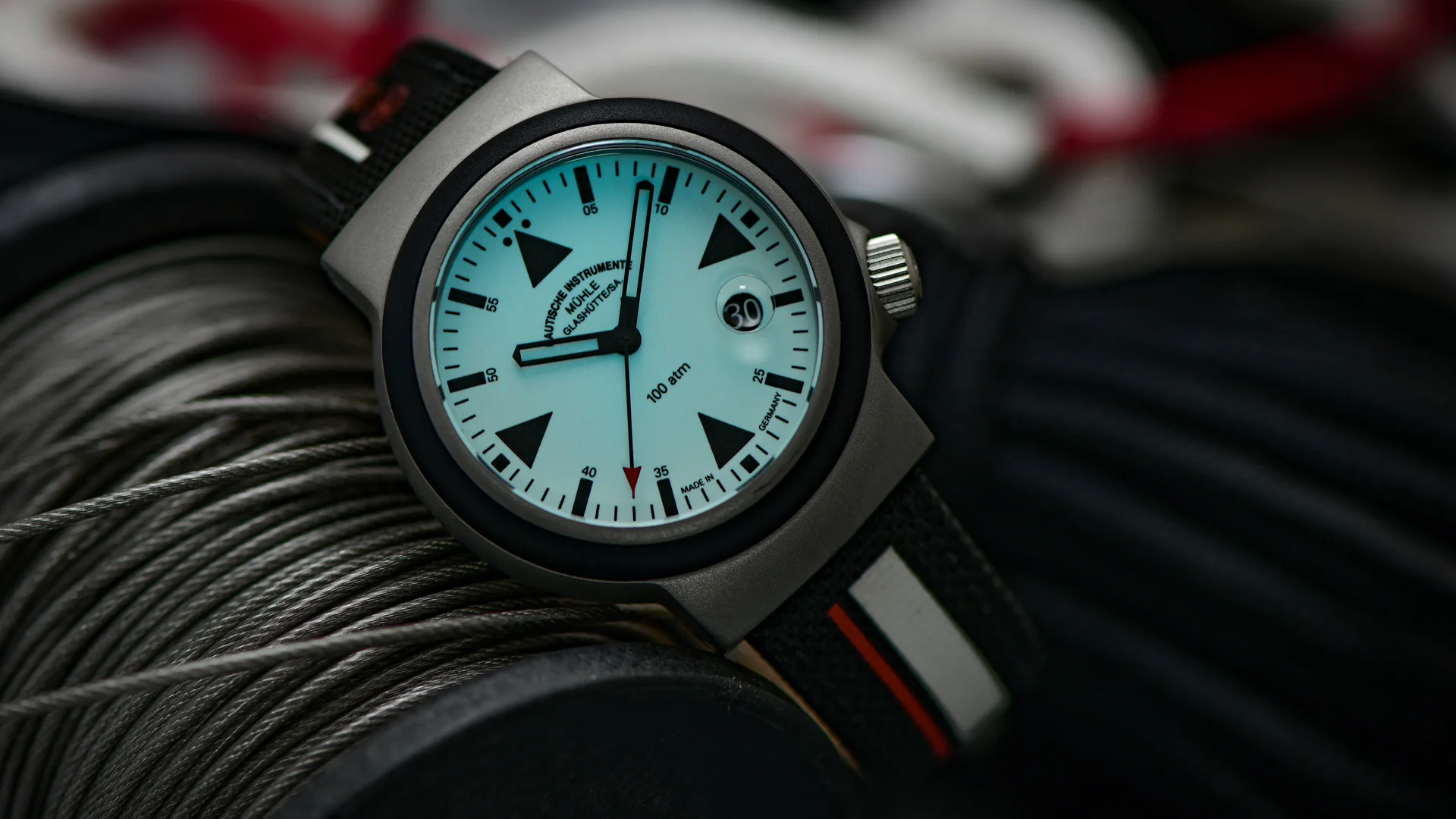
Colour is partly a matter of taste and partly of physics. Compounds with a greenish tint in daylight tend to glow brightest, because the eye is most sensitive to green light, while those that look pure white by day usually glow blue and give away a little intensity in exchange for a cleaner dial. Over the years an owner should expect very little change. Unlike tritium, modern pigment does not decay on a fixed schedule, and a well-sealed watch should charge and glow much as it did when it left the workshop. Moisture is the principal threat, which is one more reason to have seals checked as the manufacturer recommends. Vintage watches with radium dials are a separate matter, and are best left unopened and entrusted to a watchmaker who knows the material.
Perhaps the appeal of lume lies in how modest it is. It adds no complication and asks nothing of the movement, yet it turns a watch from an object that needs light into one that carries a little of the day with it. At Define Watches, we find it is often the detail owners come to appreciate most, long after the novelty of a new watch has passed. A century of chemistry, some of it hard won, sits behind that quiet glow on the bedside table. The dial has no need to be the brightest in the room. It needs only to be legible at the moment someone looks, which is precisely what the instrument makers intended.