Description
Erwin Sattler Lunaris II
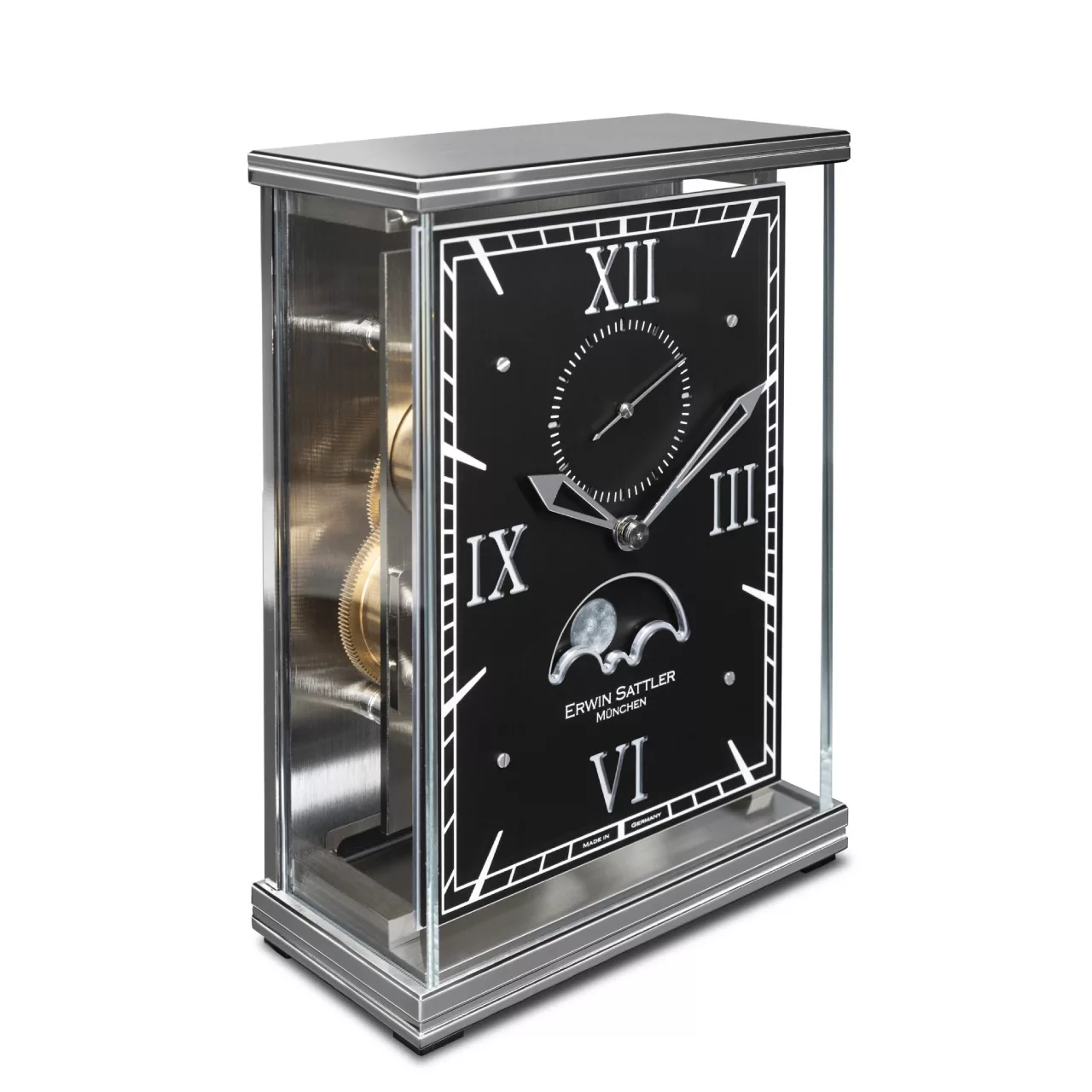
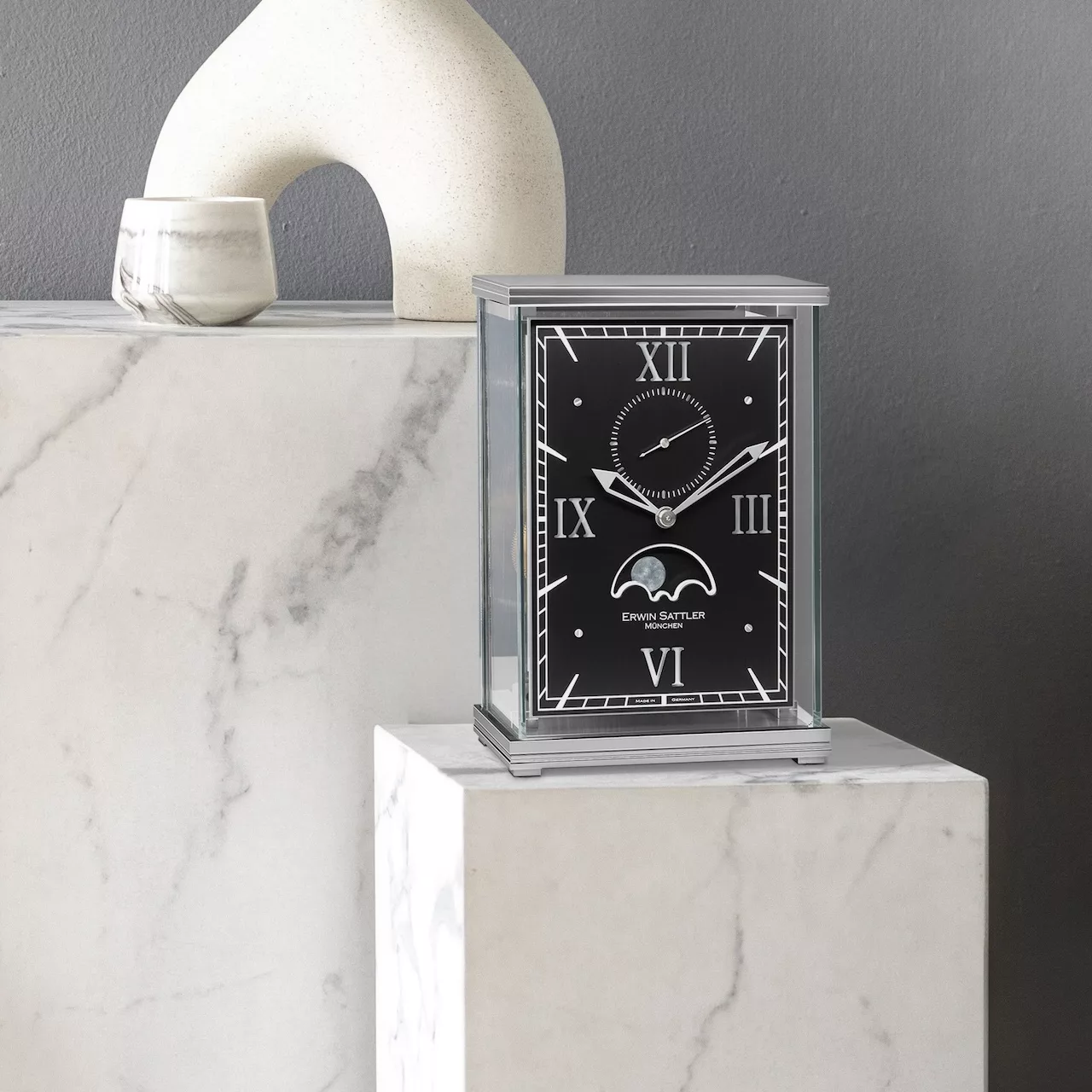
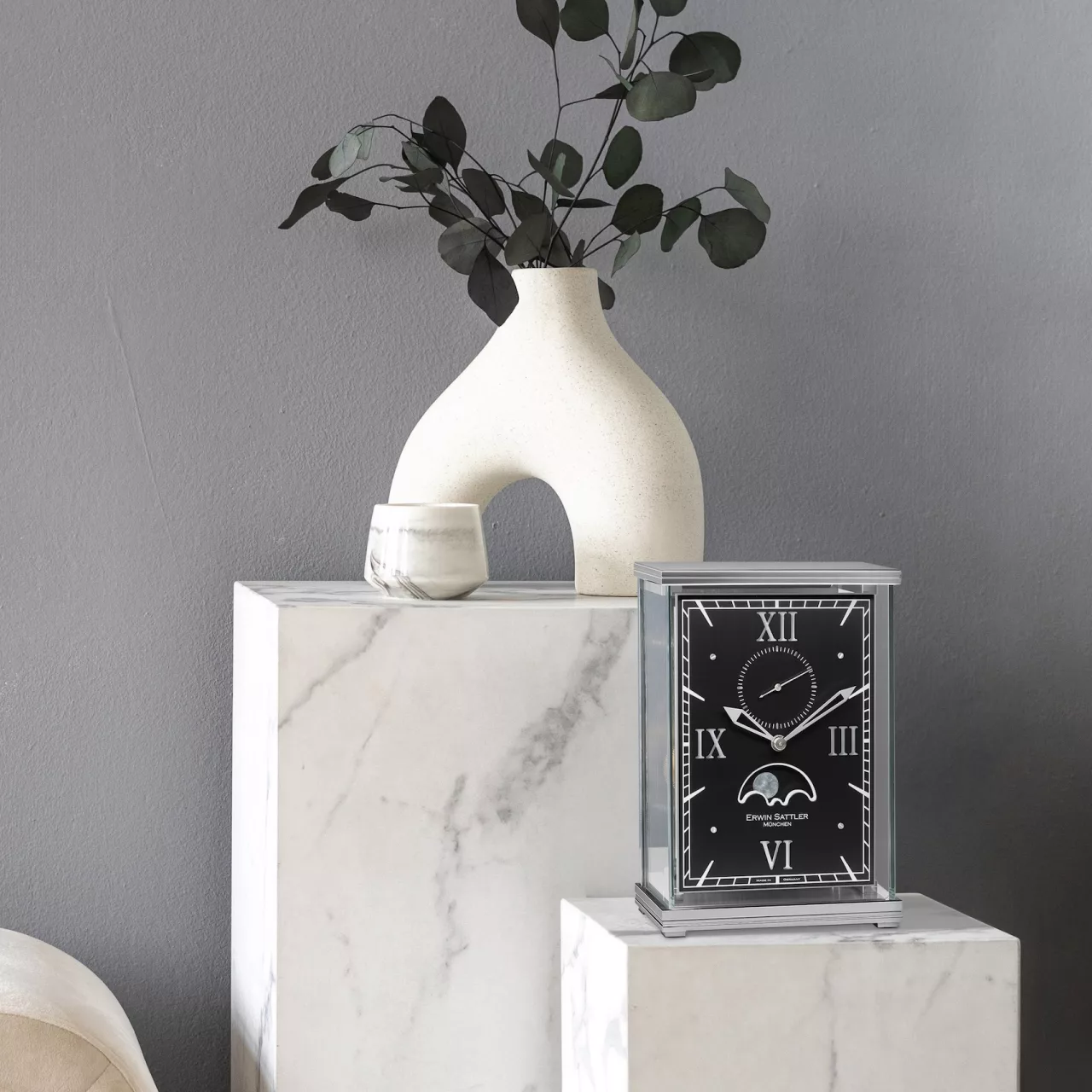
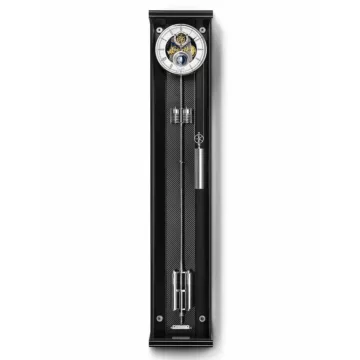
The Erwin Sattler Lunaris II is a new-generation table clock that takes the signature identity of the original Lunaris and refines it with sharper detail, cleaner material execution, and an even more deliberate sense of depth. While unmistakably modern in presentation, it remains anchored in traditional German clockmaking, where mechanics, finishing, and long-term serviceability are treated as non-negotiables rather than marketing points.
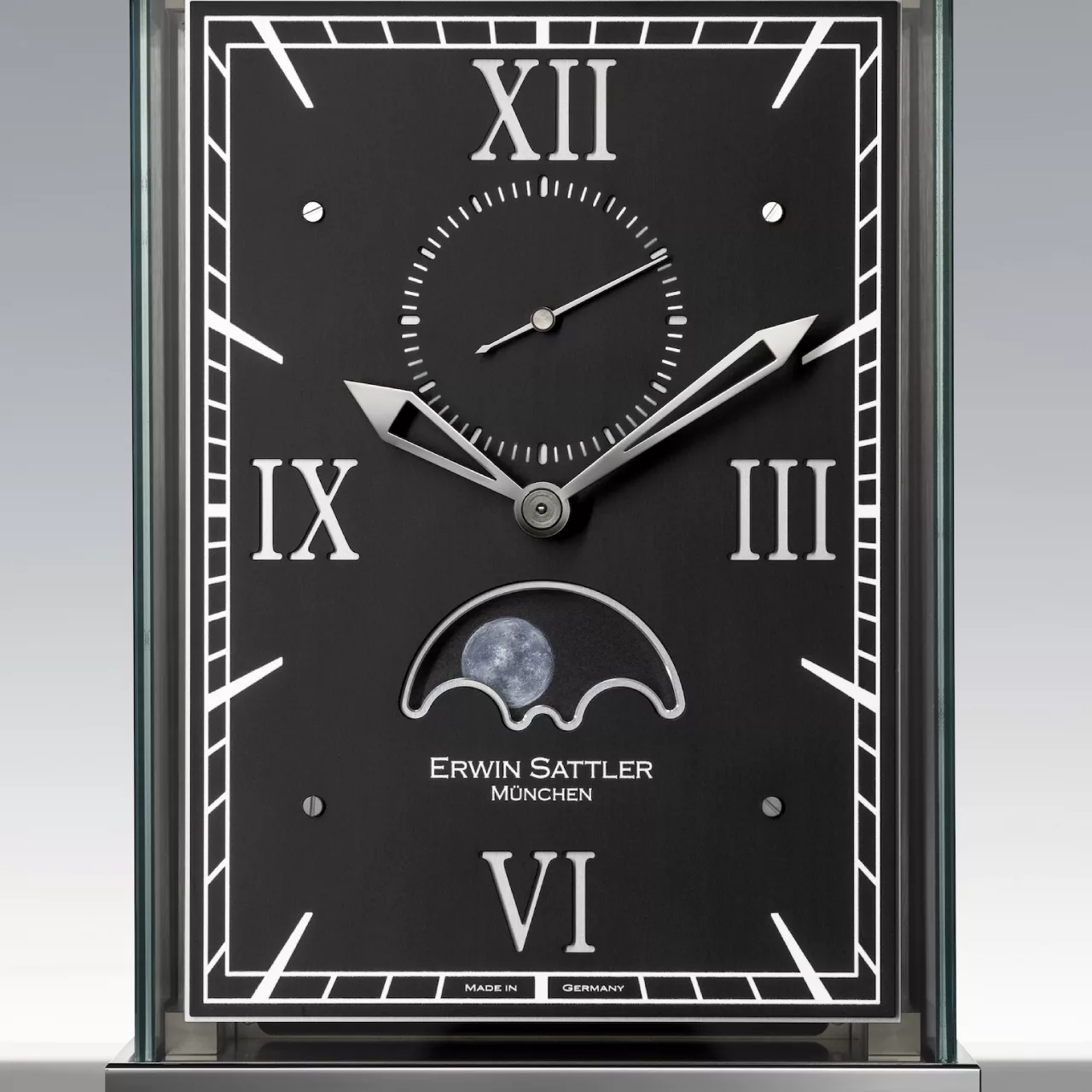
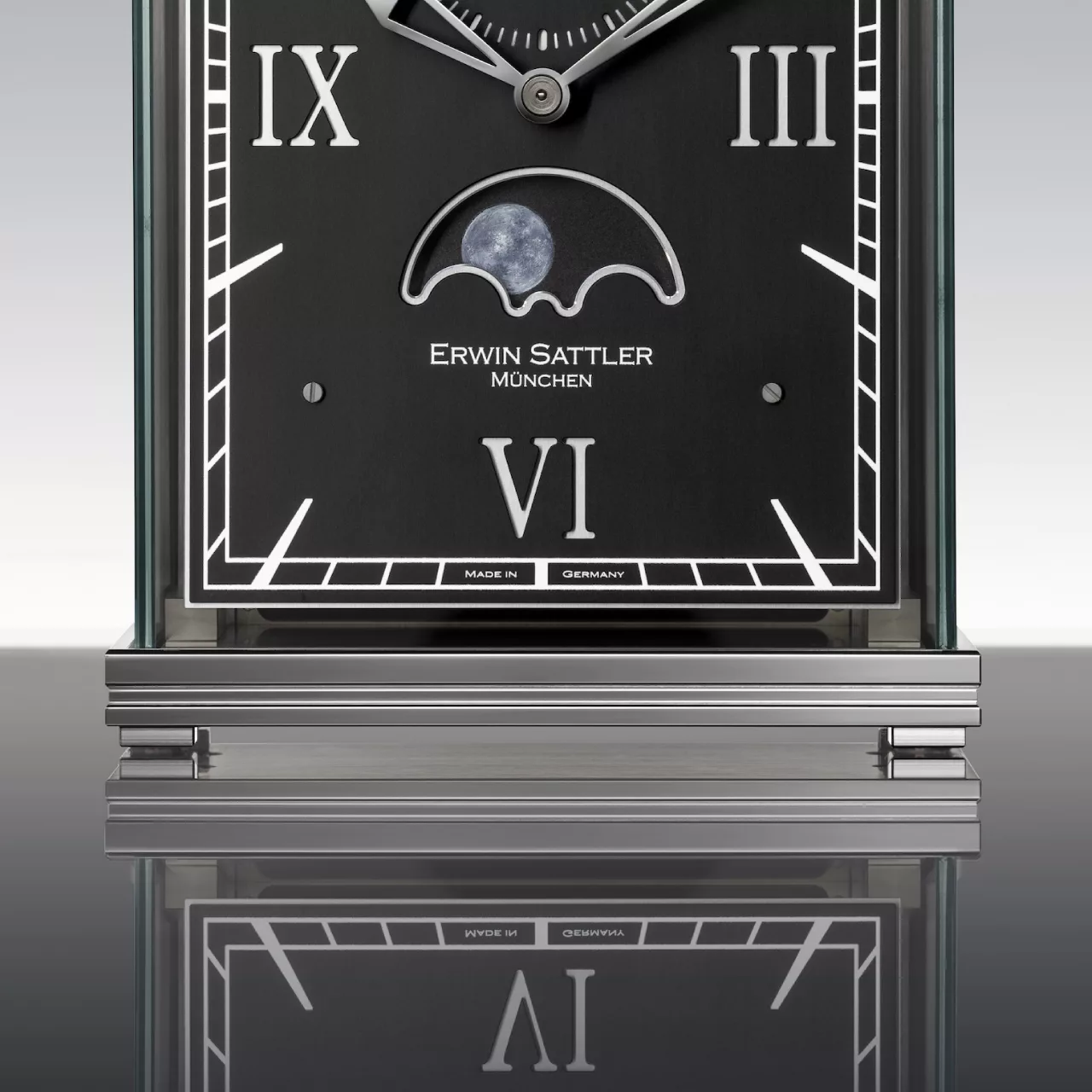
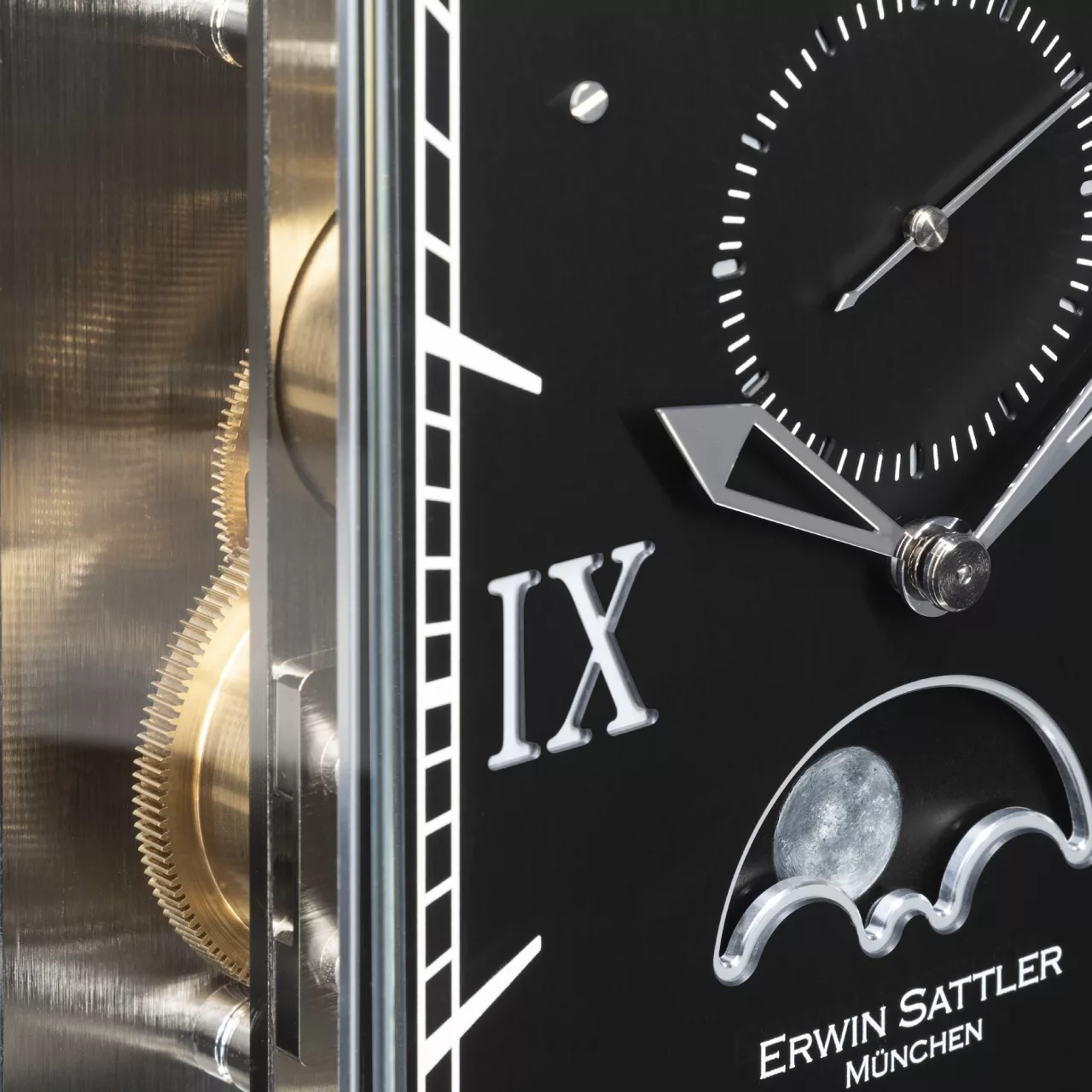
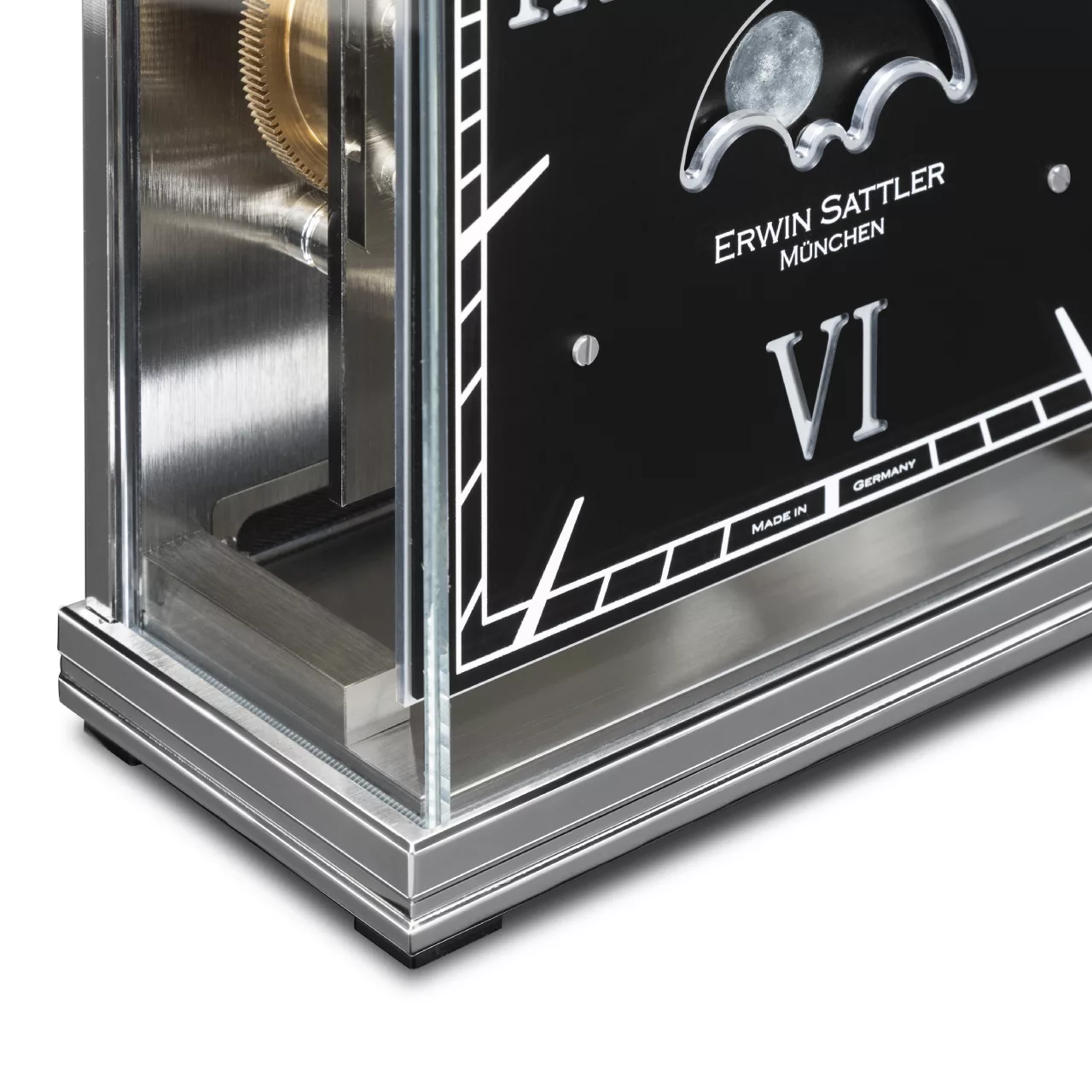
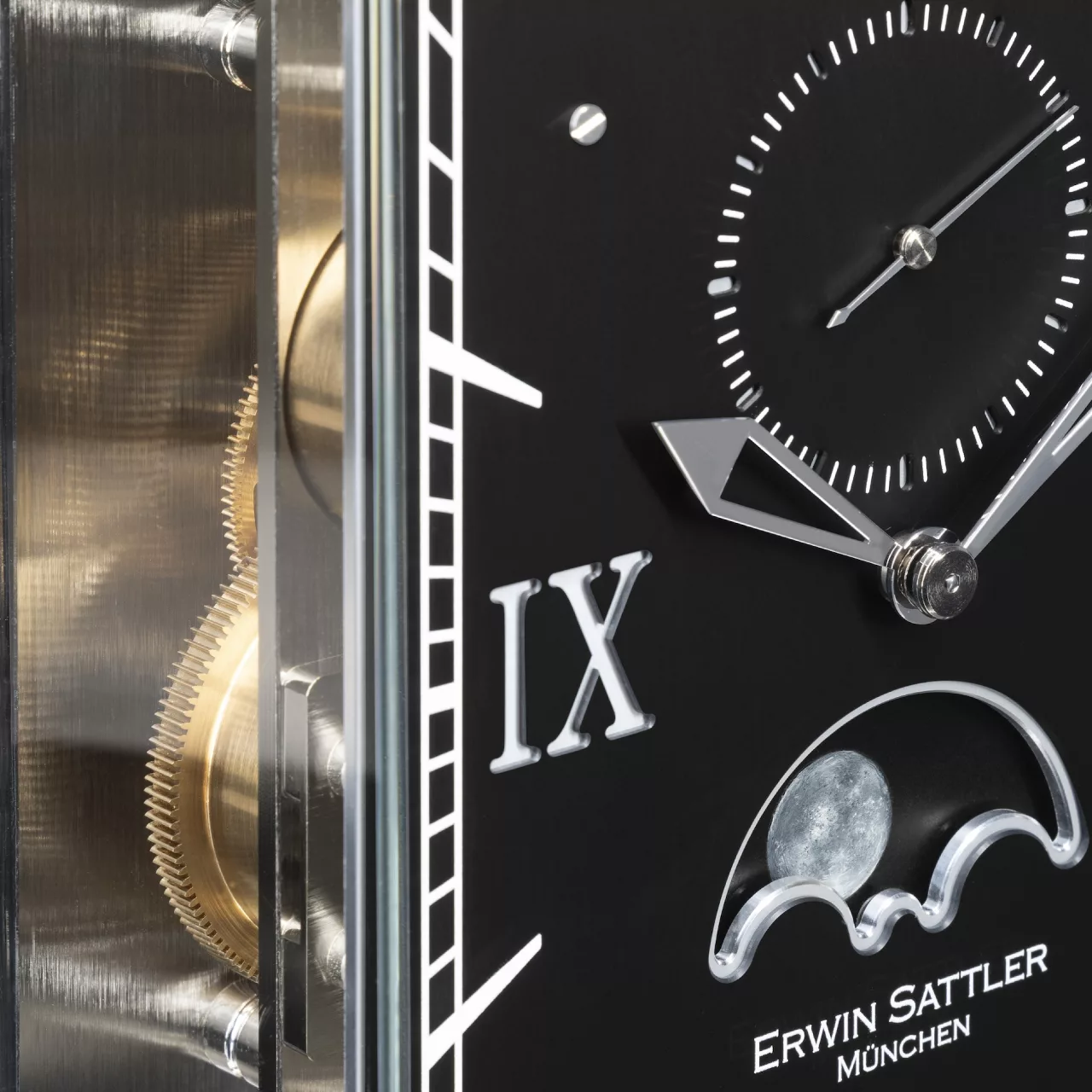
At the centre of the design is the moon, not as an afterthought, but as a defining theme. The dial is a sophisticated two-piece construction, with Roman numerals milled directly from the upper layer to reveal the second layer beneath. This technique adds subtle three-dimensionality and a quiet sense of architectural structure, enhancing legibility while giving the face an elegant, technical presence. The hand-painted moon phase display completes the concept with a human touch that contrasts beautifully against the precision of the milled work.
The Lunaris II retains its distinctive frameless glass case, a hallmark of the model’s “floating” appearance on a desk or sideboard. What changes in this generation is the confidence in the metalwork: the top and base are newly designed in finely brushed stainless steel, accented by a precisely milled and polished decorative groove. It is a small detail, but an important one, because it adds a crisp highlight that shifts with the light and gives the entire housing a more contemporary edge without losing the original character.
Equally considered is the hand design. The new skeletonised steel hands feature a refined shaft and a filled tip, improving clarity while maintaining the lightness that suits the glass-and-steel architecture. Combined with the dial’s layered construction, the Lunaris II reads as both a sculptural object and a serious instrument, designed to be lived with daily rather than admired from a distance.
A defining mechanical feature is the passing strike: once every full hour, the clock sounds a clear, delicate chime on the bell. The effect is purposeful rather than loud, offering a moment of acoustic punctuation that feels in keeping with a piece designed for a study, office, or quiet interior. The chime adds presence without pushing the clock into novelty, reinforcing that this is a timekeeper built around craft and restraint.
Practicality is handled with the same clarity as the design. Winding, time setting, moon phase adjustment, and regulation of the 8-day movement are all arranged on the rear, creating an intuitive “control side” that keeps the dial clean and undisturbed. The result is a table clock that feels familiar in concept, yet newly sharpened in execution, a refined jewel from Erwin Sattler where aesthetics and engineering remain inseparable.
Technical Specifications
Housing
- Brushed stainless steel with decorative groove
- Dimensions: Height 23 cm, Width 16 cm, Depth 8 cm
- Weight: 6 kg
Glass
Clockwork
Duration
Drive
- Tension spring with force compensation through position
Gear Selector
- Swiss escapement with screw balance
Ball Bearings
- 12 precision ball bearings
Rubies
Dial
- Two-part, natural or black anodised
- Milled Roman numerals
- Hand-painted moon disc
Hands
Percussion
- Passing strike on bell (sounds once every full hour)
Stroke Rate
Rear Controls
- Winding, time setting, moon phase adjustment, and regulation arranged on the back