Description
Benzinger GAP 2 – Graphite
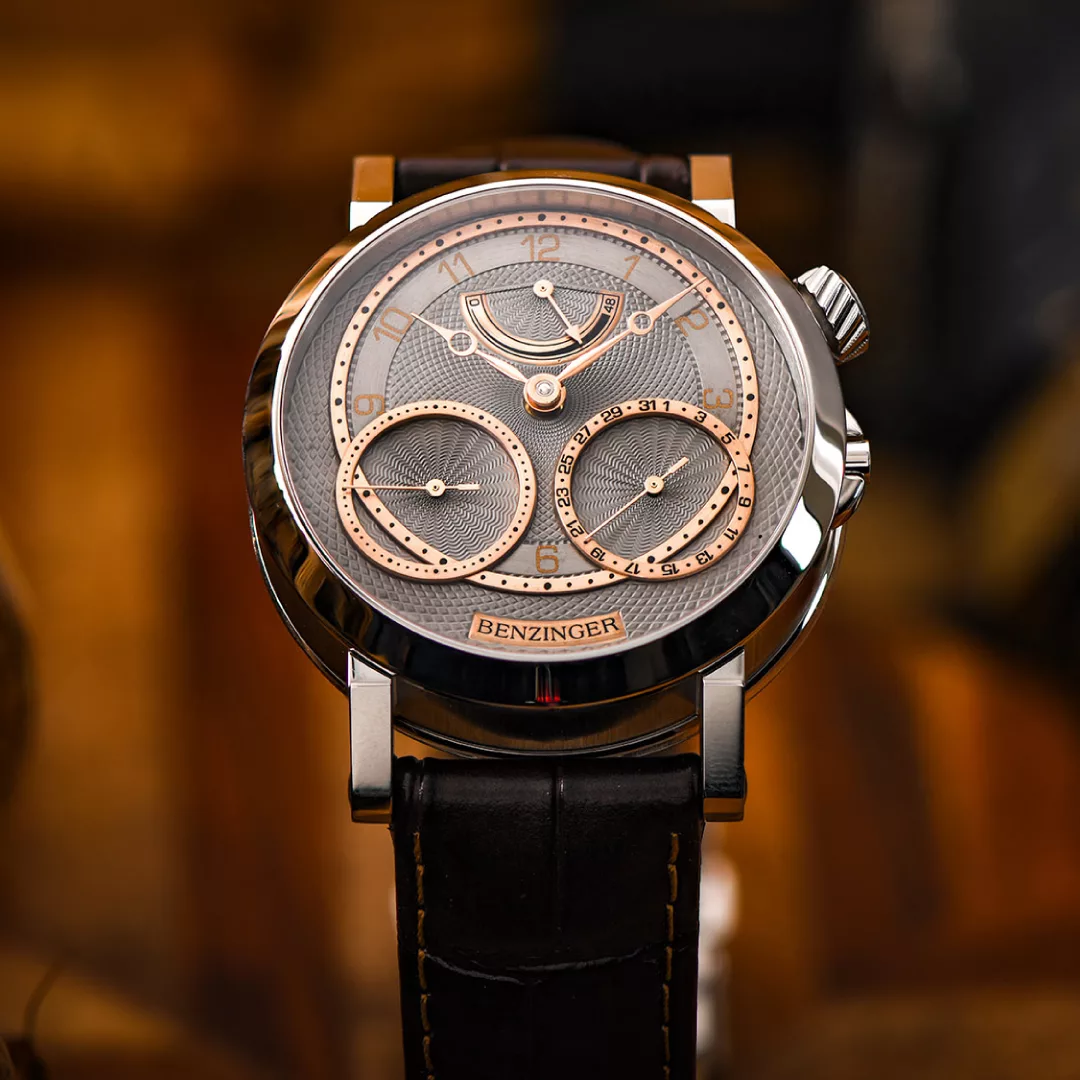
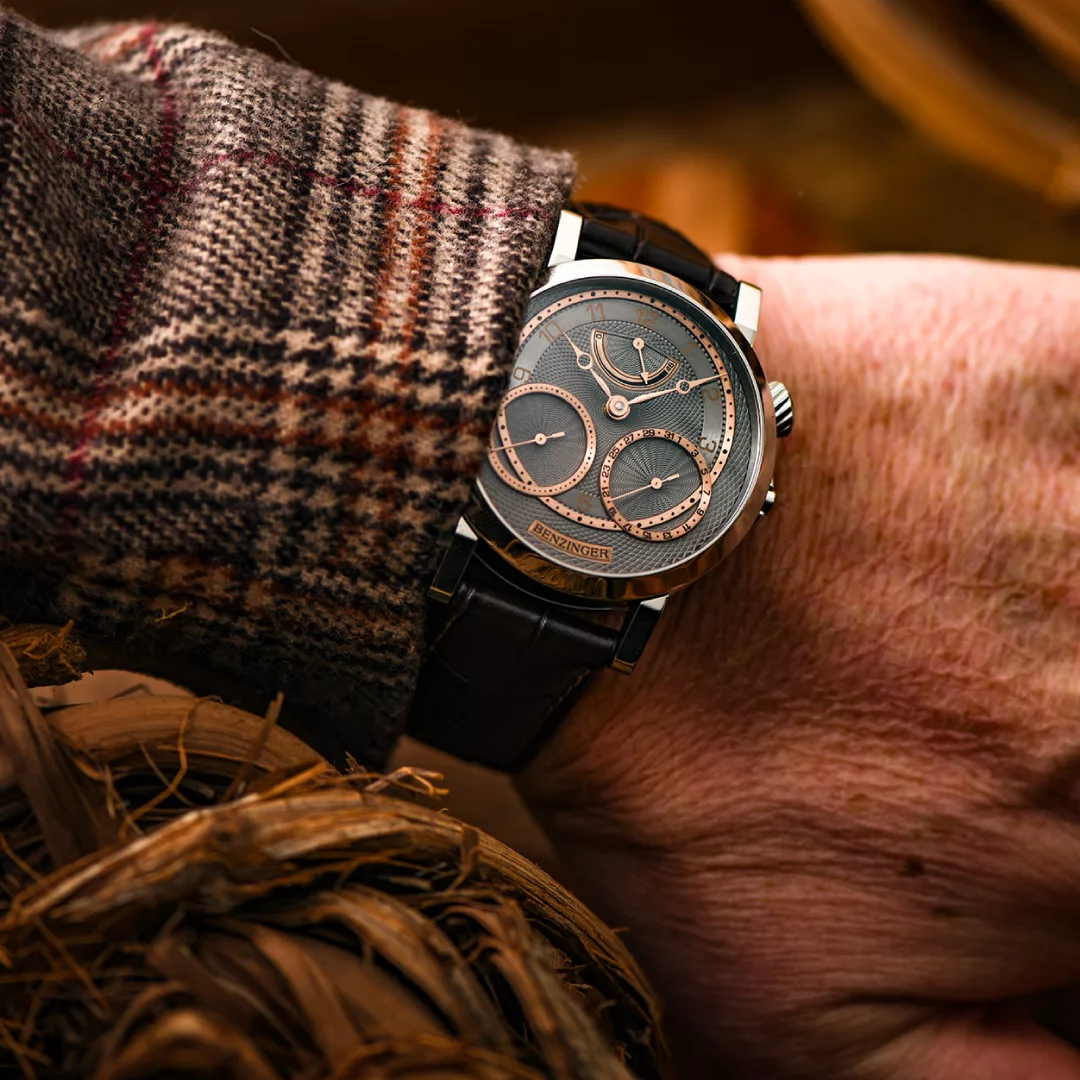
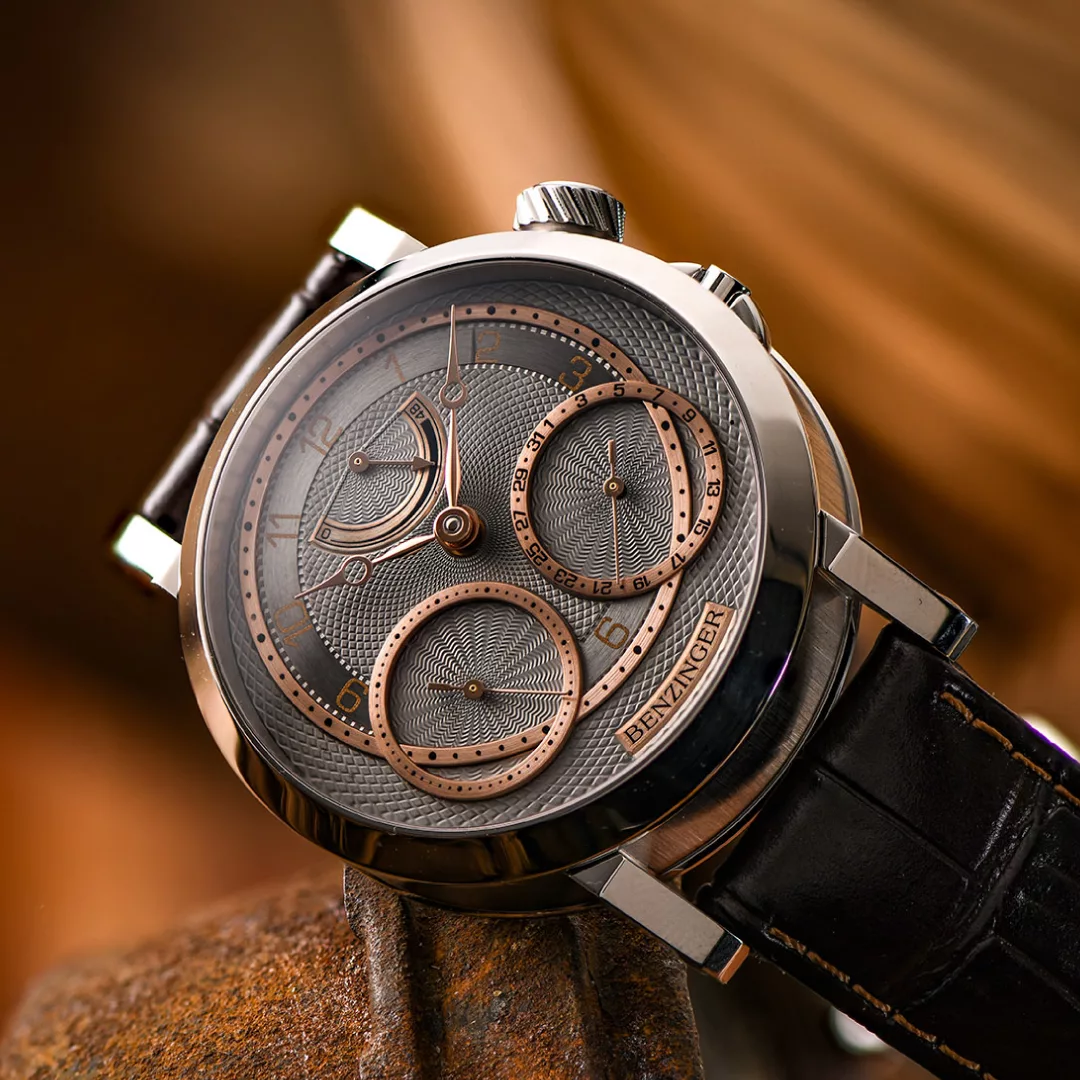
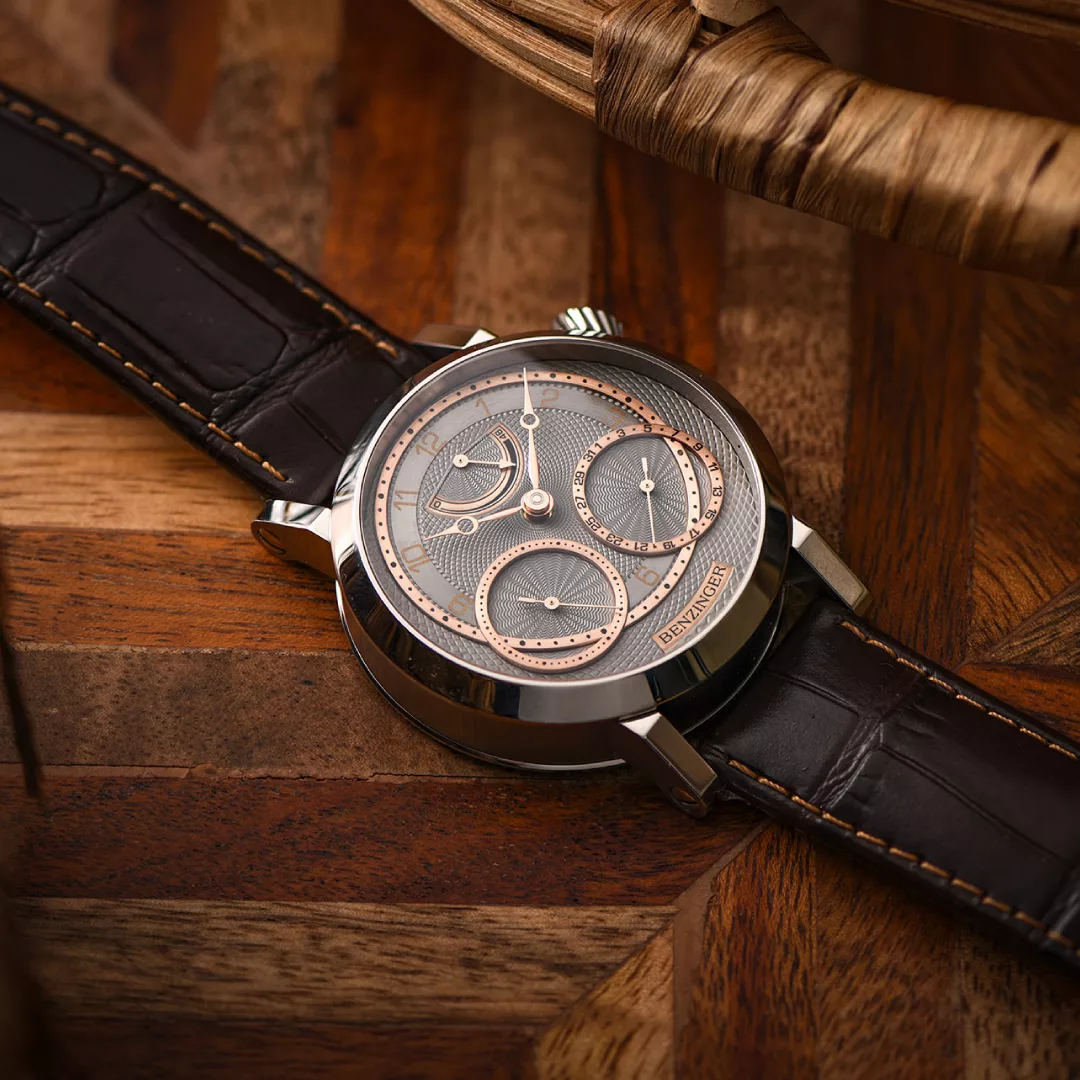
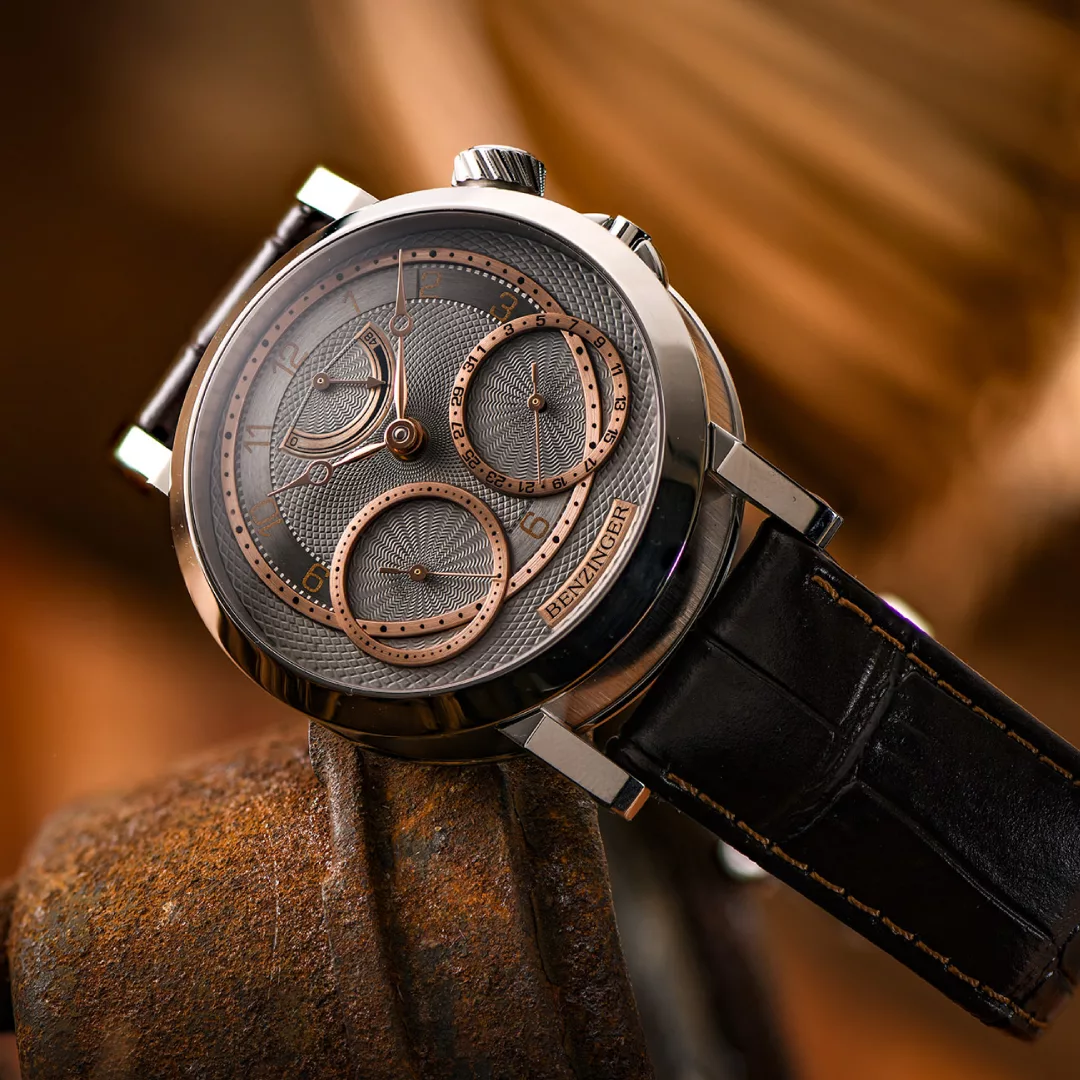
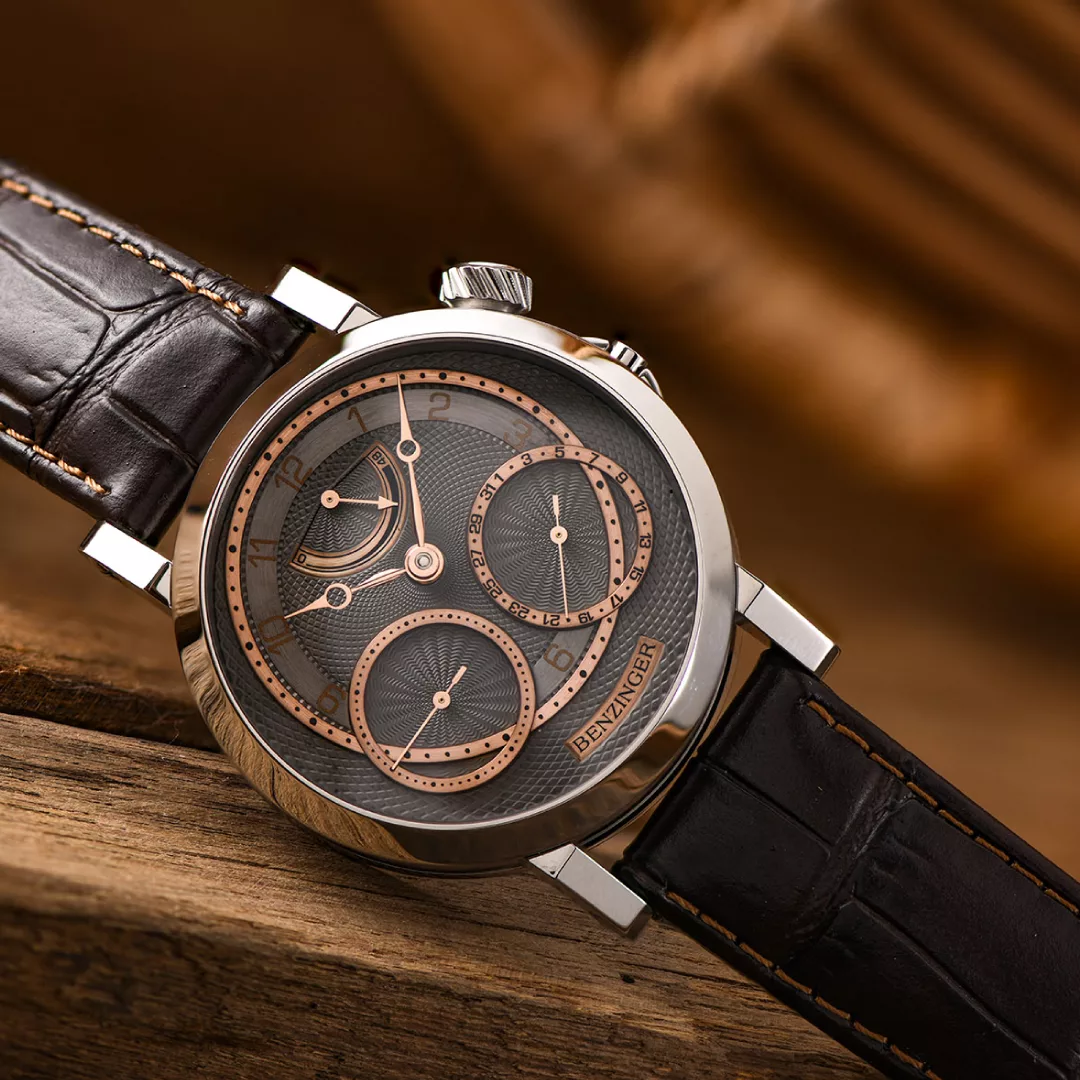
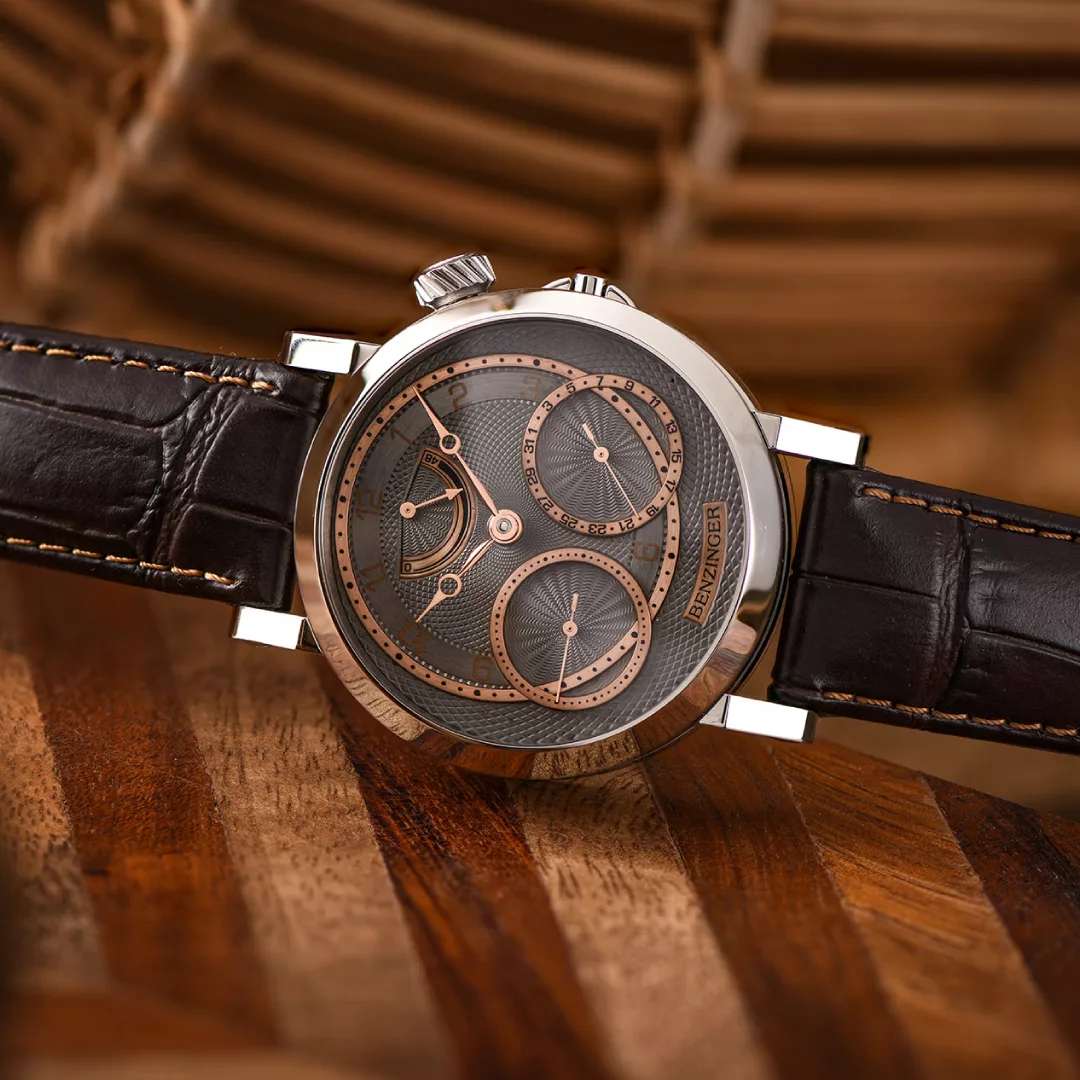
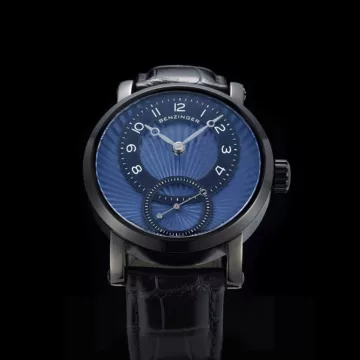
The Benzinger GAP 2 Graphite refines the artistry of independent watchmaking with a sophisticated, modern touch. Retaining the technical advancements introduced in the GAP 2 series, this timepiece features an offset time display, small seconds, date indication, and a 48-hour power reserve. However, what sets this variation apart is its striking graphite-toned dial, offering a refined contrast against the meticulously hand-guillochéd surface.
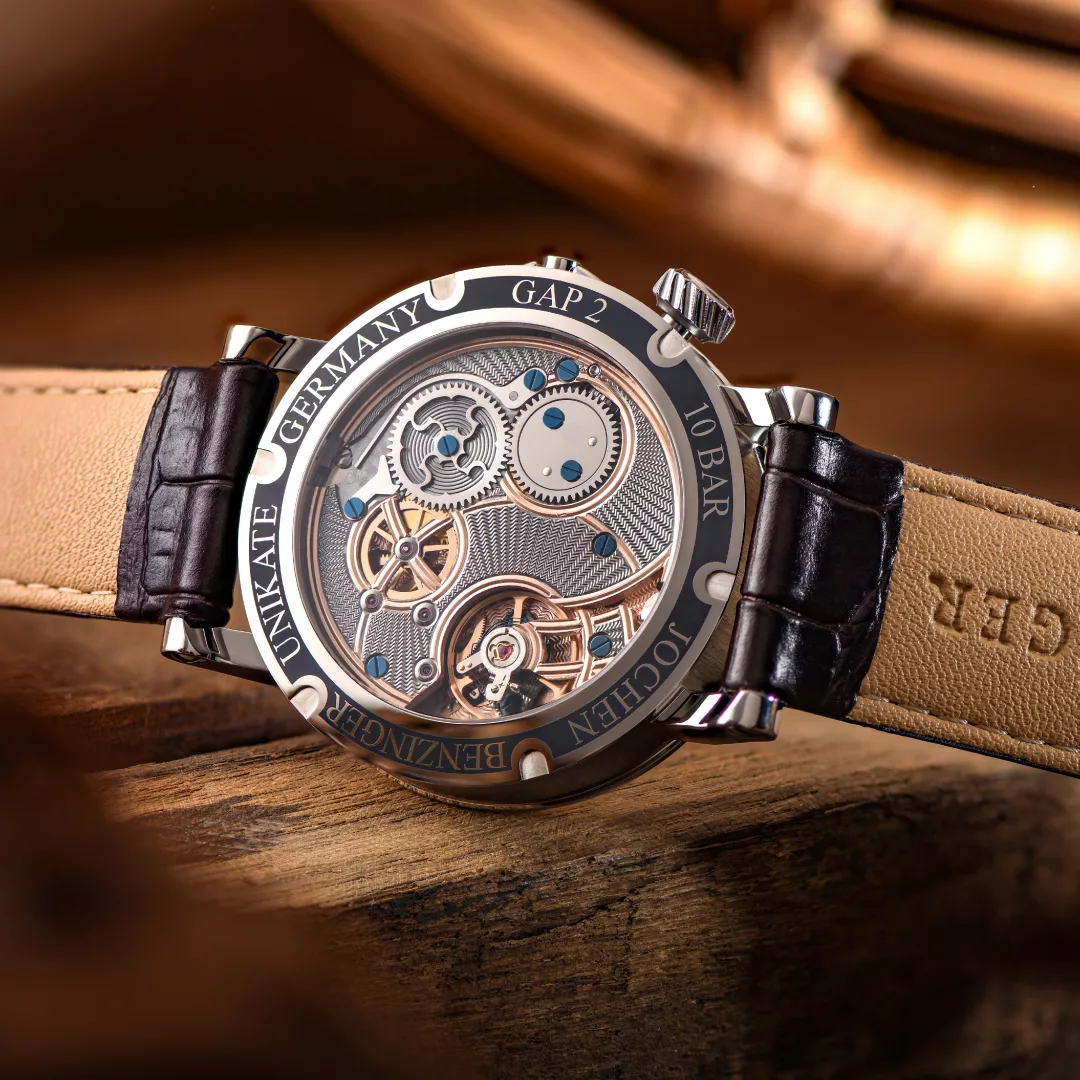
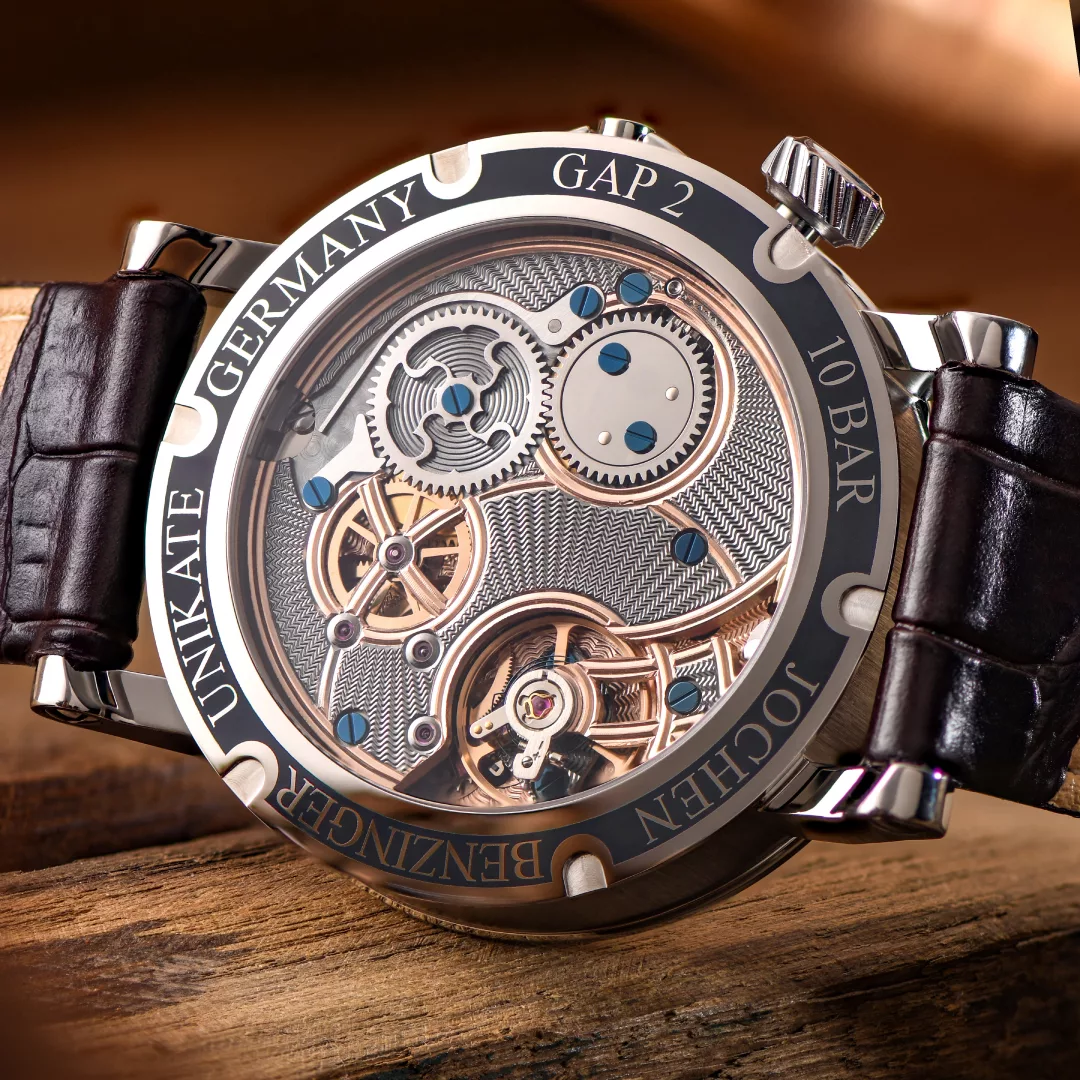
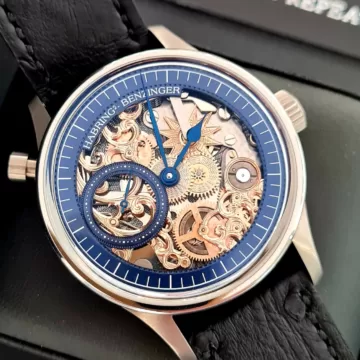
On the movement side, the skeletonized architecture of the GAP 1 has been replaced with a hand-guillochéd three-quarter plate, creating a cleaner and more composed aesthetic. This design shift enhances the visual harmony of the watch, giving it an understated elegance.
Further adding to its distinction is the optional ceramic inlay in the case back, which mirrors the deep graphite tone of the dial. These subtle yet meaningful enhancements ensure that the GAP 2 Graphite delivers a timeless aesthetic that transcends fleeting trends.
Technical Specifications
Case:
- High-grade steel case crafted in Pforzheim with 3D engraving
- Optional ceramic inlay in the case back, colour-matched to the dial
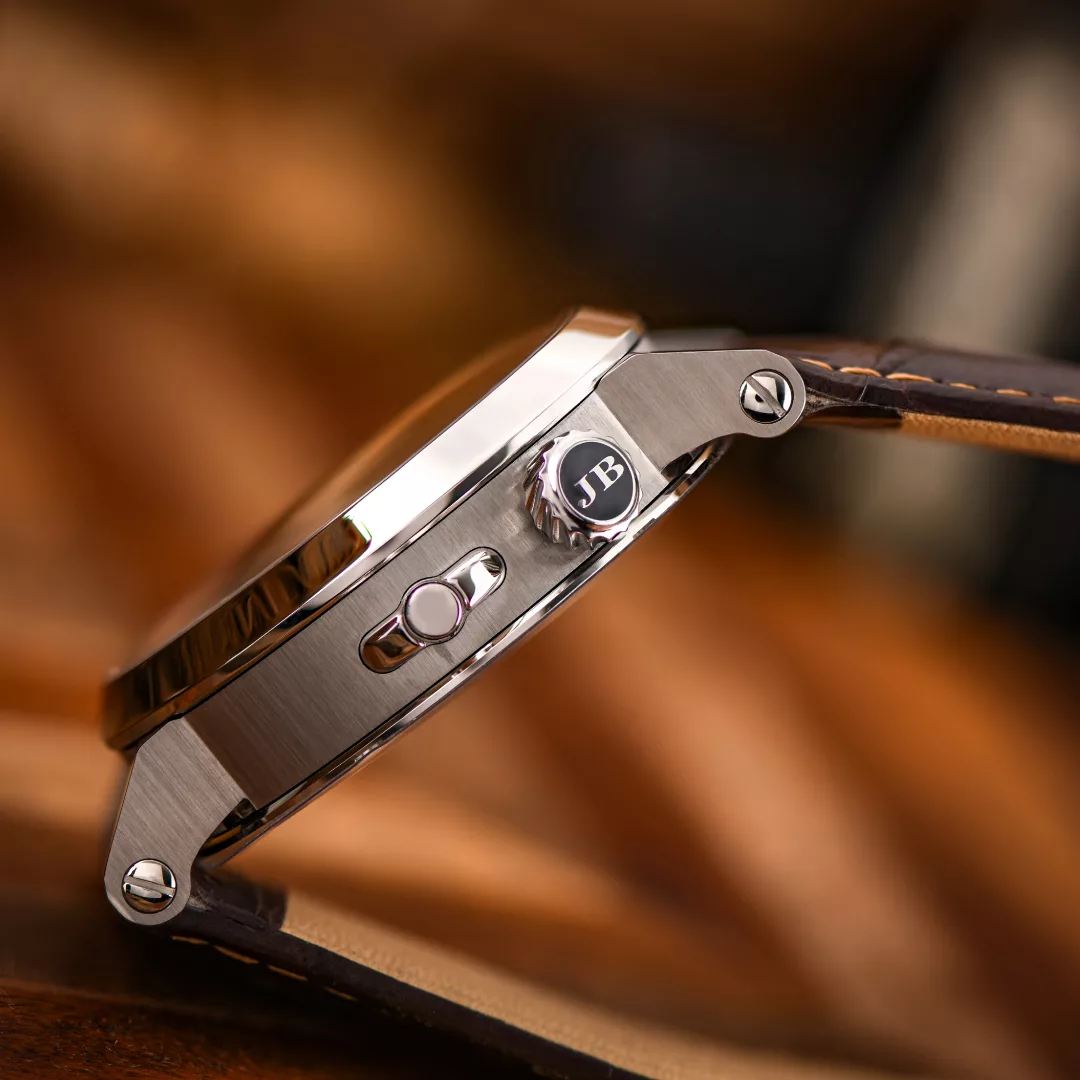
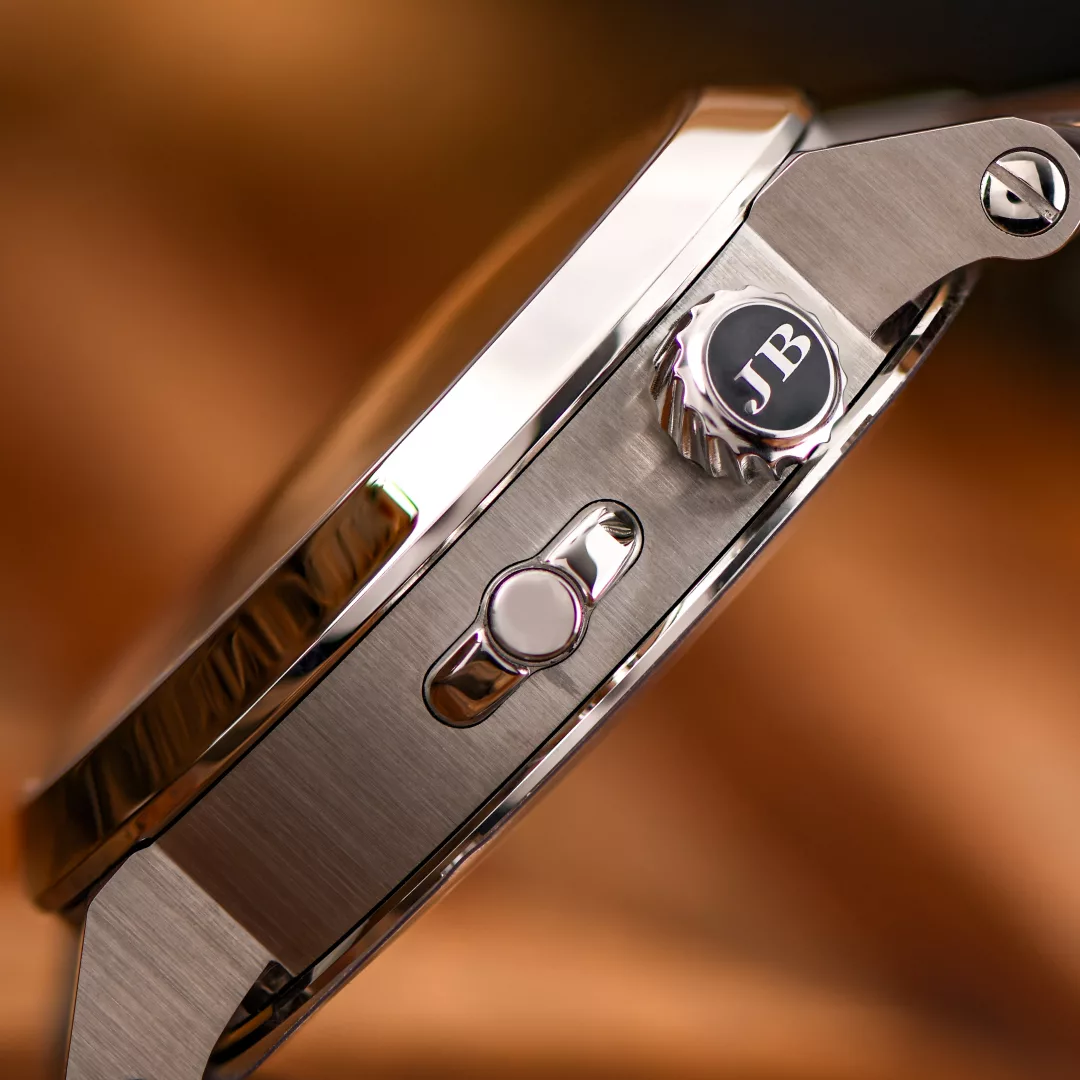
- Crown positioned at 2 o’clock with optional ceramic inlay, matching the case back
- Date correction pusher at 3 o’clock
- 39mm diameter, 11.5mm height
- Sapphire glass on both sides
Movement:
- In-house hand-wound movement with offset hour and minute indication
- Small seconds positioned at 8 o’clock
- Date display at 4 o’clock
- 30mm diameter, 5.1mm height
- 28,800 vibrations per hour (4Hz)
- 48-hour power reserve
- Tangential screw fine regulation
- Carl Haas sprung balance with chronometer accuracy
- KIF shock absorber (DIN & NIHS standard)
- 19 jewels
Dial:
- Sterling silver, hand-guillochéd
- Hour and minute indicators slightly offset toward 12 o’clock
- Subdials for small seconds and date display, rhodium plated
- 48-hour power reserve indicator below 12 o’clock
Base Plate:
- Rhodium-plated
- Hand-guillochéd, rose gold and rhodium-plated movement parts
- Flame-blued crown and ratchet wheel
- Flame-blued screws
Hands:
- Steel hands in Breguet style
Strap:
- Hand-sewn alligator leather strap
- Available with folding clasp or thorn buckle
- Screwed-in strap lugs
What is the art of Guilloche?
Guilloché (or guilloche) is a decorative technique whereby a very precise, intricate and repetitive pattern is mechanically engraved into an underlying material. It was developed between the 1600-1700s as part of the “royal craft” of art-reversing. From these princely beginnings, the watchmakers of the 18th and 19th century developed the beautiful Guilloche machines, with which, for example, Breguet cut its unique dials. At the beginning of the twentieth century, the court jeweller of the Russian Tsar, Fabergé, brought the art of Guilloche to its fullest perfection. He used the guilloche technique as a base for his famous enamel work, which culminated in the renowned Fabergé eggs. Today, thanks to the renaissance of mechanical clocks and watches, a limited number of high-quality manufacturers are still offering their products with hand-guilloched dials, which are still unmatched in their classic appearance. Jochen Benzinger is a master in this field.
What is the art of engraving?
Engraving is as old as mankind itself. People used cutting tools at all times to decorate jewellery and utensils. The engraving art in Europe in the fifteenth and sixteenth centuries reached its climax when armour and weapons were artfully engraved. In the sixteenth century, Albrecht Dürer brought this work to a new heyday when, using the same tools as Jochen Benzinger uses in his studio today, he cut the copper-printing blocks for his famous prints. Nowadays there are very few specialists who know the techniques of this craft. Hand-engraving in horology is a highly valued attribute on any timepiece. Benzinger watches feature this finish with flourish and skill.
What is the art of skeletonising?
Skeletonising is a refinement method for giving a new, individual character to closed movements. Parts of the movement are removed by a goldsmith’s saw to reveal the direct view into and through the mechanical movement. The view of the movement is made possible by a sapphire crystal, exhibition case back in all models. The imbued creative energy of Jochen Benzinger is brought to the fore in his bespoke skeletonising creations. Each piece is skilfully crafted to highlight the beauty of the mechanical movement beating within – a pleasure to observe and a privilege to wear.